Systems
The Yak Herders
The animal that makes the roof of the world livable
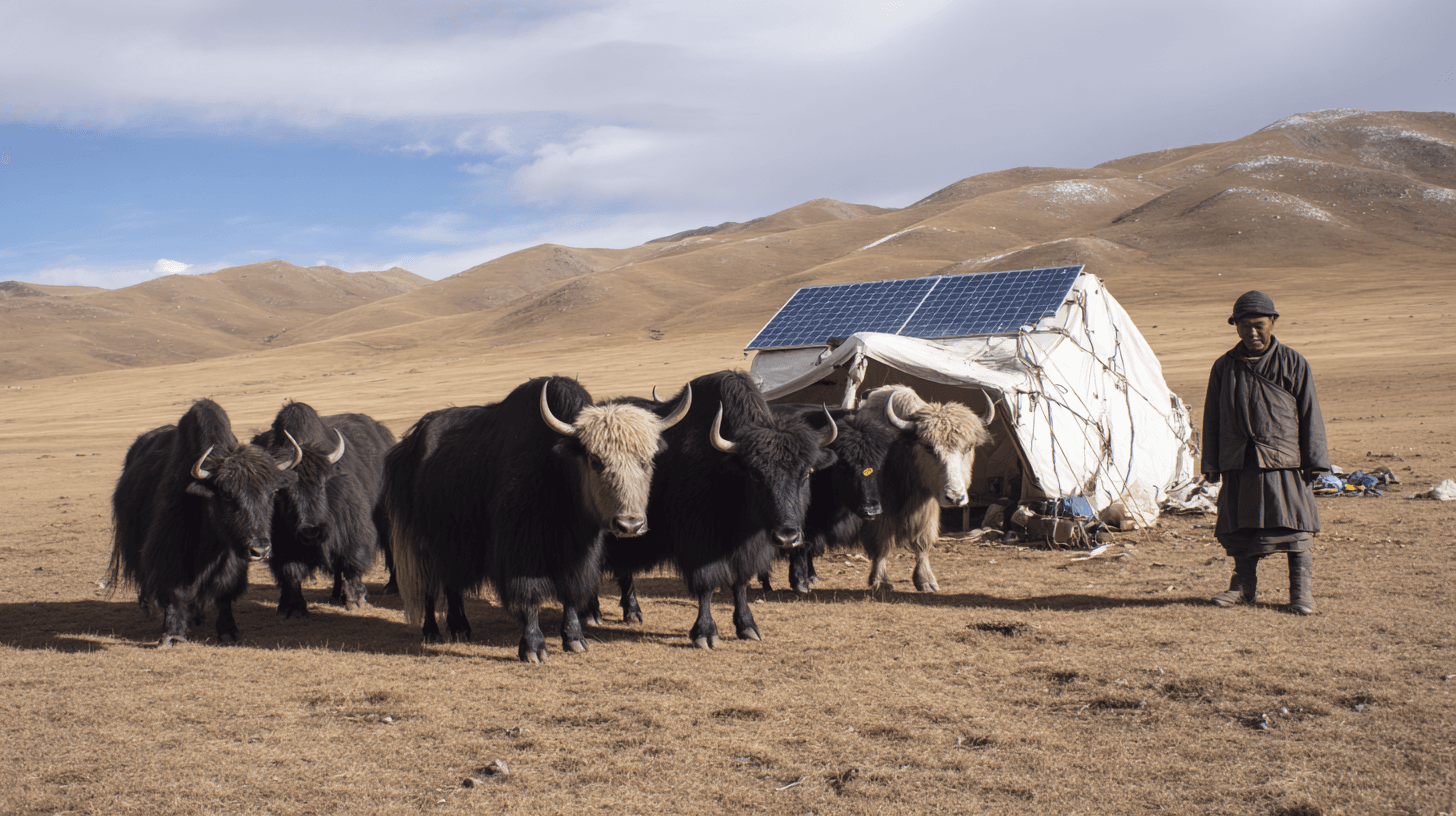
Above 4,000 meters, where nothing grows and the air thins to half its density, yaks make human life possible. The herders who follow them live at the edge of survival.
The Tibetan Plateau is the highest region on earth. It averages 4,500 meters above sea level. The air contains 40 percent less oxygen than at sea level. Winter temperatures drop to -40 degrees. Almost nothing grows.
And yet people live there. They have lived there for thousands of years. They survive because of the yak.
The Animal
The yak is the only large animal adapted to extreme altitude. Wild yaks evolved on the Tibetan Plateau over millions of years, developing traits that allow them to thrive where other animals die.
Their blood carries more oxygen than other cattle — they have more hemoglobin, more red blood cells, more efficient lungs. Their thick coats insulate against cold that would kill lesser animals. Their digestive systems extract nutrition from grasses too sparse and tough for other livestock.
Domesticated yaks diverged from wild yaks at least 7,000 years ago. They became smaller, more docile, more varied in color. They also became essential — not just useful, but necessary for human survival at altitude.
A yak provides everything. Milk for butter and cheese. Meat when slaughtered. Fiber from its coat for ropes and tents. Hide for leather. Dung for fuel — the only fuel available above the tree line. A yak is not a luxury. A yak is life.
The Herders
The herders of Dolpo, in northwestern Nepal, follow their yaks through one of the harshest landscapes on earth. Their villages sit at 4,000 to 5,000 meters. Their pastures extend higher still. Their lives revolve around the animals that make those lives possible.
The year has a rhythm. In summer, the herders move to high pastures, following the grass that grows briefly during the monsoon. In winter, they descend to villages where stone houses offer shelter from the worst of the cold. In between, they are constantly moving, following the yaks, following the grass, following the weather.
A family might own 50 yaks, or 100, or more. The animals are wealth — but wealth that requires constant labor. They must be milked, guarded from predators, moved to fresh pasture, treated when sick. The work is never finished. The herders work from before dawn until after dark, every day, in conditions that would hospitalize most lowlanders.
The Trade
Dolpo was, for centuries, a trading zone. The herders carried salt from Tibet south to Nepal, exchanging it for grain that would not grow at altitude. The yaks were the transport — sturdy, sure-footed, able to carry loads across passes that reach 5,500 meters.
The salt trade has declined. Cheap industrial salt from India undercut the Tibetan product. The border with Tibet has become more restricted. The traditional trade routes no longer function as they did.
The herders have adapted. Tourism brings trekkers who pay for lodging and yak transport. Butter and cheese are sold in lowland markets. Some families send children to schools in Kathmandu, hoping for futures beyond herding.
But the yaks remain. Whatever else changes, the animals are still necessary. The high pastures can support nothing else. The plateau cannot be farmed. The herders herd because herding is what works here.
The Pressure
Climate change is altering the plateau. The glaciers are shrinking. The permafrost is melting. The grass is growing in some places, failing in others. The patterns that herders have followed for generations are becoming unreliable.
Some years the grass is abundant. Other years it is not. The yaks, adapted to scarcity, survive either way. The herders, who depend on surplus for trade and savings, feel the fluctuations more acutely.
Young people leave. The work is hard, the returns uncertain, the outside world increasingly accessible. A generation that grew up herding yaks may raise children who never learn the skills. The chain of transmission, unbroken for millennia, is under strain.
Those who remain are adapting. They experiment with different pasture rotations. They sell to new markets. They take tourists into the high country. The tradition evolves because traditions that do not evolve die.
What Remains
The yaks still graze the high pastures. The herders still follow them, still milk them, still depend on them for everything that makes life at altitude possible.
The relationship is not sentimental. Yaks are property, wealth, resources. They are slaughtered when necessary, sold when profitable, valued for what they provide. But they are also partners — animals without which the herders could not exist, could never have existed, could never have made the roof of the world habitable.
Below 4,000 meters, life is possible without yaks. Above it, life is not. The line is absolute. The herders live on the right side of it because their animals allow them to.
The plateau is still there, still cold, still thin of air, still demanding. The yaks are still there, still doing what evolution designed them to do. The herders are still there, still following, still surviving in a place that tries constantly to kill them.
The partnership is not romantic. It is necessary. And as long as anyone wants to live on the roof of the world, it will continue.
Sources
- Wiener G. et al. (2003). The Yak
- Goldstein M. and Beall C. (1990). Nomads of Western Tibet
- Bauer K. (2004). High Frontiers: Dolpo and the Changing World of Himalayan Pastoralists
- Rhode D. et al. (2007). Yaks, yak herding, and the peopling of the Tibetan Plateau