Systems
The Wool Sorters
The fingers that read fleece by touch
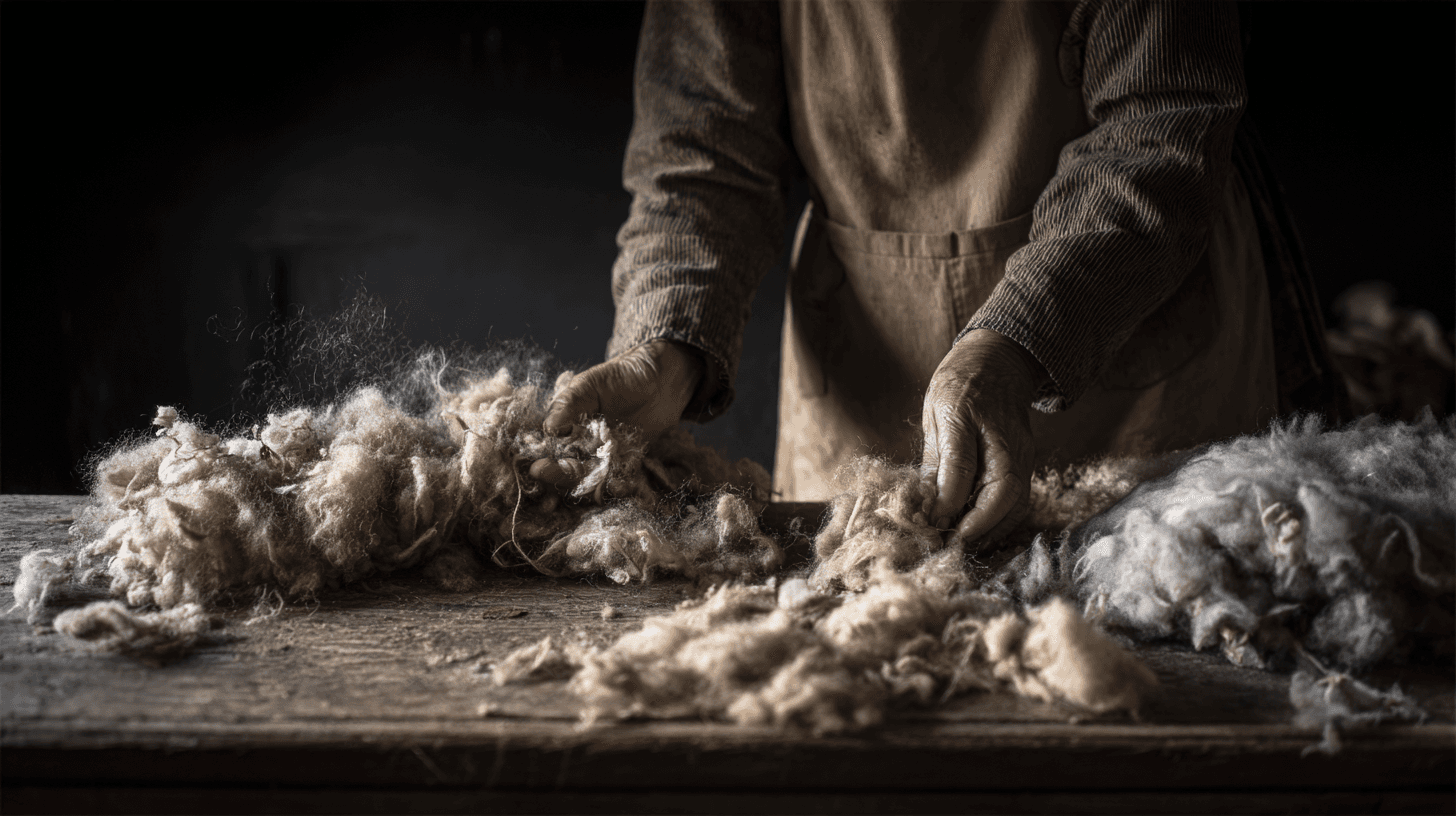
The sorter's hands move through the fleece, separating grades by feel. This pile: fine. This pile: medium. This pile: coarse. The hands know what the eyes can't see.
Wool sorting was skilled labor — the ability to grade fleeces by touch, quickly and accurately, into categories that determined price and use. The skill took years to develop.
The Fleece
A single fleece contains multiple grades. The shoulder wool differs from the belly wool. The neck differs from the legs. The sorter separates what the sheep grew as one.
The separation matters. Fine wool goes to different products than coarse. Mixing grades ruins both. Accurate sorting creates value.
The Touch
Fiber diameter determines softness and price. The finest wool — under 15 microns — comes from merino sheep and sells for premium prices. Coarser wool goes to carpets and outerwear.
The sorter's hands detect micron differences that require instruments to measure. The trained touch is remarkably precise.
The Speed
Industrial economics require speed. A sorter who takes twice as long costs twice as much. The skilled sorter was both accurate and fast.
The speed came from pattern recognition. The hands learned to feel quickly what they initially had to feel carefully. Expertise accelerated.
The Sheds
Wool sorting happened in shearing sheds after the fleece came off the sheep. The sorters worked in conditions that ranged from dusty to lanolin-thick.
The work was seasonal, following shearing schedules. Sorters developed routines that maximized efficiency during intense periods.
The Machines
Machine grading measures fiber diameter objectively. Laser systems analyze samples. The measurements are precise and consistent.
Machine grading reduced need for human sorters. The skill that took years to develop could be replaced by equipment.
The Niche
Hand sorting persists in specialty markets. Some buyers trust human judgment over machine measurement. Some fleeces are too variable for machine sampling.
The niche is small but real. Sorters who developed the skill before machines dominated still practice it.
The Knowledge
The knowledge was embodied — in hands, not books. Sorters learned from working alongside experienced sorters. The teaching was demonstration and practice.
This embodied knowledge is hard to preserve when the work disappears. You can't write down what fingers know.
The Hands
The fleece spreads on the sorting table. The hands begin to move.
This section here. That section there. The grades separate as the hands work.
The fleece becomes piles. The piles become prices. The hands do what instruments approximate.
The sorting continues where sorters continue. The touch persists where hands remember what they learned.
Sources
- British Wool Marketing Board; Bradford Industrial Museum; Campaign for Wool