Returns
The Vulture Restaurants
Feeding the undertakers back from extinction
The vultures vanished so fast that no one understood why.
In the early 1990s, India had an estimated 40 million vultures — more than any country on Earth. By 2007, the population had crashed by 99.9%. The white-rumped vulture went from one of the world's most abundant large birds to critically endangered in a decade. Entire colonies disappeared between annual surveys.
The bodies piled up. Vultures are nature's sanitation system — a single bird can consume a kilogram of rotting flesh per minute. Without them, cattle carcasses lay in fields for weeks. Feral dog populations exploded. Rabies cases increased by an estimated 50,000 deaths. The Parsi community, who practice sky burial, found their towers of silence choked with unprocessed dead.
The cause, when scientists finally identified it, was banal: a painkiller called diclofenac, given to cattle for joint inflammation. Safe for cows. Lethal to vultures. A single contaminated carcass could kill every bird that fed on it.
The Ban
India banned veterinary diclofenac in 2006. Nepal and Pakistan followed. The pharmaceutical industry resisted — diclofenac was cheap and effective. But the data was unambiguous. Where diclofenac was used, vultures died. Where it wasn't, they survived.
The ban helped but wasn't enough. Vultures reproduce slowly — one egg per year, six years to maturity. Even with the poison removed, recovery would take decades. The remaining birds needed safe food, and they needed it immediately.
The Restaurants
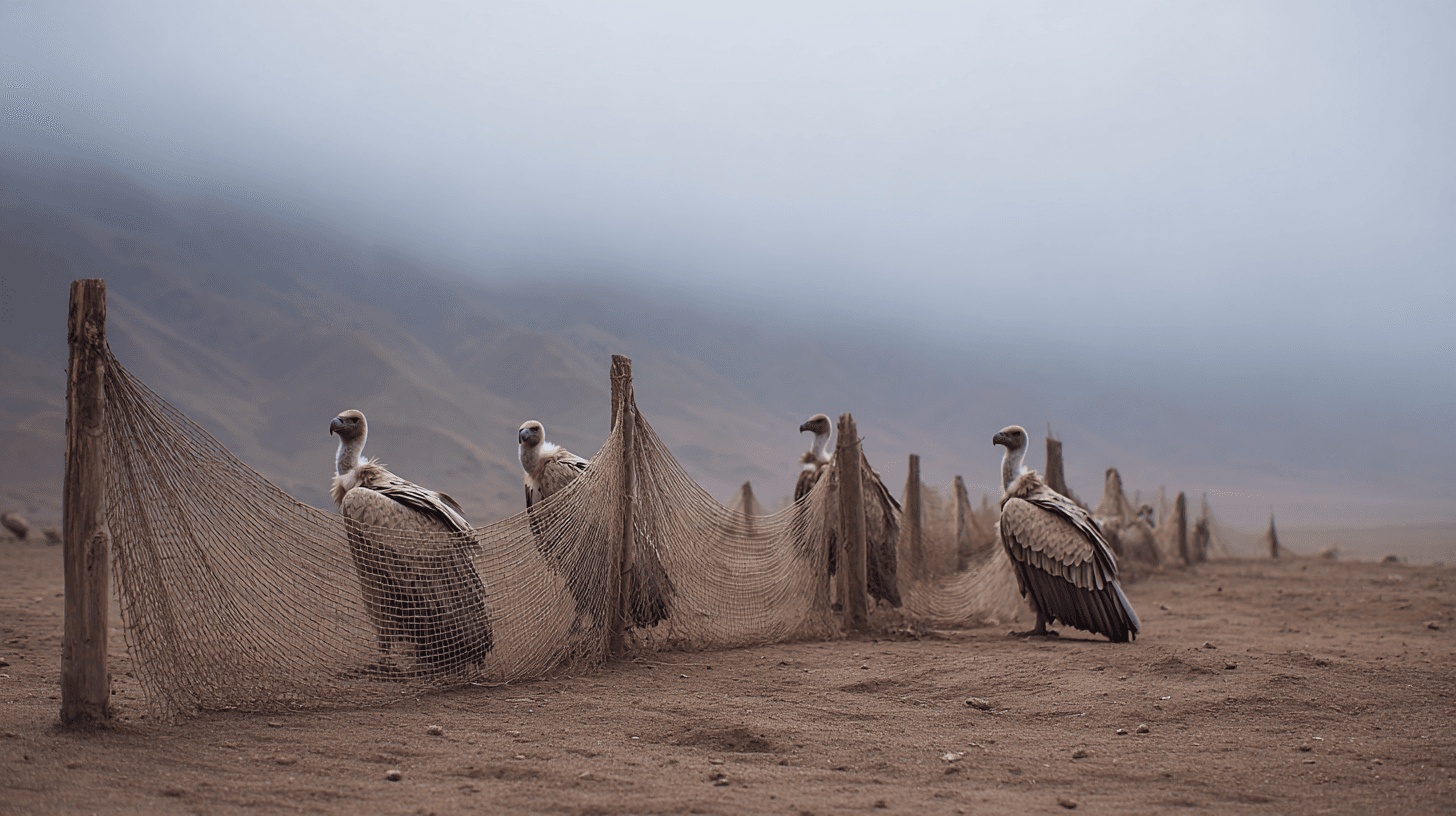
A vulture restaurant is a designated feeding site that serves guaranteed-clean carcasses. Cattle that die of natural causes, verified free of diclofenac, are transported to fenced areas where vultures can feed safely.
The first vulture restaurant opened in Nepal in 2007. By 2023, there were over 60 across South Asia. The sites are carefully managed: carcasses tested for drug residues, feeding monitored, vulture populations surveyed.
The results are measurable. In areas with vulture restaurants, populations have stabilized and begun to increase. Nepal's vulture census shows year-over-year growth for the first time since the crash began.
The Network
The restaurants work best as a system. Vultures range hundreds of kilometers. A single safe feeding site isn't enough — the birds need safe food across their entire territory. Conservation groups have created "vulture safe zones," coordinating farmers, veterinarians, and carcass providers across regions.
The zones require social infrastructure. Farmers must report cattle deaths. Veterinarians must prescribe alternative painkillers. Carcasses must be transported quickly before dogs get them. Everyone must believe the effort matters.
The Economics
A vulture provides waste disposal services worth an estimated $11,000 over its lifetime. The birds process carcasses faster than any alternative. Without them, governments must fund burial programs, manage feral dog populations, address disease outbreaks.
The restaurants are cheap by comparison. A site costs a few thousand dollars annually to operate. The ecosystem services are worth millions.
The Return
Vulture populations in core protected areas have increased 10-15% annually since the restaurants opened. The white-rumped vulture, once thought headed for extinction, is breeding again. Young birds are surviving.
The recovery will take decades. Vultures are long-lived and slow to reproduce. But the trajectory has reversed. The undertakers are returning to work.
Sources
- Oaks, J.L. et al. Diclofenac residues as the cause of vulture population decline in Pakistan. Nature, 2004
- Prakash, V. et al. Catastrophic collapse of Indian white-backed vulture population. JBNHS, 2003
- SAVE (Saving Asia's Vultures from Extinction). Annual reports 2007-2024
- Bird Conservation Nepal. Vulture Safe Zone reports
- Markandya, A. et al. Counting the cost of vulture decline. Ecological Economics, 2008