Systems
The Truffle Hunters
The treasure that cannot be farmed
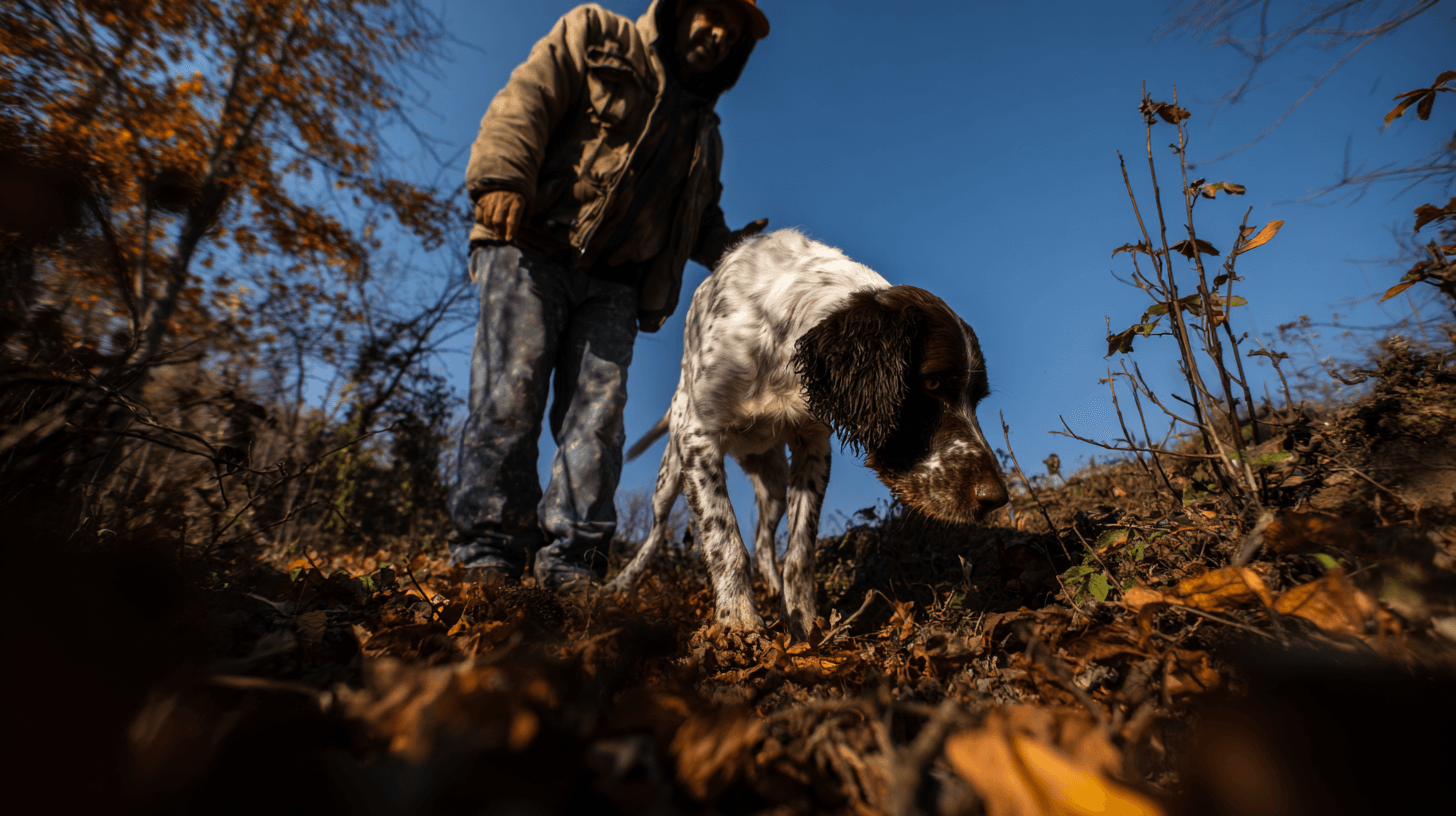
The dog stops. Its tail goes rigid. The hunter reads the stance, kneels, brushes away leaves. Beneath the soil, something is releasing a scent that only the dog could detect — molecules that drift upward through inches of earth, invisible, irresistible.
White truffles grow wild in the forests of Piedmont. No one has ever cultivated them.
And it is hunted, not grown. Despite decades of research, no one has successfully cultivated white truffles commercially. They grow only in the wild, in forests where the soil, the trees, and the climate align in ways that scientists do not fully understand. Finding them requires dogs, knowledge, and luck.
The hunters of Piedmont have been finding them for centuries. They are the keepers of a tradition that makes the truffle trade possible.
The Truffle
A truffle is the fruiting body of an underground fungus — a structure that produces spores the way a mushroom does, but beneath the soil rather than above it. The fungus lives in symbiosis with tree roots, primarily oak and hazel, exchanging nutrients in ways that benefit both organisms.
White truffles grow in a narrow range of conditions. The soil must be calcareous, well-drained, but moist. The climate must have distinct seasons. The trees must be the right species and the right age. Too much sun or too little, too wet or too dry, and the truffles do not form.
The forests of Piedmont and a few neighboring regions provide these conditions. So do scattered locations in Croatia, Slovenia, and elsewhere. Nowhere else on earth produces white truffles of comparable quality. The geography is destiny.
The truffles mature in autumn, between September and December. They grow a few centimeters underground, attached to tree roots, invisible from the surface. They announce their presence only through scent — a powerful, complex aroma that attracts the animals that will disperse their spores.
Humans cannot smell them underground. Dogs can.
The Dogs
The truffle dogs of Piedmont are not a specific breed. They are trained individuals — often mixed breeds, selected for nose, temperament, and trainability. A good truffle dog is worth more than a car. A great one is irreplaceable.
Training begins young. Puppies are introduced to truffle scent through play, learning to associate the smell with rewards. As they mature, they learn to indicate finds without digging, to work systematically through a forest, to ignore distractions. The training takes years. Not all dogs succeed.
The relationship between hunter and dog is intimate. The hunter reads the dog — its posture, its breathing, its excitement — as much as the dog reads the scent. They work together through dark forests, often at night to avoid competition, communicating in ways that outsiders cannot perceive.
When the dog finds a truffle, it stops, sniffs, indicates. The hunter approaches, praises the dog, gently moves it aside. He digs carefully — truffles bruise easily, and damage reduces value. The truffle emerges, pale and fragrant, worth more per gram than gold.
The Secrecy
Truffle hunters do not share their locations. A productive spot — a tree that produces truffles year after year — is guarded more carefully than any other secret. Hunters go out at night. They take circuitous routes. They lie about where they've been.
The secrecy is not paranoia. Truffle locations are genuinely valuable. A single tree can produce thousands of euros worth of truffles per season. Revealing its location invites poaching, competition, or sabotage. Hunters have been known to poison rival dogs.
Within families, knowledge is passed from generation to generation. A hunter teaches his son the locations, the techniques, the signs that indicate where truffles might grow. The son inherits not just knowledge but a map — a mental record of productive spots accumulated over decades.
When a hunter dies without an heir, his locations die with him. The trees continue producing, but no one knows to look there. The truffles mature, disperse their spores, and rot. The secret becomes a loss.
The Market
The white truffle trade is worth hundreds of millions of euros annually. Most of the value concentrates in a few weeks of autumn, when the truffles are fresh and the restaurants of the world compete for supply.
The Alba truffle fair, held each October and November, is the center of the trade. Buyers from Japan, America, and the Middle East bid on exceptional specimens. A single truffle can sell for tens of thousands of dollars. The prices make headlines. The hunters remain anonymous.
The anonymity is intentional. A hunter who is known to find valuable truffles becomes a target — for thieves, for tax authorities, for rivals. The most successful hunters are invisible, moving cash through networks that leave no trace, revealing nothing about their finds.
This opacity makes the trade vulnerable. Truffles from other regions, or even other species, are sometimes sold as Alba white truffles. Quality varies enormously. Buyers must trust sellers, and trust is in short supply. The market works despite its inefficiencies because the product is irreplaceable.
What Remains
The forests still produce. Every autumn, the hunters and their dogs enter the woods at night, searching for treasure that cannot be farmed, finding it through knowledge that cannot be taught in classrooms.
Climate change is shifting the conditions. Some traditional areas are becoming too dry. Some seasons produce almost nothing. The hunters adapt, seeking new territories, adjusting their timing, watching for changes in the forests they know better than anyone.
The truffles remain wild. Every attempt to cultivate them commercially has failed. The relationship between fungus, tree, and soil is too complex, too dependent on variables that cannot be controlled. The white truffle resists domestication.
This resistance is its value. A truffle can only be found, not made. The hunters and their dogs are not optional — they are essential. As long as white truffles are wanted, someone will search for them in the dark forests of Piedmont, following a dog's nose toward something that science cannot replicate and money cannot buy.
The treasure is underground, invisible, guarded by secrecy that outlasts the hunters who keep it. The dogs grow old. The hunters die. The locations are lost and found again. The truffles keep growing, indifferent to the fortunes made from finding them.
Sources
- Hall I. et al. (2007). Truffles
- Mello A. et al. (2006). Truffle biology and cultivation
- Ferrante M. (2020). The Truffle Hunters (documentary)
- Renowden G. (2005). The Truffle Book