Systems
The Tide Readers
The fishermen who follow the moon
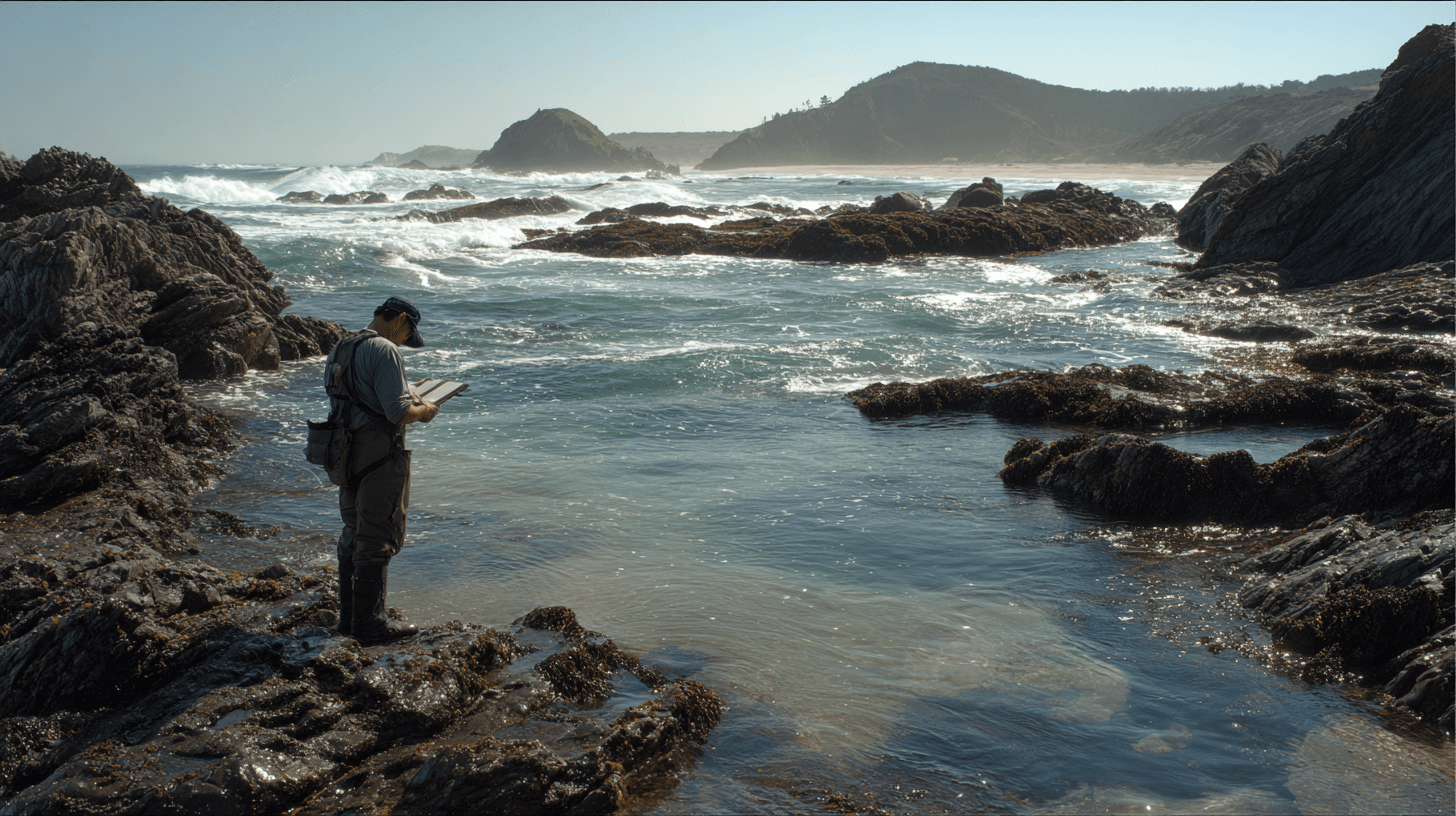
The tide pools empty. The rocks emerge. The forager knows exactly which window the sea allows.
Tidal knowledge meant survival for coastal peoples. When to fish, when to gather, when to launch canoes, when to shelter — all depended on reading the sea's rhythms.
Modern tide tables predict water heights to the centimeter. They don't predict everything.
The Timing
The basic tidal cycle — two highs and two lows per day, shifting with the moon — is ancient knowledge. Every coastal culture understood this pattern.
But the details vary by location. Geography shapes tides: funnel-shaped bays amplify them, island chains complicate them. Local knowledge tracked local patterns.
The Texture
Traditional tide readers observe more than height. The texture of water indicates current. The color suggests what the tide is carrying — silt, plankton, debris. The behavior around headlands and channels reveals conditions that tables don't capture.
This observational knowledge developed through millennia of watching. It exists in people, not instruments.
The Fishing
Fish respond to tides. Feeding patterns follow tidal flows. Traditional fishers knew when species would be available at specific locations — knowledge tied to tidal timing.
This knowledge was hyper-local. What worked at one point might fail 100 meters away. The specificity made the knowledge valuable and difficult to transfer.
The Navigation
Traditional navigators used tides to travel. Riding outgoing tides extended range. Timing passages through treacherous channels required knowing exactly when conditions allowed.
The knowledge was life-or-death. Mistiming a channel crossing meant capsizing in currents that even strong paddlers couldn't overcome.
The Prediction
Traditional tidal knowledge was predictive. Observers noted patterns over years and generations. Exceptional tides — storms, earthquakes — were remembered and informed expectations.
This empirical knowledge predated mathematical tide prediction by centuries. The patterns were known before the astronomy was understood.
The Tables
Modern tide tables are calculated from astronomical data and local measurements. They're accurate for height. They don't capture current behavior, local anomalies, or the qualitative aspects traditional readers observed.
The tables replaced traditional knowledge for most purposes. But fishers, surfers, and sailors still value the observational skill that tables don't provide.
The Reading
The skill is watching. Noticing how water moves around that rock, through that channel, at that state of tide. Building mental models from observation. Predicting from pattern.
The reading happens continuously for those who depend on the sea. The tide is always observed, always informing.
The Edge
At the water's edge, the tide turns. The waders feel the current shift. The rocks begin to cover.
The reader knows how long before the window closes. The gathering continues until exactly the moment to leave.
The tide rises. The reader walks back. The sea reclaims what it temporarily offered.
Sources
- Deshayes L. (2012). La Baie du Mont-Saint-Michel
- Larsonneur C. (1989). The Bay of Mont-Saint-Michel: A Sedimentation Model
- UNESCO World Heritage Committee (1979). Mont-Saint-Michel and its Bay
- Migniot C. (1997). Bilan des connaissances sur les sédiments de la baie