Systems
The Tea Gardens
The leaf that built empires
At 2,000 meters in the Himalayan foothills, tea bushes grow on slopes so steep that workers harvest by hand. The tea they produce is among the most prized in the world.
Darjeeling tea is not a type of tea — it is a place. The name refers only to tea grown in the Darjeeling district of West Bengal, on the slopes that rise from the Indian plains toward the Himalayan peaks. The combination of altitude, rainfall, temperature, and soil produces tea that is distinctive, delicate, and unlike anything grown anywhere else.
The plantations were established by the British in the 1850s, carved from forested slopes, worked by laborers brought from Nepal. The colonial system that created them is gone. The tea remains, grown and harvested much as it was 170 years ago, prized by connoisseurs who pay premium prices for the authentic product.
The workers who produce it earn a few dollars a day.
The Place
Darjeeling sits between 600 and 2,000 meters above sea level, on ridges that descend from the Himalayan range. The climate is cool and wet — temperatures rarely exceed 25 degrees, and the monsoon brings heavy rainfall from June through September. Mists roll through the valleys, shrouding the tea gardens in moisture that the plants absorb through their leaves.
The slopes are steep, often 45 degrees or more. The tea bushes are planted in rows that follow the contours, creating patterns visible from kilometers away. The landscape is beautiful and brutal — beautiful to see, brutal to work.
The altitude matters. Tea grown higher produces fewer leaves but more flavor. The stress of altitude, the temperature fluctuations, the thin air — all concentrate the compounds that give Darjeeling tea its distinctive character. Tea from the highest gardens commands the highest prices.
The Harvest
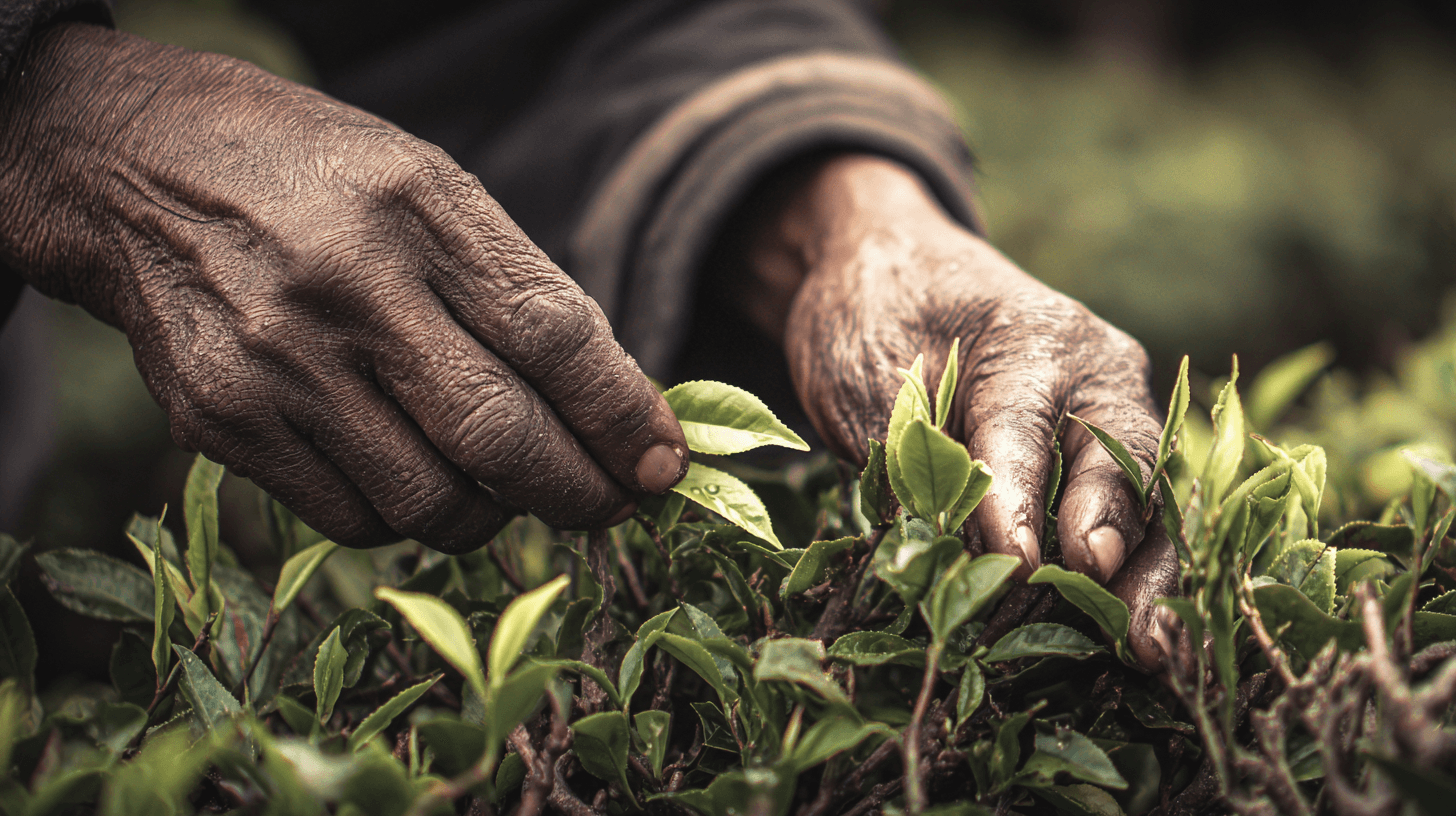
Tea is harvested by plucking — pulling the young leaves from the bush by hand. A skilled plucker can harvest 20 to 30 kilograms of fresh leaves per day, working across slopes so steep that machines cannot operate.
The harvest follows a seasonal pattern. The first flush, in spring, produces light, floral tea. The second flush, in early summer, produces the muscatel notes that define Darjeeling for many drinkers. The autumn flush produces yet another character. Each flush is distinct, valued differently, sold separately.
The pluckers are almost all women. They move through the rows with baskets on their backs, selecting the right leaves — typically two leaves and a bud — and leaving the rest to grow. The work is repetitive, skilled, and underpaid. A plucker earns roughly $3 to $5 per day, plus housing and basic amenities provided by the estate.
The system is a relic of colonialism. The estates are self-contained worlds — workers live on the property, buy from estate shops, send children to estate schools. The paternalism is real, as is the dependency. Workers have limited options. The estates provide what alternatives do not.
The Process
After plucking, the leaves are processed on the estate. The traditional method for Darjeeling is orthodox processing — withering, rolling, oxidizing, and drying the leaves in a sequence that preserves their delicate character.
The leaves arrive at the factory within hours of plucking. They are spread on racks to wither, losing moisture and becoming pliable. They are rolled, gently crushing the cell walls to release enzymes that begin oxidation. They are spread again to oxidize, developing color and flavor. They are dried to halt the process and preserve the tea.
Each step requires judgment. How long to wither depends on humidity. How hard to roll depends on the leaf. How long to oxidize depends on temperature, on the flush, on what the tea maker senses in the leaf. The best tea comes from experienced makers who understand their gardens and their leaves.
Modern machines assist the process, but human judgment remains essential. The difference between exceptional tea and ordinary tea lies in decisions made by people who have spent decades learning to make them.
The Market
Authentic Darjeeling tea is scarce. The district produces roughly 8,000 tons annually. This is a fraction of global tea production, barely enough to satisfy the connoisseur market, nowhere near enough to meet the demand for tea labeled "Darjeeling."
The discrepancy creates fraud. By some estimates, four times as much tea is sold as "Darjeeling" as the region actually produces. The fake tea comes from elsewhere — other parts of India, other countries — and is labeled to command Darjeeling prices. Enforcement is difficult. The market rewards deception.
Authentic Darjeeling has responded with certification. The Tea Board of India has established a protected geographical indication and requires estates to certify their production. This helps but does not eliminate fraud. Buyers must trust their suppliers, and trust is always vulnerable.
What Remains
The tea gardens still cover the slopes of Darjeeling. The women still pluck the leaves by hand, moving through the rows as workers have moved for 170 years. The factories still process the harvest, producing tea that connoisseurs recognize as distinct from any other.
The economics are precarious. Labor costs rise. Climate change alters growing conditions. The young people leave for cities where work is easier and pay is better. Some estates have closed. Others struggle.
But the tea remains. The combination of altitude and climate and soil and skill produces something that cannot be replicated elsewhere, something that discerning drinkers will pay premium prices to obtain. As long as that market exists, someone will tend the gardens.
Two thousand meters above sea level, on slopes too steep for machines, the tea bushes grow. The pluckers move through them, selecting leaves, filling baskets, doing work that their mothers and grandmothers did before them.
The leaf that built empires still builds livelihoods, still fills cups, still carries the taste of a place that exists nowhere else on earth.
Sources
- Griffiths P. (1967). The History of the Indian Tea Industry
- Koehler J. (2015). Darjeeling: The Colorful History and Precarious Fate of the World's Greatest Tea
- Besky S. (2014). The Darjeeling Distinction: Labor and Justice on Fair-Trade Tea Plantations
- Tea Board of India Annual Reports