Systems
The Shipbreakers
Where ships go to die
When a ship reaches the end of its life, it is driven onto a beach and torn apart by hand. The work is dangerous, poorly paid, and essential. The men who do it are called shipbreakers.
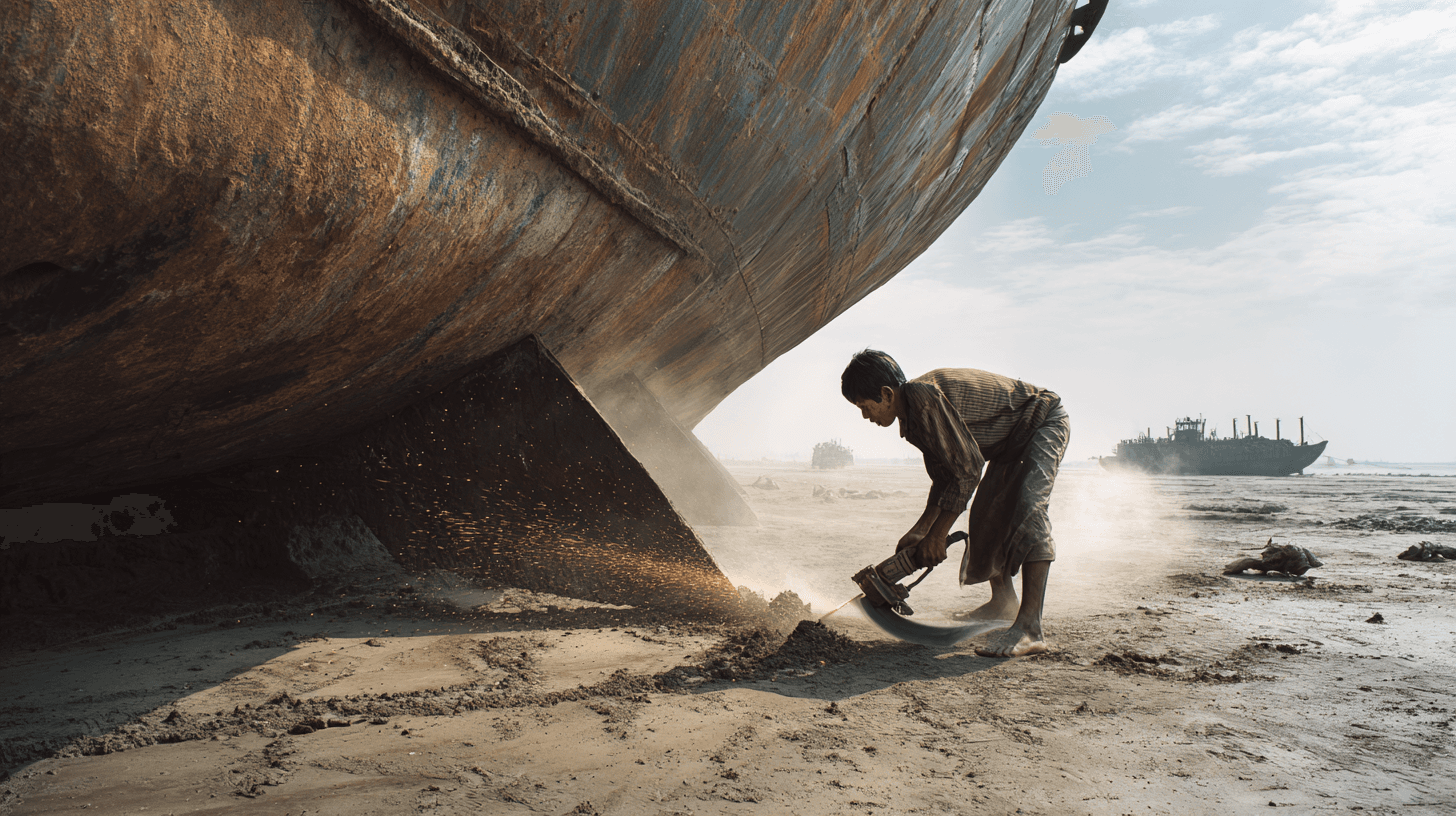
Chittagong, on the coast of Bangladesh, is where ships come to die. The beach stretches for 20 kilometers, lined with the carcasses of vessels being dismantled piece by piece. Oil tankers, container ships, cruise liners — all end up here, driven onto the sand at high tide, then cut apart by workers who earn a few dollars a day.
It is one of the most dangerous jobs on earth. It is also one of the largest recycling operations on earth. The steel from Chittagong builds the infrastructure of South Asia.
The Industry
Ship recycling — the industry prefers this term to shipbreaking — processes roughly 1,000 large vessels per year globally. Bangladesh handles about 40 percent of this volume, with most of the rest going to India, Pakistan, and Turkey. The industry exists in these countries because labor is cheap, regulations are loose, and the infrastructure for heavy industrial work is limited.
A ship arrives at the end of a long journey. It has sailed for 25 or 30 years, maintained and repaired until the cost of keeping it seaworthy exceeds its value. The shipping company sells it to a cash buyer, who sells it to a breaking yard, who will reduce it to saleable materials.
The ship makes its final voyage to the beach. At high tide, under full power, it drives itself onto the sand as far as it will go. The engines stop. The ship will never move again.
Then the cutting begins.
The Work
Shipbreaking is done largely by hand. Workers climb over the beached vessel with cutting torches, slicing through steel plates that can be inches thick. The pieces fall to the ground — or the deck below, or onto other workers. Each piece is dragged or carried to collection points, then trucked to mills for recycling.
The work is dangerous in ways that are difficult to enumerate. The torches can ignite residual fuel or chemicals in the ship's tanks. The steel pieces can fall unpredictably. The structures can collapse as supports are cut away. Asbestos, lead paint, PCBs, and other toxic materials contaminate the work environment. Workers fall from heights, are crushed by falling steel, are burned, are poisoned.
Safety equipment is minimal. Hard hats and gloves are common; respirators and harnesses are rare. Training is informal — workers learn by watching and doing, acquiring skills that keep them alive or failing to acquire them. The injury rate is impossible to calculate accurately because many injuries go unreported. The death rate is estimated at one worker per week across the Chittagong yards.
The workers earn perhaps $5 per day. They come from the poorest regions of Bangladesh, driven by desperation to accept work that others will not do. They live in makeshift settlements near the yards, sending money home to families they rarely see. They are essential to a global industry that would prefer not to acknowledge them.
The Materials
A single large ship contains 20,000 to 40,000 tons of steel. Recycled, this steel becomes rebar, beams, plates — the raw material for construction across South Asia. Bangladesh imports almost no virgin steel for construction. It does not need to. The ships provide enough.
Beyond steel, the ships yield other materials. Copper wiring, brass fittings, aluminum superstructures, furniture, electronics, lifeboats — everything is salvaged and sold. The local economy around Chittagong depends on this flow of materials. Entire markets exist to sell ship-sourced goods.
The environmental cost is significant. Oil and chemicals leak into the beach and water. Heavy metals contaminate the soil. Asbestos fibers drift in the air. The workers absorb toxins that will shorten their lives. The ecosystem of the coast has been transformed — polluted, degraded, yet economically vital.
The Alternatives
Rich countries have shipbreaking regulations that make the work expensive. Ships must be decontaminated before breaking. Workers must be protected. Waste must be disposed of properly. These requirements add cost — cost that shipowners avoid by selling their vessels to yards in Bangladesh, India, or Pakistan.
International conventions attempt to regulate the trade. The Hong Kong Convention, adopted in 2009, sets standards for safe and environmentally sound ship recycling. But enforcement is weak, and the economic incentives point toward the cheapest option.
Some yards in Turkey and elsewhere have achieved higher standards. They prove that shipbreaking can be done more safely. But they cannot compete on price with yards that externalize the costs onto workers and the environment.
The industry continues as it is because the alternatives cost more and because the workers have no power to demand better conditions. The ships keep coming. The cutting continues.
What Remains
The beach at Chittagong is a strange landscape — part industrial site, part graveyard, part marketplace. The hulks of ships in various stages of dismemberment line the shore. Workers swarm over them like ants on carcasses. The sound of cutting torches and falling steel fills the air.
The workers know the risks. They do the work anyway because the alternative is poverty more absolute than the dangers they face. The calculation is grim but rational. A few dollars a day is better than no dollars. A dangerous job is better than no job.
The ships that once sailed the world's oceans end their existence here, transformed from vessels into raw materials, from structures into commodities. The transformation is necessary — the world produces too many ships and too little steel. Someone must do this work.
The question is not whether ships will be broken but how, and at what cost to the people who break them. For now, the cost falls on the poorest workers in the poorest yards in the poorest countries. The steel flows north. The profits flow away. The workers remain on the beach, cutting, until the ships are gone or they are.
Sources
- Rousmaniere P. and Raj N. (2007). Shipbreaking in the Developing World
- Hossain M. and Islam M. (2006). Ship Breaking Activities in Bangladesh
- NGO Shipbreaking Platform Annual Reports
- Buerk R. (2006). Breaking Ships: How Supertankers and Cargo Ships Are Dismantled