Returns
The Seed Keepers
The library that could outlast civilization
Inside an Arctic mountain, a vault holds seeds from every food crop on earth. It is designed to survive anything — war, climate collapse, the fall of nations.
The Svalbard Global Seed Vault is carved into the permafrost of a Norwegian island 1,300 kilometers from the North Pole. The location was chosen for its remoteness, its political neutrality, and its cold. The mountain is frozen year-round. Even if the refrigeration fails, the seeds will stay cold. Even if civilization collapses, the vault will remain.
Inside are 1.3 million seed samples from almost every country on earth — more than 6,000 species, hundreds of thousands of varieties. The collection includes ancient grains that humans have cultivated for 10,000 years and modern hybrids released last year. It is the most complete backup of agricultural biodiversity ever assembled.
The vault has never been used for its intended purpose. That is the point.
The Logic
Seeds are fragile. They can be destroyed by war, lost to natural disaster, allowed to deteriorate through neglect. Crop varieties that took centuries to develop can disappear in a single generation. Once lost, they cannot be recovered.
This has happened before. The Syrian civil war destroyed the gene bank in Aleppo, one of the oldest collections in the Middle East. Political instability has threatened collections in Iraq, Afghanistan, and the Philippines. Climate change is making storage conditions unpredictable. The diversity that agriculture depends on is constantly at risk.
The Svalbard Vault is the backup of backups. Countries maintain their own seed banks. When those banks face threats, they send duplicates to Svalbard. The vault does not own the seeds; it simply stores them. If a collection is destroyed, the duplicates can be retrieved and replanted.
The logic is the same as backing up computer files — except the files are irreplaceable and the backup is designed to survive the end of the world as we know it.
The Architecture
The vault is built to be indestructible. The entrance tunnel runs 130 meters into the mountain. The storage chambers are at -18 degrees Celsius, kept cold by the permafrost even without electricity. The seeds are sealed in aluminum packets, placed in boxes, stored on shelves in rooms designed to last centuries.
The location is above sea level even if all the ice on earth melts. The rock is stable, unlikely to crack or shift. The site is remote enough to be protected from most human conflicts but accessible enough to be maintained. The design assumes that things will go wrong — electricity will fail, funding will lapse, nations will fall — and ensures that the seeds will survive anyway.
The vault has no permanent staff. Deposits are made on scheduled days when teams fly in from the mainland. The rest of the time, the mountain is empty, the seeds waiting in the dark, preserved by cold and time.
The Collection
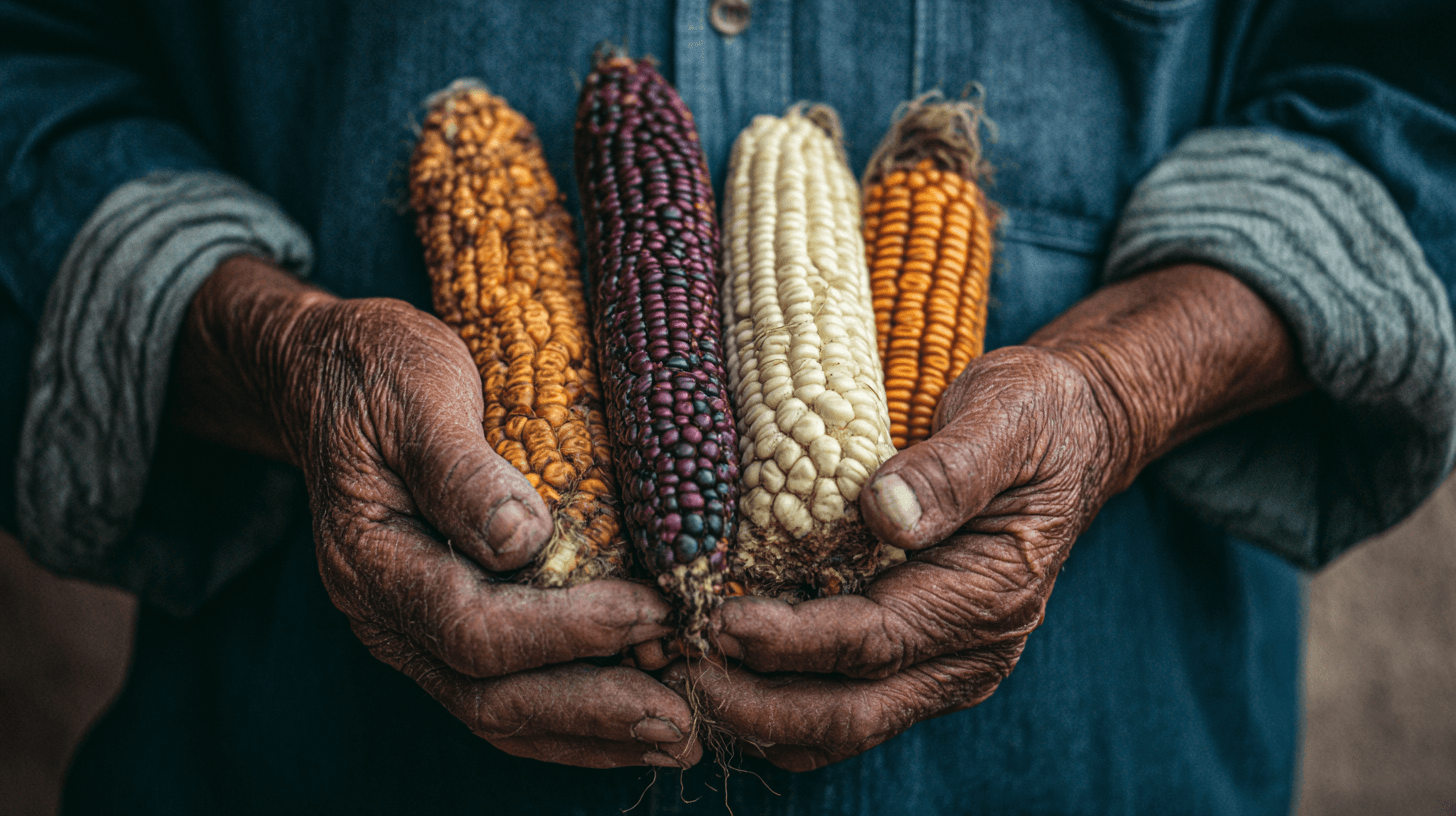
The diversity inside the vault is staggering. There are 150,000 varieties of wheat. 40,000 varieties of rice. Thousands of varieties of maize, barley, sorghum, beans, lentils. Crops that feed billions and crops that feed only small communities in isolated regions.
Each variety represents adaptation — to a particular soil, a particular climate, a particular pest or disease. The wheat that grows in one valley may not grow in the next. The rice that tolerates flooding may not tolerate drought. The diversity is not redundancy; it is options. When conditions change, the options matter.
Climate change is already forcing adaptation. Crops need to grow in different conditions than they did a generation ago. The genes that will make this possible exist somewhere — in traditional varieties that farmers maintained for centuries, in wild relatives that have never been cultivated. Finding them requires having them. The vault ensures they will be available.
The Use
The vault was used once, in 2015. The Syrian gene bank, evacuated from Aleppo to Morocco as civil war consumed the country, requested its deposits back. Seeds that had been sent to Svalbard for safekeeping were returned to the reconstituted collection. The system worked exactly as designed.
The hope is that it will never be needed again. Every retrieval means something has gone wrong — a collection has been destroyed, a country has faced crisis. The vault's success is measured by its silence, by the years that pass without withdrawals.
But the seeds are there. If the worst happens — if gene banks are destroyed, if collections are lost, if the agricultural diversity that humanity depends on is threatened — the backup exists. The mountain will hold.
What Remains
The vault is a strange kind of monument — a structure built for the future, designed by people who will be dead long before its purpose is tested. It assumes that civilization will face crises, that nations will fail, that systems will break. It assumes that despite all this, someone will remain who needs seeds, who can plant them, who can start again.
This is not optimism. It is realism combined with preparation. The people who built the vault do not know what disasters will come. They only know that disasters come. The vault is there for afterward.
Inside the mountain, 1.3 million packets wait. The cold preserves them. The darkness protects them. The mountain surrounds them like a fist around something precious.
The seeds are patient. They can wait for centuries. They are designed to survive what we cannot predict, to remain when we are gone, to grow again when someone finds them and remembers what they are for.
This is what humans do at their best — build for a future they will not see, prepare for disasters they hope will not come, preserve what matters even when preservation seems impossible.
The vault is a kind of faith. The seeds are what the faith protects.
Sources
- Fowler C. (2016). Seeds on Ice: Svalbard and the Global Seed Vault
- Global Crop Diversity Trust Annual Reports
- Westengen O. et al. (2013). Safeguarding the Future of Global Crop Diversity
- Nordgen (2020). The Svalbard Global Seed Vault: 10 Years