Systems
The Salt Ponds
The harvest of the sun
On the Atlantic coast of Brittany, salt is still harvested by hand from shallow ponds. The paludiers who do this work practice techniques unchanged since the 9th century.
Salt is essential to life and was once worth fortunes. The ability to produce it determined the wealth of nations. Wars were fought for salt. Trade routes were built around it. The white crystals that we now buy for pennies were once as valuable as silver.
Industrial production has made salt cheap and abundant. Mines and evaporation plants produce quantities that traditional methods cannot match. The economics should have killed artisanal salt making long ago.
In Guérande, on the coast of Brittany, the tradition survives. The paludiers — salt farmers — still work their shallow ponds, still rake crystals by hand, still produce salt that commands premium prices because it is different from what machines produce. The work is ancient. The market is modern.
The Marais
The salt marshes of Guérande — the marais salants — cover roughly 2,000 hectares along the Atlantic coast. The landscape is geometric: rectangular ponds separated by low dikes, connected by channels that control the flow of seawater. The system is entirely artificial, constructed over centuries, maintained by constant labor.
Seawater enters the system through primary channels, filling storage ponds where the sun begins evaporation. The water flows through progressively smaller and shallower ponds, concentrating as it goes. By the time it reaches the final harvesting ponds — the oeillets — the salt concentration has increased tenfold.
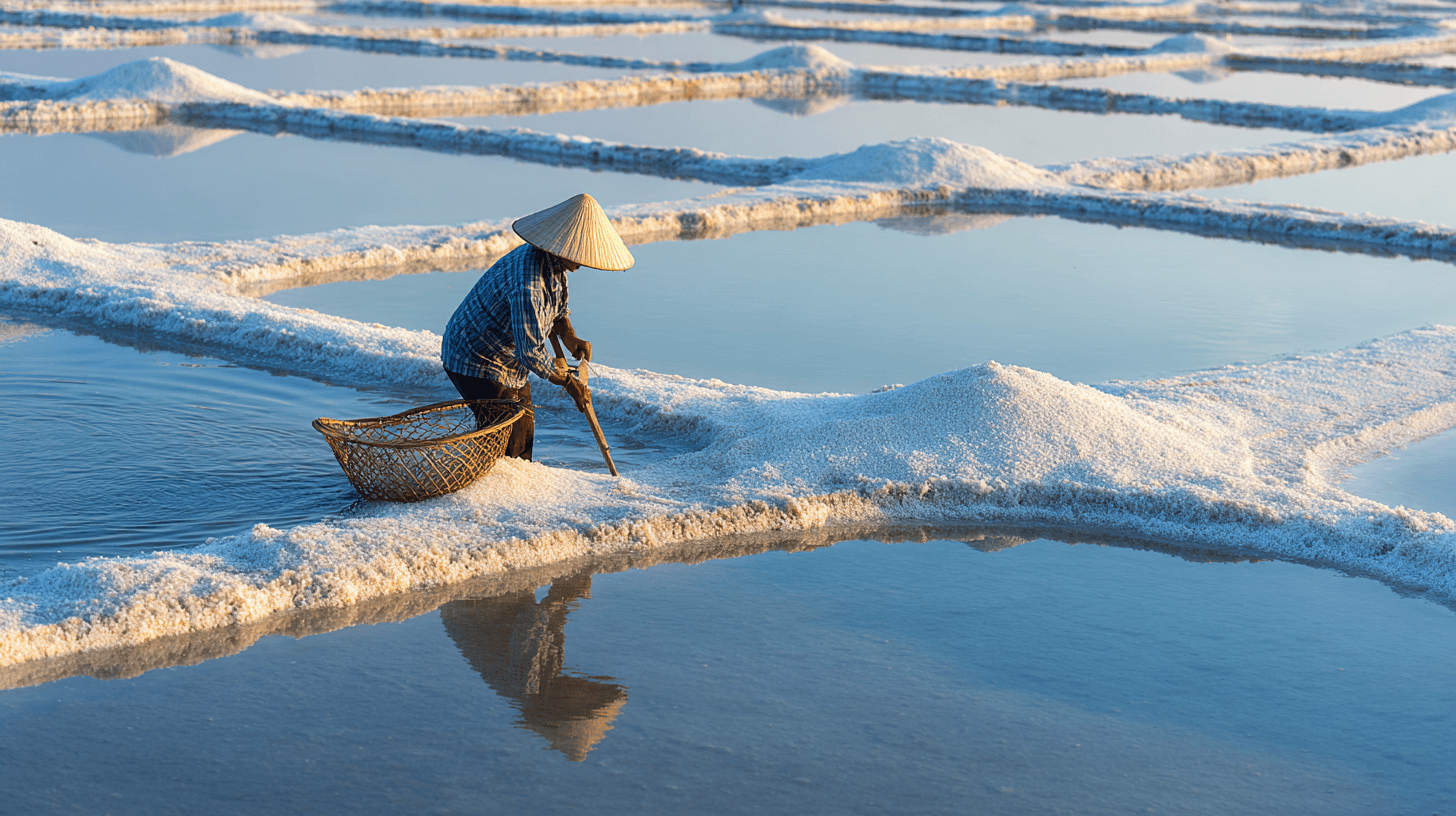
The oeillets are shallow, just a few centimeters deep. The sun and wind evaporate the water, leaving crystals that the paludier harvests. The coarse gray salt — gros sel — sinks to the bottom. The delicate white fleur de sel crystallizes on the surface, skimmed off before it sinks.
The infrastructure is medieval. The ponds were first constructed in the 9th century, when Carolingian monks began systematic salt production here. The basic design has not changed. The dikes and channels require constant maintenance, but the system they form is the same system that has operated for 1,200 years.
The Work
A paludier's year follows the salt. Winter and spring are for maintenance — repairing dikes, cleaning channels, preparing ponds. The harvest season runs from June to September, when the sun is strong enough and the rain infrequent enough for evaporation to exceed precipitation.
The harvest itself is simple but demanding. The paludier uses a wooden rake — a las — to draw the salt across the pond bottom to collection points. The motion is rhythmic, repeated thousands of times per day. The salt is heavy, the ponds are extensive, the work continues for hours under summer sun.
Fleur de sel requires different technique. It forms a thin crust on the water's surface that must be skimmed before the wind disturbs it or the crystals sink. The timing is precise. The harvest happens in late afternoon when the day's evaporation has formed the crust but before evening dew dissolves it.
The yield depends on weather. A sunny, windy summer produces abundant salt. A rainy summer produces little. The paludier cannot control the conditions, only respond to them. Some years are good; some are poor. The variability is accepted as part of the work.
The Product
Guérande salt is different from industrial salt. The gray color comes from clay in the pond bottoms, which contributes minerals absent in refined salt. The moisture content is higher. The crystals are irregular. The flavor is more complex, with mineral notes that industrial salt lacks.
Fleur de sel is particularly prized. The delicate crystals, harvested from the surface, have a flavor and texture unlike any other salt. Chefs pay premium prices for it, using it as a finishing salt — the final addition before serving, where its character can be tasted.
The prices sustain the tradition. Guérande gros sel sells for several times the price of industrial salt. Fleur de sel sells for ten times more. The economics work because consumers will pay for quality and authenticity that mass production cannot provide.
The production is certified and protected. The Guérande geographic indication guarantees origin and method. The paludiers must follow traditional techniques — no machines, no additives, no shortcuts. The protection creates value by ensuring authenticity.
The Community
Roughly 300 paludiers work the Guérande marshes. They are organized in cooperatives that handle marketing and sales, allowing individual producers to focus on production. The cooperatives also maintain common infrastructure and advocate for the industry's interests.
The work attracts newcomers. Young people, often from outside the region, are choosing to become paludiers. The lifestyle appeals — outdoor work, connection to tradition, environmental sustainability. The economics are viable if not lucrative. The community is not shrinking.
The training takes time. A new paludier must learn the marshes, the weather, the techniques. The knowledge cannot be acquired from books. It comes from seasons of work, from mistakes and corrections, from the accumulation of experience that only time provides.
What Remains
The marshes remain, geometric and ancient, covering the same coastal land they have covered for 1,200 years. The infrastructure is not original — every dike has been rebuilt many times — but the design is original. The form persists.
The paludiers remain, fewer than in past centuries but still present, still working the ponds as their predecessors worked them. The tools are the same. The techniques are the same. The product is the same. Only the markets have changed.
The salt remains, crystallizing in the summer sun as it has crystallized since the monks first built these ponds. The chemistry is constant. The process is constant. The harvest varies with the weather but always comes.
The tradition remains, protected and documented, recognized as heritage worth preserving. Whether it would survive without protection is uncertain. With protection, it continues — a living demonstration that ancient methods can work in modern markets, that quality can compete with quantity, that some things are worth doing the old way.
The sun shines on Guérande. The water evaporates. The salt crystallizes. The paludier rakes it across the clay, gathering what the sea and sun have made. The harvest of the sun, as it has been harvested for twelve centuries, as it may be harvested for twelve more.
Sources
- Lemonnier P. (1980). Les Salines de l'Ouest
- Buron G. (2000). Bretagne des Marais Salants
- Kurlansky M. (2002). Salt: A World History
- UNESCO Intangible Cultural Heritage Committee Reports