Systems
The Sake Masters
The winter monks who read fermentation by sound
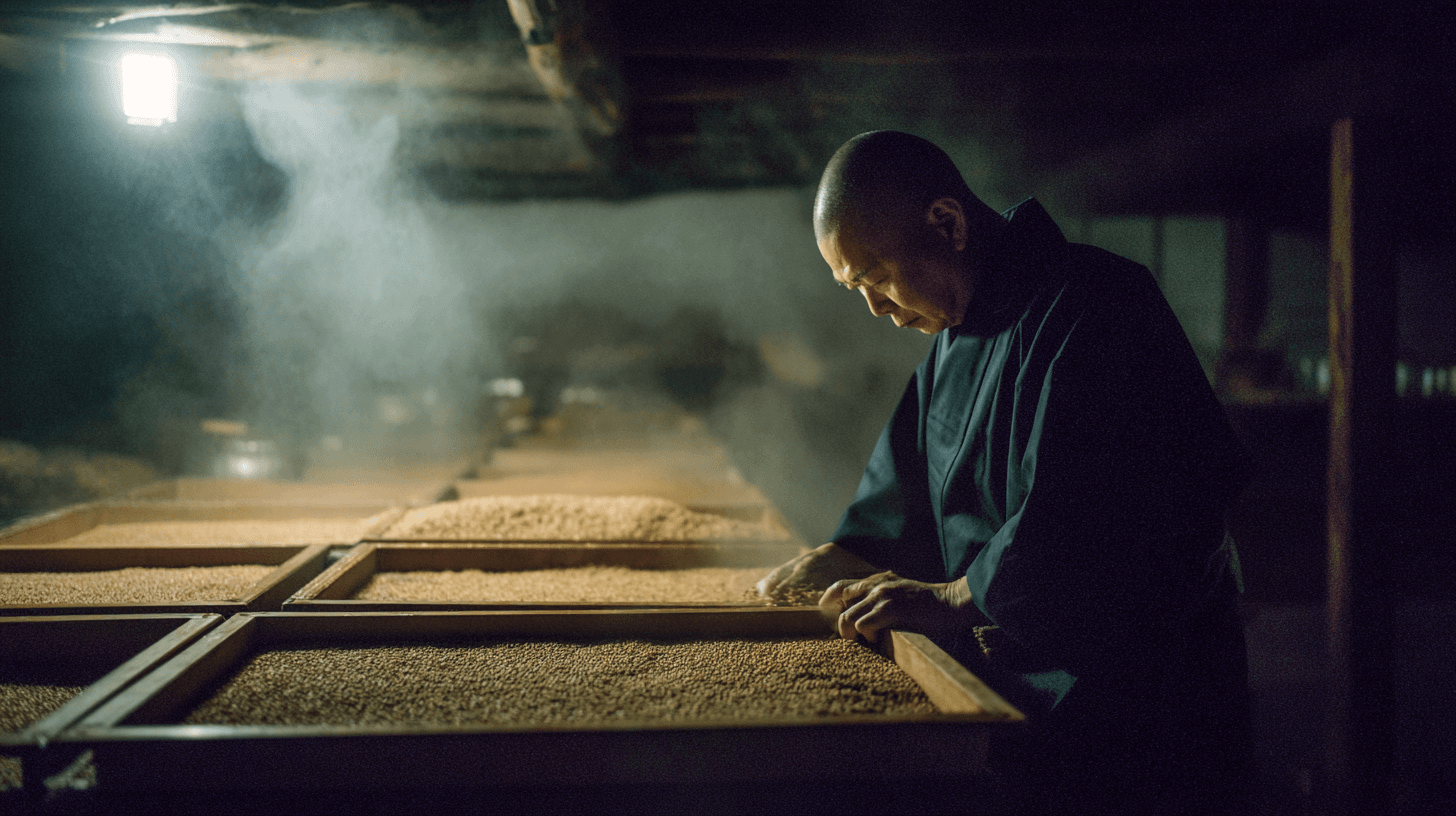
The toji wakes at 3 AM to check the koji room. He touches the rice, smells the air, adjusts the temperature by feel.
Sake brewing is uniquely complex. Unlike beer or wine, sake requires simultaneous saccharification and fermentation — the koji mold converting starch to sugar while yeast converts sugar to alcohol. Managing both processes in parallel requires extraordinary skill.
The Parallel
Most fermentation is sequential: malting converts grain starch to sugar, then yeast ferments the sugar. Sake's parallel fermentation achieves higher alcohol content but demands precise control.
The timing is everything. Too much sugar overwhelms yeast. Too little starves it. The toji manages the balance through weeks of fermentation.
The Koji
Aspergillus oryzae — the koji mold — is Japan's national microorganism. It grows on steamed rice, producing enzymes that break down starch. The koji room is maintained at specific temperature and humidity.
The koji maker works in conditions that feel tropical. The work is physical, precise, and continuous. The mold needs attention around the clock.
The Toji
The toji is the master brewer. Traditionally, toji came from agricultural regions and worked seasonal brewery jobs during winter when farming stopped.
The toji system created guilds — regional traditions with distinctive techniques. Each guild developed approaches suited to local conditions, water, and rice.
The Intuition
Traditional toji worked without thermometers or hydrometers. They judged temperature by touch, fermentation progress by sound, rice quality by sight and smell. The judgment took decades to develop.
Modern breweries have instruments everywhere. But many still rely on experienced toji to interpret what instruments measure. The number tells less than the experienced hand.
The Water
Sake is mostly water. Water chemistry affects every aspect of brewing. Traditional regions developed around water sources with suitable mineral content.
The famous brewing regions — Nada, Fushimi, Niigata — each have distinctive water. The regional styles reflect water as much as technique.
The Industrial
Large-scale sake production industrialized the process. Machines replaced human judgment. Consistency replaced variation. Market share shifted to industrial producers.
The craft sake movement pushes back. Small breweries emphasize traditional methods, distinctive styles, human judgment over mechanical consistency.
The Future
The toji system faces demographic challenge. Young people don't pursue decades of apprenticeship. The guilds shrink.
Some breweries train new toji internally. Others rely increasingly on scientific brewing degrees. The knowledge persists through changed transmission.
The Night
The toji walks the brewery at 3 AM. Fermentation tanks bubble. The sound tells him what he needs to know.
He adjusts. He waits. He watches. The sake develops through attention.
The parallel fermentation continues. The koji works. The yeast works. The master watches both.
Morning comes. The day shift arrives. The toji has already made the decisions that matter.
Sources
- Japan Sake and Shochu Makers Association; Niigata Sake Brewers Guild; Interviews with toji masters