Systems
The Sacred Groves
The forests that fear protects
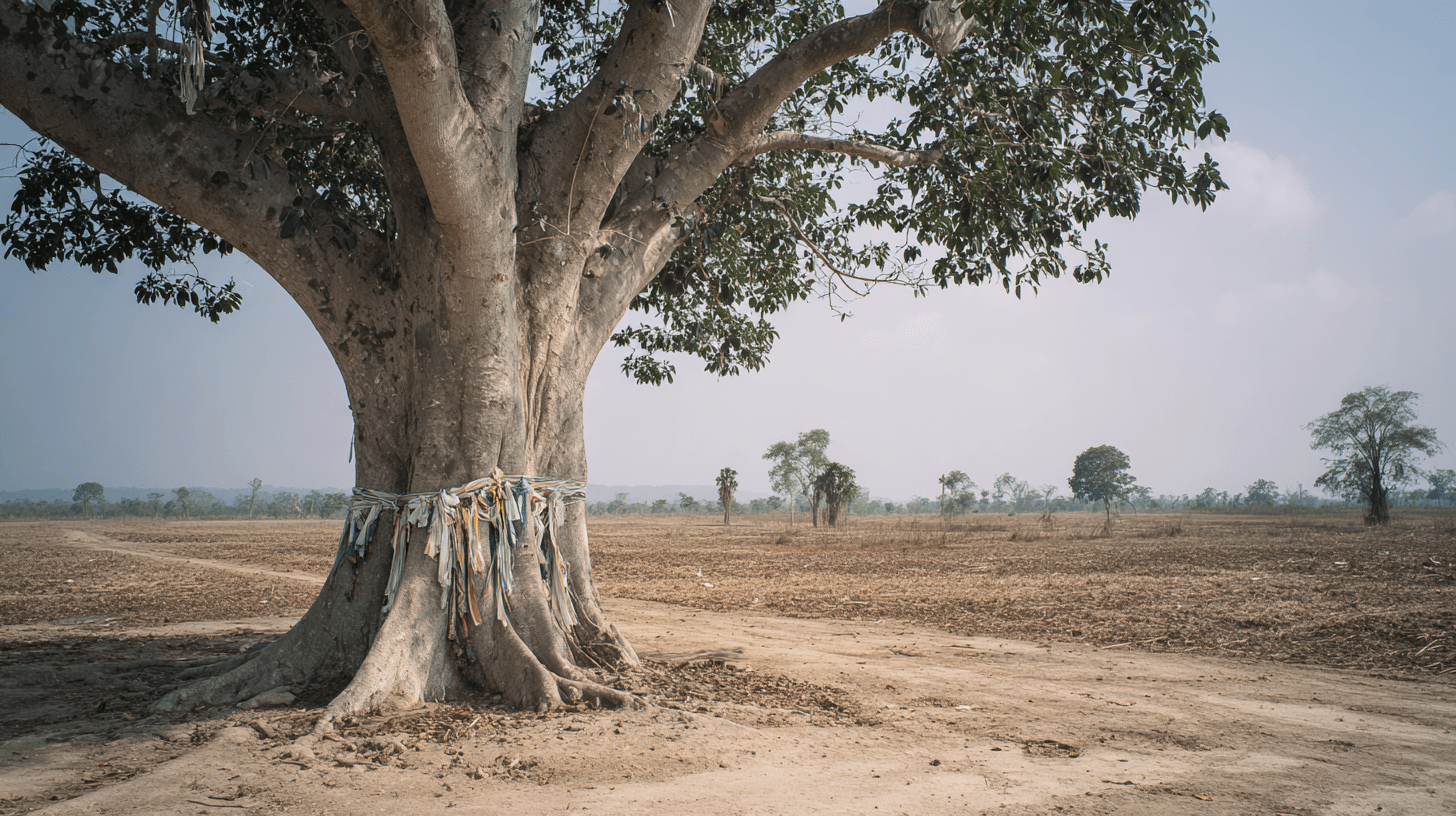
The forest fragment stands in cleared farmland. No one cuts there. The gods live in those trees.
Sacred groves — patches of forest protected by religious or spiritual designation — exist across cultures. In landscapes otherwise transformed by agriculture, these fragments persist. The protection is belief, not law.
The Distribution
Sacred groves are documented across Africa, India, Japan, and elsewhere. India alone has an estimated 100,000-150,000 sacred groves. West African countries maintain groves associated with traditional religions.
The fragments range from small clusters of trees to substantial forest patches. Collectively, they represent significant conservation.
The Protection
The protection mechanisms vary. Some groves are abodes of deities — cutting trees would offend the gods. Others contain burial sites of ancestors. Some are simply forbidden zones where entry brings misfortune.
The prohibition doesn't require enforcement. Belief is sufficient. People don't cut what they fear to cut.
The Biodiversity
Sacred groves often harbor biodiversity that has disappeared from surrounding areas. They may be the last refuges for forest species in agricultural landscapes.
The ecological value was not the original purpose. The groves were protected for spiritual reasons. The biodiversity is consequence, not intent.
The Threat
Sacred groves face increasing pressure. Conversion to Christianity or Islam may remove the spiritual protection. Economic pressure makes land valuable. Younger generations may not hold traditional beliefs.
When belief erodes, the groves become just trees. Just trees get cut.
The Conversion
Some communities are converting spiritual protection to legal protection. Sacred groves become community forests with formal rules. The protection changes basis but continues.
The conversion may preserve the grove while losing something. Legal protection and spiritual protection are not the same thing.
The Study
Ecologists study sacred groves as natural experiments. What survives in protected fragments? How does protection without management differ from conservation with active intervention?
The groves provide baselines — glimpses of what landscapes contained before transformation.
The Recognition
UNESCO and conservation organizations increasingly recognize sacred natural sites. The recognition validates traditional conservation while potentially changing its character.
Recognition brings attention. Attention can protect or commodify. The outcomes vary.
The Grove
The trees stand. Generations have passed beneath them. The designation persists.
Around the grove, the landscape has transformed. Fields, roads, buildings. The fragment remains — an island of what was.
The gods may or may not live there. The trees certainly do. The protection, whatever its basis, has worked.
The grove persists. The belief that protects it persists or doesn't. The trees wait to see which.
Sources
- Campbell M. (2005). Sacred Groves for biodiversity conservation in Ghana
- Wadley R. & Colfer C. (2004). Sacred forest, hunting, and conservation in West Kalimantan
- Sheridan M. (2008). The dynamics of African sacred groves
- Chouin G. (2002). Sacred groves in history: Pathways to the social shaping of forest landscapes