Systems
The Rope Bridges
The paths across the void
The Inca built bridges from grass. One still spans the Apurímac gorge, rebuilt each year using techniques 500 years old. It is the last of its kind.
The Q'eswachaka bridge hangs 28 meters above the Apurímac River, a suspension span woven from ichu grass by the communities that have maintained it for centuries. It is the last remaining Inca rope bridge, a survivor from a network that once connected the empire across some of the world's most difficult terrain.
The bridge is rebuilt every June. Four communities gather, harvest grass, braid ropes, and construct the span in three days of communal labor. The work follows traditions that predate the Spanish conquest. The bridge that hangs when they finish is new, but the knowledge that built it is old.
The Q'eswachaka is not a museum piece. It is a working bridge, still used by the communities that maintain it. It is also a UNESCO-recognized heritage practice, documented and protected as one of humanity's irreplaceable traditions.
The Structure
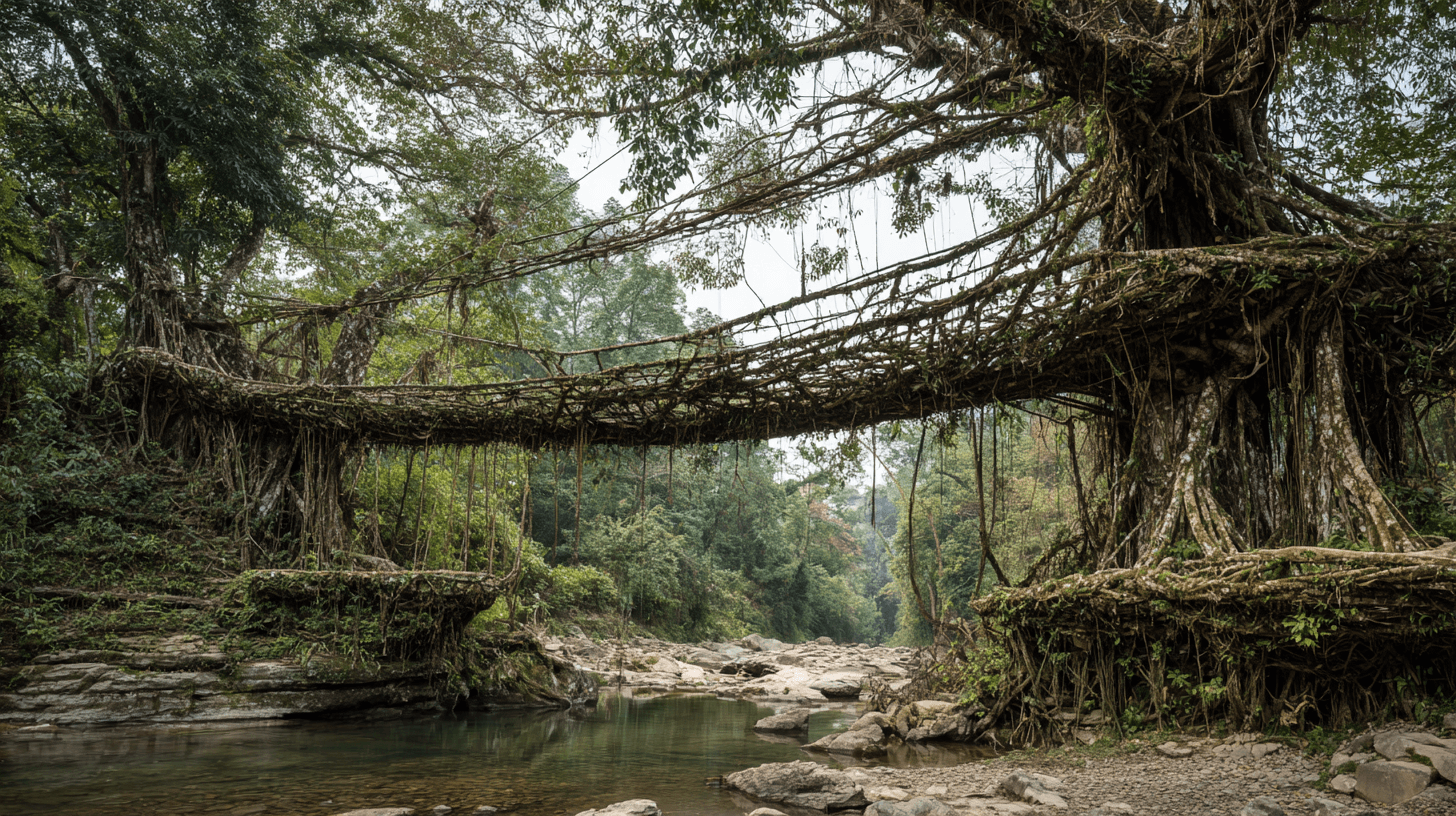
An Inca rope bridge is an engineering achievement. The main cables — thick braided ropes of ichu grass — anchor on both sides of the gorge and suspend the walkway between. Smaller ropes form the floor and the handrails. The entire structure is woven, flexible, and remarkably strong.
The Q'eswachaka spans about 30 meters. The cables are 40 centimeters in diameter, braided from thousands of smaller cords, each cord braided from grass fibers. The layering of braid upon braid creates strength that individual fibers cannot provide. A finished cable can support tons of weight.
The flexibility is intentional. A rigid bridge would tear itself apart in the winds that sweep the gorge. The rope bridge sways and bounces, absorbing forces that would break stone or steel. Walking across is disconcerting — the motion is constant — but the structure is sound.
The materials are entirely organic. Ichu grass grows abundantly on the high puna above the canyon. The grass is harvested, dried, and braided into rope. No metal, no synthetic materials, no industrial inputs. The bridge is built from what the landscape provides.
The Rebuilding
Each June, during the dry season, the communities gather for the Qeswachaka festival. The four ayllus — traditional Andean community units — each take responsibility for different parts of the work. The division follows patterns established before anyone living can remember.
In the weeks before the festival, families harvest ichu grass and braid it into small cords. Each household contributes according to its capacity. The cords are collected and braided into larger ropes at the festival itself. The process is collective at every stage.
The old bridge is cut down on the first day. The cables fall into the gorge, where the river will carry them away. Nothing is salvaged; everything is renewed. The bridge that served for a year is gone.
Over the next three days, the communities construct the new bridge. The main cables are braided and hauled across the gorge. The walkway is woven onto the cables. The handrails are attached. By the end of the third day, the new bridge is complete.
The work is dangerous. Men hang from the cables over the gorge, weaving and adjusting. A fall would be fatal. But the techniques are refined over centuries. The workers know what they are doing. Accidents are rare.
The Survival
The Inca built hundreds of rope bridges across their mountain empire. The bridges carried armies, messengers, and trade goods across gorges that would otherwise be impassable. They were essential infrastructure, maintained by communities under imperial obligation.
The Spanish destroyed most of them. The conquerors cut bridges to impede resistance, and the communities that had maintained them lost the obligation to rebuild. Within decades, the network was gone.
The Q'eswachaka survived because its communities chose to continue. They were not forced; they simply did not stop. The annual rebuilding continued through the colonial period, through independence, through the changes of the 20th century. The tradition persisted because the people persisted.
The survival is remarkable. For 500 years, without external requirement, the communities have gathered each June, braided their ropes, and rebuilt their bridge. The practice is older than the United States, older than most of the world's nations, maintained purely by choice.
The Meaning
The bridge serves practical purpose — it crosses the gorge — but its meaning exceeds its function. The annual rebuilding is a reaffirmation of community, a demonstration of collective capability, a connection to ancestors who did the same work.
The skills the work requires are not common. The braiding techniques, the structural knowledge, the coordination of communal labor — these are transmitted through practice, learned by doing, maintained only by continuing to do. Each generation that participates acquires what the previous generation holds.
The four communities that maintain the bridge are connected by the work. The festival brings them together annually, reinforcing relationships that span the gorge. The bridge is social infrastructure as much as physical infrastructure.
What Remains
The bridge remains, rebuilt each year, spanning the gorge as it has spanned it for centuries. The current bridge is new — woven this June — but the practice is old. The form persists even as the material renews.
The communities remain, gathering each year, contributing labor and materials, maintaining traditions that have no external enforcement. They do it because they have always done it, because it matters to them, because stopping would mean losing something that cannot be recovered.
The knowledge remains, held in hands that have braided grass and woven walkways, passed through demonstration from generation to generation. The knowledge has no other repository. It exists only in practice.
The gorge remains, deep and impassable by any other means. The river flows below. The wind sweeps through. The bridge sways in the air, connecting what would otherwise be separate, doing what it was designed to do 500 years ago.
The last Inca rope bridge. Still there. Still working. Still rebuilt each year by people who choose to continue what their ancestors began. For as long as they continue, the bridge will cross the void.
Sources
- Vega G. (1609). Comentarios Reales de los Incas
- Hyslop J. (1984). The Inka Road System
- UNESCO Intangible Cultural Heritage (2013). Q'eswachaka Bridge
- Kania N. (2016). Woven Bridges of the Andes