Systems
The Rice Terraces
The mountains that became stairs
Water enters at the top and flows down for two thousand years.
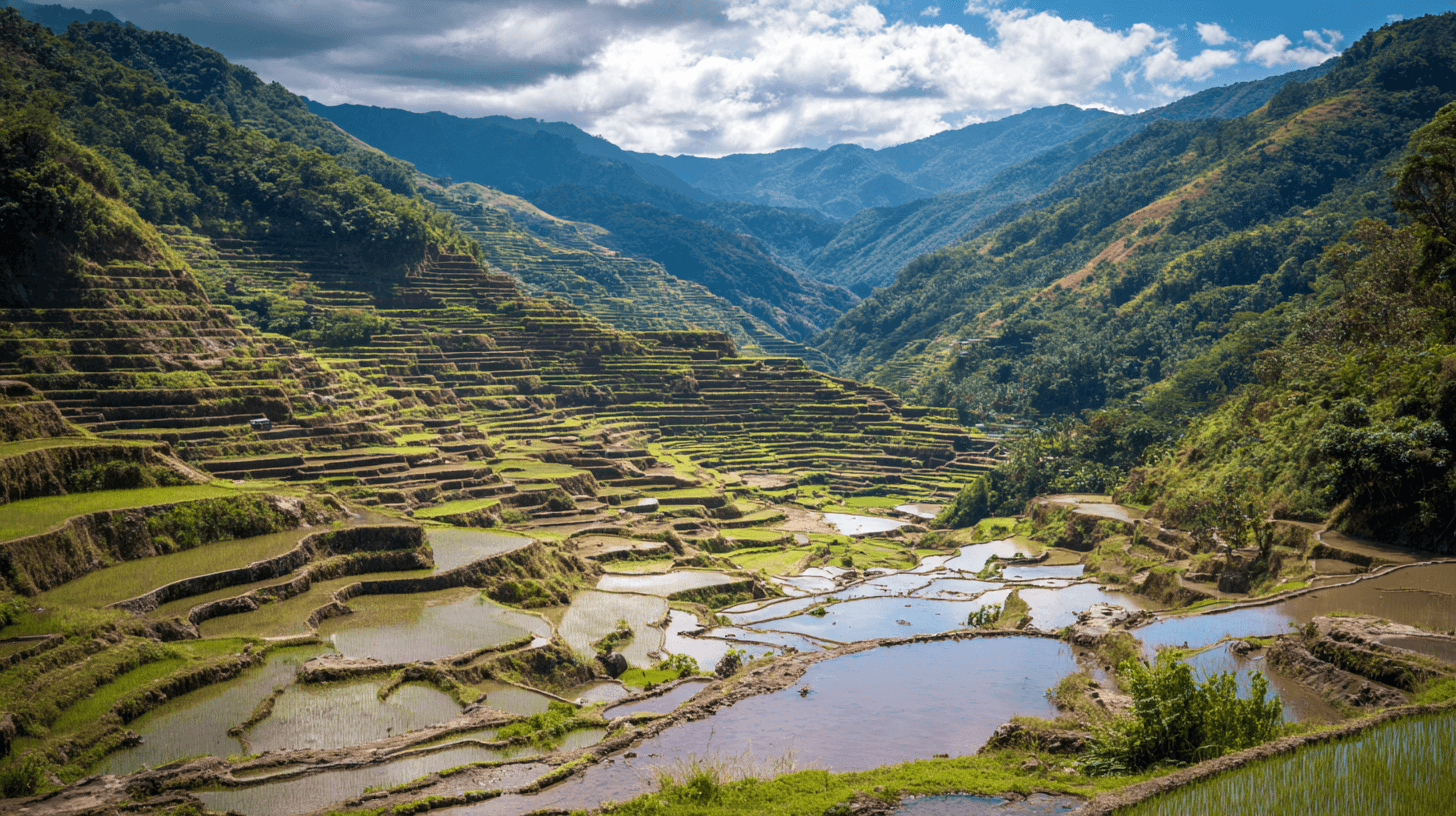
The rice terraces of Ifugao are not fields. They're a water management system carved into mountains over millennia. Hand-built stone walls. Hand-dug channels. An irrigation network that moves water through thousands of vertical meters without pumps.
The Engineering
The terraces follow contours, wrapping around mountainsides in sinuous curves. Each terrace is level within centimeters — essential for rice, which must be flooded to precise depths.
Water enters from forests at the summit. It flows through channels to the highest terraces, ponds there, overflows to the next level, continues down. The system is gravity-powered and self-regulating.
The Scale
The Ifugao terraces cover approximately 10,000 hectares. If the terrace walls were laid end to end, they'd circle half the Earth. The construction represents millions of person-days of labor, accumulated over centuries.
UNESCO designated them a World Heritage Site in 1995 — one of the few cultural landscapes to receive the designation based on continuing traditional use.
The Maintenance
The terraces require constant maintenance. Walls must be repaired. Channels must be cleared. The forest watershed that supplies water must be protected.
Traditionally, this labor was distributed through community obligation. Everyone worked because the system only functions collectively.
The Pressure
Young people leave for cities. Wage labor pays better than rice farming. The terrace population ages.
Less labor means less maintenance. Walls crumble. Channels clog. Some terraces have been abandoned.
The Economics
Rice from the terraces costs more to produce than rice from lowland paddies. The yields are lower, the labor higher. Market competition favors industrial production.
Some farmers have shifted to vegetable crops that command better prices. Others rely on tourism income to subsidize rice growing. The pure economics of terrace rice don't work.
The Water
The irrigation system depends on watershed forests. The forests trap rainfall, releasing it gradually through the dry season. Cut the forests and the water flow becomes erratic — floods during rain, drought between.
Logging and land conversion threaten the watershed. No watershed, no terraces.
The Present
The terraces still function. Rice is still grown. Water still flows down the mountain.
But the system is stressed. The balance between labor inputs and outputs, between forest preservation and development pressure, between tradition and economics — these balances are shifting.
The Future
The terraces could survive indefinitely if maintained. The engineering is sound. The water supply is renewable. The problem is not technical.
The problem is whether enough people will continue doing the work. The terraces are a social technology as much as a physical one. The physical structures remain. The social structures are under pressure.
The water keeps flowing. For now.
Sources
- Conklin H. (1980). Ethnographic Atlas of Ifugao
- UNESCO World Heritage Centre: Rice Terraces of the Philippine Cordilleras
- Acabado S. (2017). The archaeology of pericolonialism: Responses of the Old Kiyyangan Village in Ifugao
- Lansing J. (1991). Priests and Programmers: Technologies of Power in the Engineered Landscape of Bali