Systems
The Reed Islands
The land they built each day
The islands rot from below while the Uros build from above. Every few months they harvest fresh totora reeds and lay them on top — adding to a floating foundation that has been continuously maintained, layer upon layer, for centuries.
The Uros live on islands they made from plants.
The Uros built one anyway. Unable or unwilling to live on the hostile shores, they constructed islands from totora reeds and floated them on the lake. They have been doing this for at least 500 years, possibly longer. The islands are their homeland — a homeland they must rebuild constantly to prevent from sinking.
The Construction
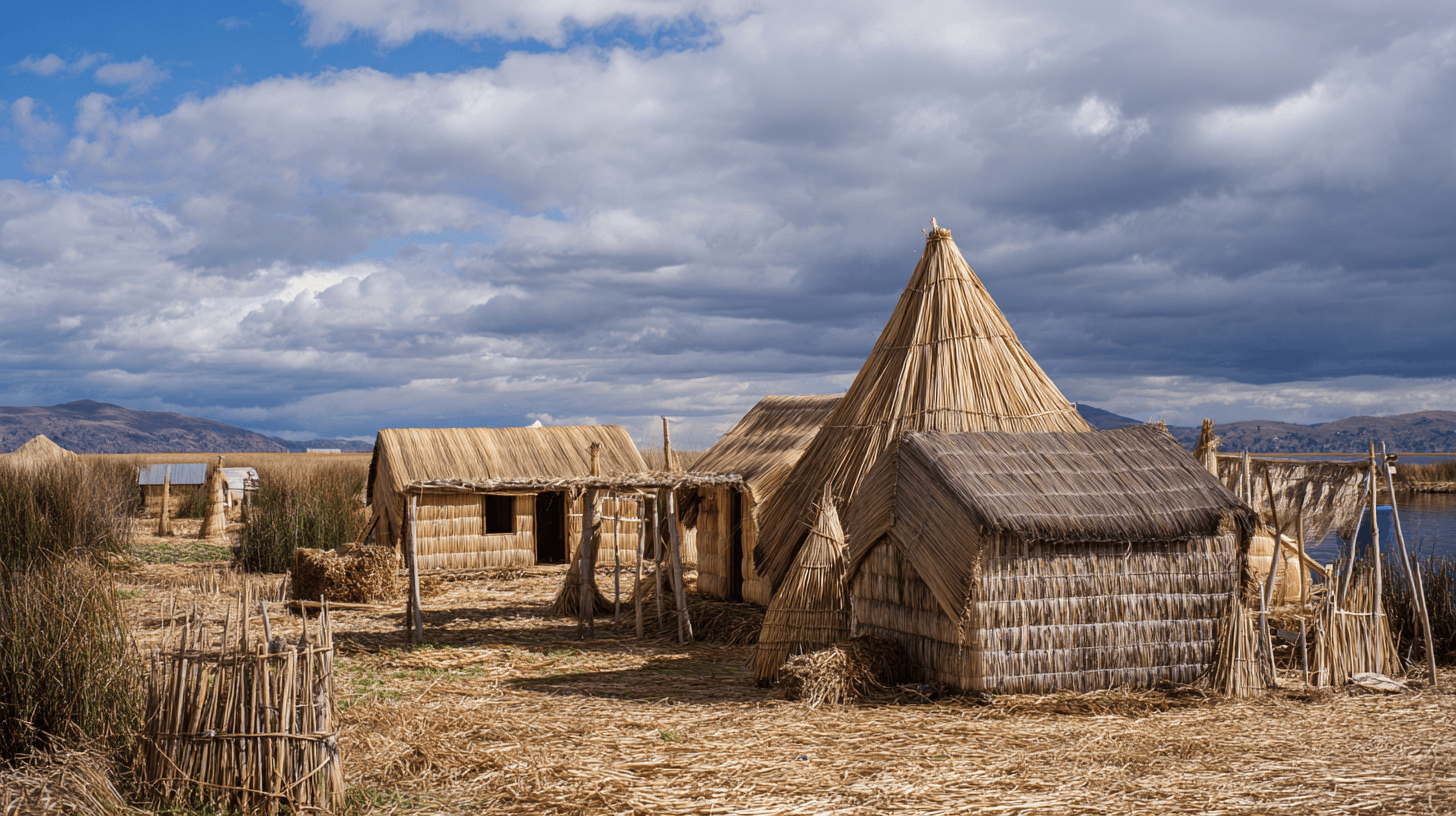
A totora reed island begins with blocks of reed roots. The roots are dense and buoyant, providing the flotation that keeps the island above water. The blocks are lashed together to form a platform, typically 15 to 20 meters across.
On top of the root platform, layers of dried reeds are stacked and compressed. This becomes the living surface — the ground on which houses are built, fires are lit, children play. The surface is soft and springy, never quite solid, always slightly in motion with the waves.
The problem is rot. The bottom layers of the island are always wet. The reeds decompose. The island slowly sinks. To stay afloat, new reeds must be added to the top faster than the bottom rots away. During the rainy season, fresh reeds might need to be added every two weeks.
The work is constant. Every day, someone is gathering reeds, drying them, adding them to the island. Stop the work and the island sinks. There is no vacation from living on water.
The Life
Approximately 1,200 Uros live on about 60 islands scattered across the Peruvian side of the lake. The islands float in loose groups, connected by reed boats and family ties. Each island is home to two to ten families — small enough to maintain, large enough to support a community.
The totora reed provides almost everything. It is construction material for islands, houses, and boats. It is fuel for cooking fires. It is food — the white base of the reed is edible, tasting vaguely of sugarcane. It is medicine, craft material, and animal feed. The Uros joke that they cannot survive without totora, and it is not entirely a joke.
Fishing supplements the reed diet. The lake holds trout and other species, caught from reed boats using techniques that have changed little in centuries. Some families keep small plots on the mainland for potatoes and quinoa, rowing across the water to tend them.
The isolation was once protection. The Uros, according to their own traditions, retreated to the lake to escape the Inca expansion. The islands could be moved if enemies approached. The water provided a buffer that land could not. By the time the Spanish arrived, the Uros were established on the lake and difficult to dislodge.
The Tourism
Today, the Uros face a different challenge. Tourists come by the thousands to see the floating islands, the reed houses, the traditional boats. The tourism provides income but also transforms the culture it comes to observe.
Some islands have become essentially performances. The residents dress in traditional clothing, demonstrate reed construction, sell handicrafts, pose for photographs. The work is less demanding than constant island maintenance and pays better. But it changes what the islands are.
Other islands have withdrawn from tourism, maintaining traditional ways at the cost of tourist income. The choice is not easy. The money matters, especially for families with children to educate. But becoming a living exhibit is its own kind of loss.
The tension is visible. Some islands have solar panels and televisions. Others have none. Some residents commute to Puno for wage work. Others rarely leave the lake. The Uros are not a museum exhibit; they are living people making choices about how to live.
The Future
Climate change is altering Lake Titicaca. Water levels fluctuate more than they used to. The totora reeds are affected by temperature changes. The fish populations are shifting. The environment that has sustained the Uros for centuries is not stable.
The young people face familiar pressures. Education is on the mainland. Jobs are in cities. The constant labor of island maintenance is less appealing than steady wages and solid ground. Many leave. Not all return.
Those who remain are adapting. New materials supplement traditional reeds. Outboard motors supplement traditional boats. Cell phones connect the islands to the wider world. The culture is changing because all cultures change, and pretending otherwise is a kind of death.
What Remains
The islands still float on Lake Titicaca. The reeds still rot from below and are added from above. The work still never ends.
What remains is not a frozen tradition but a living practice — people making choices every day about how to live on water, how to maintain a homeland that requires constant maintenance, how to adapt to changes they did not choose and cannot prevent.
The Uros have been doing this for 500 years. They have outlasted the Incas, the Spanish, and various modern governments. They have adapted before and will adapt again. The islands are not static; they are processes — requiring constant work, constant renewal, constant choice.
The ground beneath their feet is not solid. It never has been. That is the point.
Sources
- Orlove B. (2002). Lines in the Water: Nature and Culture at Lake Titicaca
- Kent J. (2008). The Domestication and Exploitation of the South American Camelids
- Stanish C. (2003). Ancient Titicaca: The Evolution of Complex Society
- Levieil D. and Orlove B. (1990). Local Control of Aquatic Resources