Systems
The Papermakers
Beating bark for a thousand years
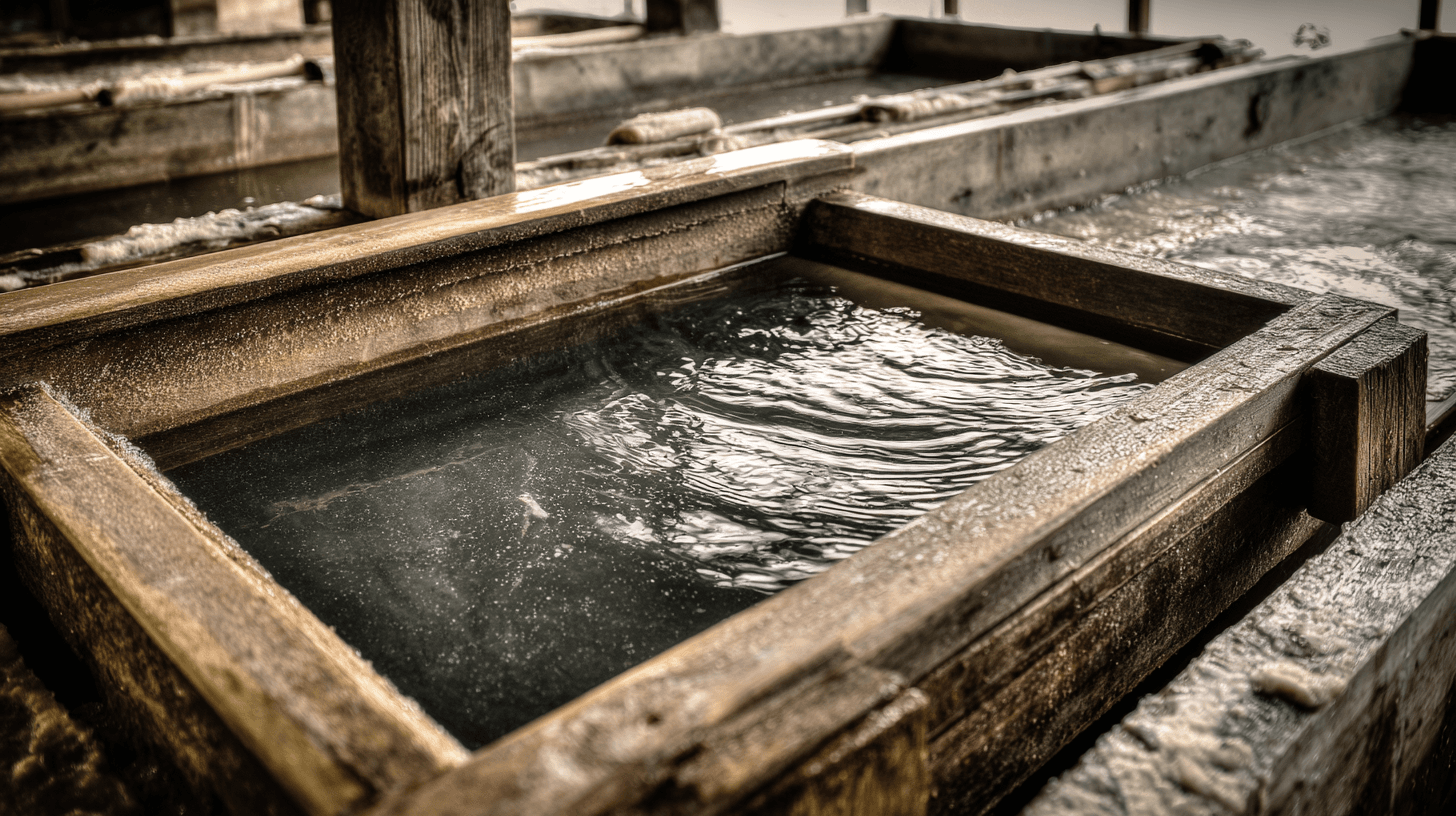
The papermaker dips the frame into the vat, lifts, and shakes. Fibers settle into a sheet. Water drains through the screen.
Handmade paper predates printing. For centuries, paper was made sheet by sheet, by hand, from plant fibers processed through labor-intensive methods. Some traditions continue.
The Fiber
Different traditions use different fibers. Japanese washi uses kozo (mulberry), mitsumata, and gampi. Korean hanji uses mulberry. Nepali lokta paper uses Daphne bark. Each fiber produces distinctive paper.
The fiber is harvested, cooked, beaten to pulp, and suspended in water. The preparation takes days before a single sheet is formed.
The Formation
The papermaker dips a screen frame into fiber-suspended water, lifts, and shakes to distribute fibers evenly. The technique determines paper quality.
Nagashi-zuki, the Japanese technique, involves rhythmic dipping and draining that layers fibers. The motion takes years to master. The resulting paper is remarkably strong.
The Drying
Wet sheets are pressed to remove water, then dried. Traditional drying uses boards, walls, or outdoor racks. The drying affects paper character.
The entire process — from fiber to finished sheet — might take weeks. Industrial paper takes minutes.
The Properties
Handmade papers have properties machines don't replicate. Washi can be incredibly thin yet strong. Lokta paper resists insects and aging. Hanji breathes, regulating humidity.
The properties made these papers essential for specific uses — screens, scrolls, conservation, art. Some uses require what only handmade paper provides.
The Uses
Traditional papers served traditional cultures. Japanese screens and sliding doors used washi. Korean ondol floors were papered with hanji. Documents requiring permanence used papers that lasted.
Modern uses continue. Conservation requires acid-free, long-lasting paper. Artists choose handmade paper for texture and character. Some documents still demand traditional materials.
The Economics
Handmade paper cannot compete with machine paper on price. A sheet that takes hours to make cannot match industrial cost.
The economics force specialization. Handmade paper survives in niches where its properties justify its price.
The Villages
Papermaking villages persist in Japan, Korea, Nepal, and elsewhere. Some families have made paper for generations. The work is often family work.
The villages face pressure. Young people leave. Demand is limited. The economics are marginal.
The Sheet
The frame lifts from the vat. Water drains. Fibers settle.
The sheet transfers to the drying surface. The next dip begins.
Sheet by sheet, the stack grows. Each sheet formed by hand, carrying the characteristics of handwork.
The paper will outlast machine paper. Centuries from now, the sheet formed today may still exist.
The papermaker continues. The tradition continues where practitioners continue it.
Sources
- UNESCO Intangible Cultural Heritage; Japan Handmade Paper Association; Kurotani Washi Cooperative