Systems
The Painted Dogs
The predator that votes
African wild dogs make decisions by sneezing. It sounds absurd. It works.
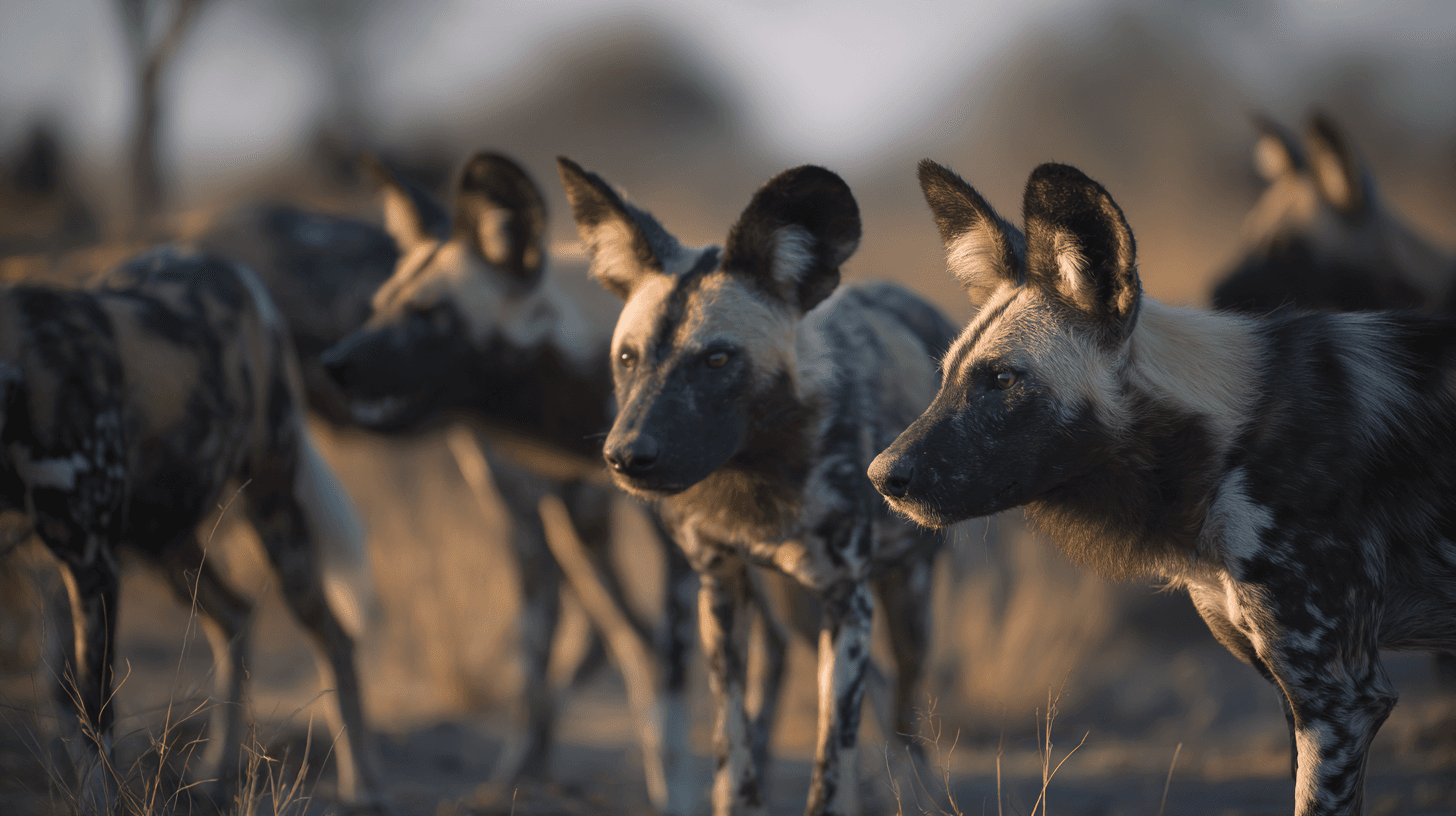
The pack has been resting in the shade for hours. It is late afternoon in Hwange National Park, the temperature dropping toward something tolerable. Somewhere out there, prey is starting to move. The question is: do we hunt?
One dog stands, stretches, sneezes. Then another. And another. The sneezes ripple through the pack. When enough dogs have sneezed, the pack rises and moves out. When too few sneeze, they settle back down.
This is not a metaphor. This is documented behavior, published in peer-reviewed journals. African wild dogs hold votes. They just use sneezes instead of ballots.
The Science
In 2017, researchers from Swansea University and the Botswana Predator Conservation Trust published a study of wild dog decision-making. They observed 68 "social rallies" — the gatherings that precede group movements — and recorded the behavior in detail.
The pattern was consistent. Before a hunt, dogs would engage in a rally: greeting each other, playing, moving around. During the rally, individual dogs would sneeze sharply — a forceful exhalation distinct from normal breathing. The more sneezes, the more likely the pack was to move.
But the sneezes were not counted equally. When dominant dogs initiated a rally, fewer sneezes were needed to trigger movement. When subordinate dogs initiated, more sneezes were required. The system was democratic, but with weighted votes.
The researchers called it a "quorum response." The pack was not following a single leader's decision. It was aggregating information from multiple individuals — each sneeze a signal of readiness, of willingness to commit to the hunt.
The Logic
Why would evolution produce voting dogs?
African wild dogs are among the most successful hunters in Africa. Their success rate on hunts exceeds 80 percent — far higher than lions, leopards, or cheetahs. But the hunt is also risky. Wild dogs are small, easily injured, vulnerable to larger predators. A pack that hunts when some members are tired, sick, or unwilling is a pack that might lose a member.
The sneezing system solves this problem. It ensures that hunts only begin when enough of the pack is committed. A dog that is tired or injured simply doesn't sneeze. Its vote is automatically registered as "no." The hunt only happens when sufficient consensus exists.
This is not conscious democracy. The dogs are not thinking about political theory. They are responding to evolved instincts shaped by millions of years of selection. But the outcome is functionally democratic: collective decisions made through aggregated individual signals.
The Threat
African wild dogs are among the most endangered carnivores on the continent. Fewer than 7,000 remain in the wild. They have lost more than 90 percent of their historical range. The packs in Hwange — several hundred individuals divided into a few dozen packs — represent one of the largest remaining populations.
The threats are familiar: habitat loss, conflict with livestock farmers, disease spread by domestic dogs, road kills, snaring. Wild dogs range over enormous territories — a single pack may roam 1,500 square kilometers — and inevitably come into conflict with humans.
Conservation programs have focused on reducing conflict, vaccinating against disease, and maintaining corridors between protected areas. The Painted Dog Conservation project in Zimbabwe has pioneered community engagement, education, and anti-snaring patrols. Population numbers have stabilized in some areas.
But the species remains precarious. A population of 7,000 individuals, divided into isolated pockets, is not secure. Disease outbreaks can devastate entire regions. A few bad years of poaching or habitat loss can erase decades of progress.
The Pack
What makes wild dogs worth saving is harder to articulate than what threatens them. They are not the most beautiful animals. They are not the most charismatic. Their hunting methods — chasing prey to exhaustion, then disemboweling it while still alive — are brutal to human eyes.
But they are genuinely remarkable. Their social structure is unusual among carnivores — packs centered on a breeding pair, with older offspring helping raise younger siblings. Their cooperation is unusually tight — food is shared, sick or injured members are cared for, the pack genuinely functions as a unit.
And they vote by sneezing. They aggregate individual preferences into collective decisions through a mechanism that no one expected and that took decades to discover. They are more sophisticated than they appear.
What Remains
In Hwange and a handful of other reserves across southern Africa, the painted dogs still run. They still gather in the late afternoon, still engage in the rallies that precede the hunt, still sneeze their votes into the consensus.
The packs are small. The territories are shrinking. The threats are not diminishing. But the dogs persist, doing what they have done for millions of years — hunting together, deciding together, surviving through cooperation.
When the sneezes reach the threshold, they rise and run. When they don't, they wait.
Democracy, it turns out, is older than humans.
Sources
- Walker R. et al. (2017). Sneeze to leave: African wild dogs use variable quorum thresholds
- Creel S. & Creel N. (2002). The African Wild Dog: Behavior, Ecology, and Conservation
- Woodroffe R. et al. (2004). The African Wild Dog: Status Survey and Conservation Action Plan
- Painted Dog Conservation Zimbabwe Annual Reports