Systems
The Oasis Keepers
The gardens in the sand
In the Western Desert of Egypt, oases have sustained human life for 12,000 years. The people who maintain them fight a battle against salt that they are slowly losing.
An oasis is not a mirage. It is an engineering project, maintained across generations, requiring constant labor to keep the desert from reclaiming what humans have taken from it. The palm groves and gardens of Egypt's Western Desert exist because people make them exist — channeling water, managing salt, tending trees that would die without care.
Siwa is the most famous of these oases. Located near the Libyan border, 560 kilometers from Cairo, it has been inhabited continuously for at least 12,000 years. Alexander the Great visited its oracle. The dates and olives it produces are prized throughout Egypt. The hot and cold springs that feed it have drawn visitors for millennia.
The springs still flow. The salt is winning anyway.
The Water
Oases exist where water reaches the surface. In the Western Desert, the water comes from the Nubian Sandstone Aquifer, a vast underground reservoir that stretches beneath four countries. The aquifer was filled during wetter periods thousands of years ago. It is fossil water — ancient, finite, not being replenished.
At Siwa, the water rises through natural springs and drilled wells. The springs are hot or cold depending on their depth and path through the rock. The water is slightly saline — not enough to taste, but enough to matter when it evaporates.
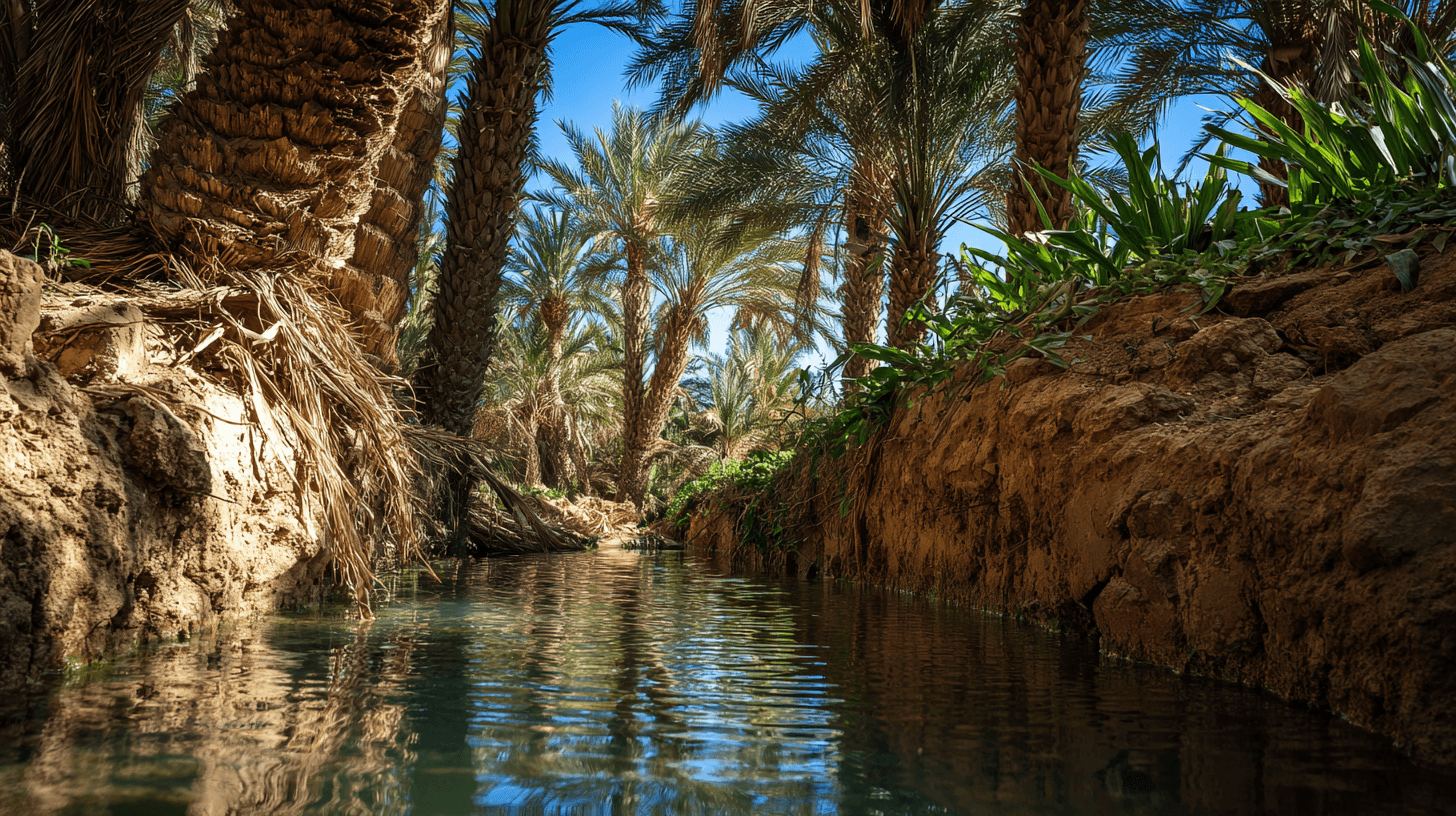
The traditional system channeled this water through a network of small canals called khottaras. The water flowed by gravity from higher springs to lower fields, irrigating date palms and olive trees and vegetables. The system was simple, elegant, and sustainable as long as the water was carefully managed.
The management was social. Families had rights to specific amounts of water at specific times. The rights were hereditary, traded, fought over. The entire social structure of the oasis organized around water, because without water there was nothing.
The Salt
Every irrigation system in an arid climate faces the same problem: salt. Water evaporates; salt remains. Over time, salt accumulates in the soil until crops cannot grow. This is how civilizations fall. Mesopotamia, the Indus Valley, countless smaller societies — all were ultimately defeated by salt.
Traditional irrigation at Siwa managed salt through careful water use. Fields were flooded periodically to leach salt from the upper soil. Crops were rotated. Some areas were left fallow. The salt accumulated, but slowly, over centuries rather than decades.
Modern irrigation disrupted the balance. Electric pumps brought more water from deeper wells. The extra water meant more crops but also more evaporation. The water table rose, bringing salt closer to the surface. Drainage systems that might have carried salt away were never built.
The result is visible in the landscape. White salt crusts cover abandoned fields. Healthy palm groves stand next to dying ones. The oasis is fragmenting, shrinking, retreating from the advancing salt.
The People
The Siwi are Berbers, speaking a language related to others across North Africa. They have lived in the oasis for centuries, perhaps millennia. Their identity is tied to the place — to the dates and olives and springs, to the traditions that have sustained life in the desert.
The young people are leaving. The work of maintaining an oasis — the constant labor of irrigation, the management of salt, the tending of groves — is hard and poorly rewarded. Cairo offers opportunities that Siwa cannot. The population that remains is aging.
Those who stay fight the salt with what tools they have. They plant salt-tolerant varieties. They install drainage where they can afford it. They abandon fields that can no longer produce and concentrate resources on those that still can. The fight is rearguard, defensive, focused on holding what remains rather than reclaiming what is lost.
The government offers some support — drainage projects, agricultural extension, attempts to address the water table. The efforts help but do not solve the problem. The salt keeps coming. The oasis keeps shrinking.
The Future
The springs will continue to flow for centuries. The aquifer is vast, even if it is not infinite. Water is not the limiting factor. Salt is.
Without dramatic intervention — major drainage systems, desalination of irrigation water, fundamental changes in how water is managed — the oasis will continue to shrink. The salt will claim more fields each year. The groves will contract. The population will decline.
This is not inevitable. Other oases have managed salt successfully. Modern technology offers tools that traditional systems lacked. The knowledge of how to fight salt exists. What is uncertain is whether the will and resources exist to apply it.
Siwa is not yet dead. The dates still ripen in the summer heat. The olives still produce. The springs still flow, warm and cold, as they have for longer than human memory. The oasis still lives.
But it is wounded, and the wound is growing.
What Remains
The gardens in the sand still produce. The farmers still tend their groves, still manage their water, still fight the salt that creeps a little closer each year. The oasis that has sustained human life for 12,000 years continues to sustain life, diminished but not yet defeated.
What remains is a question of choices. The oasis can be saved if the investment is made. The salt can be managed if the systems are built. The knowledge exists. The technology exists. What is uncertain is whether the commitment exists — whether Siwa matters enough to those who could save it.
The people of Siwa continue their work regardless. They plant where they can. They irrigate carefully. They watch the white salt crusts spread and do what they can to slow the spreading. The battle is older than they are. It will continue after they are gone.
Twelve thousand years of human presence in the desert. Gardens where nothing should grow. Springs that have never stopped flowing. The oasis persists because people make it persist, because they have always made it persist, because they do not know how to stop.
The salt is patient. So are the oasis keepers. The contest continues.
Sources
- Fakhry A. (1973). The Oases of Egypt: Siwa Oasis
- Kuper R. and Kröpelin S. (2006). Climate-controlled Holocene occupation in the Sahara
- Abd El-Ghani M. (1998). Environmental correlates of species distribution in arid desert ecosystems
- Zahran M. and Willis A. (2009). The Vegetation of Egypt