Returns
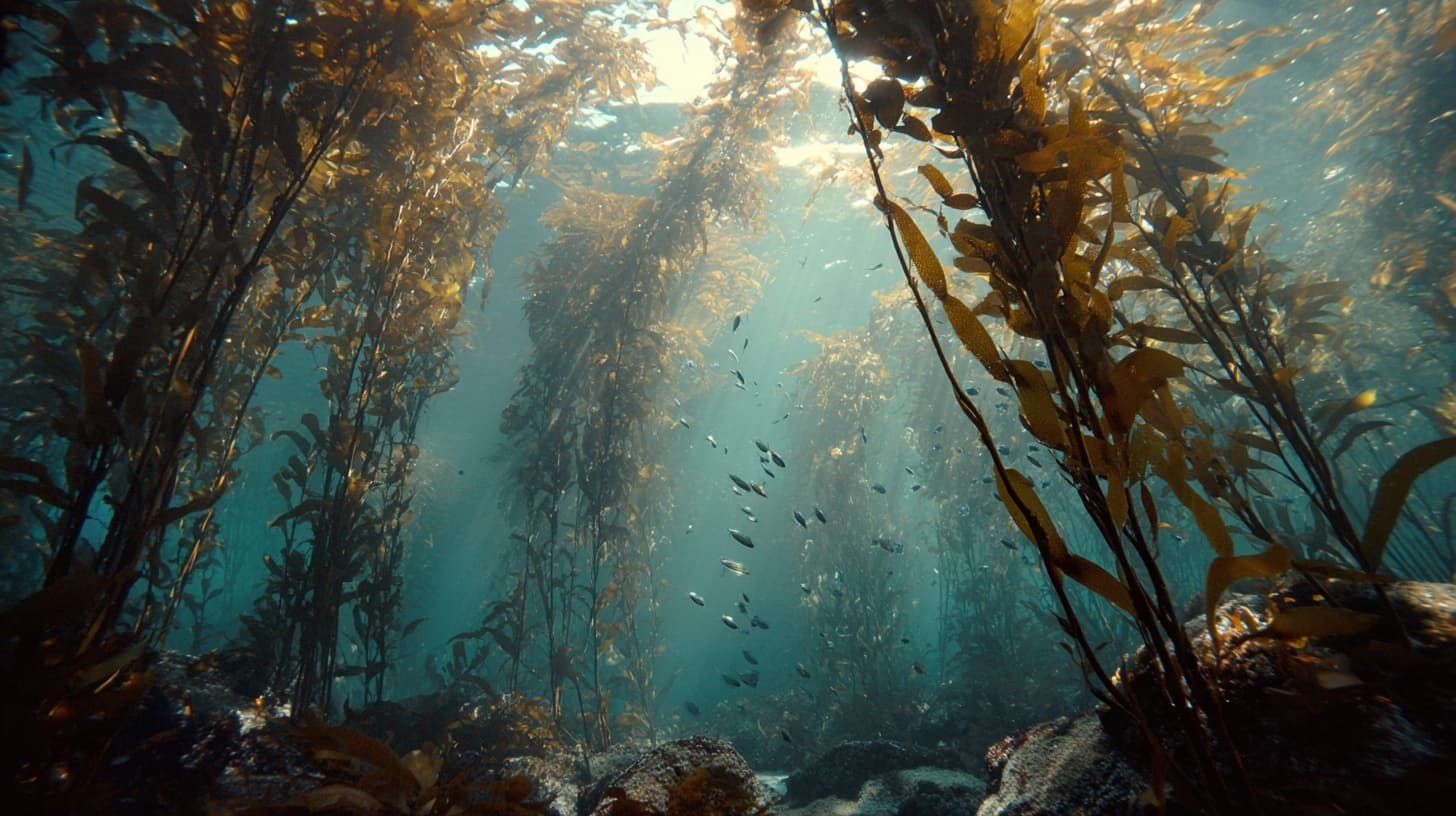
The Kelp Forests
The underwater forests coming back
The urchins ate everything.
Sea urchins are simple creatures — spiny spheres with mouths on the bottom, designed to graze. In balanced ecosystems, they eat dead kelp and algae, keeping the seafloor clean. In unbalanced ecosystems, they eat the living kelp from the roots up, turning forests into wastelands called "urchin barrens."
California's kelp forests collapsed in the 2010s. Marine heatwaves weakened the kelp. A disease killed 90% of the sunflower sea stars that preyed on urchins. The urchin population exploded. Bull kelp coverage in Northern California dropped 95% in just four years.
The forests that had fed fish, sheltered otters, and sequestered carbon for thousands of years were gone.
The Otters
Sea otters are the kelp forest's keystone predator. They eat urchins — up to 25% of their body weight daily. In areas with healthy otter populations, kelp forests thrive. In areas without otters, urchin barrens spread.
The connection was proven accidentally. When fur traders hunted otters to near-extinction in the 18th and 19th centuries, kelp forests collapsed along the entire Pacific coast. When otters were protected and populations recovered, the kelp returned — often within years.
The relationship is now textbook ecology. Otters eat urchins. Kelp survives. Fish return. Carbon is captured. Remove the otters and the cascade reverses.
The Intervention
California's kelp crisis triggered multiple restoration efforts. Divers manually removed urchins from priority areas — labor-intensive but immediately effective. Kelp grew back within months where urchin pressure was reduced.
A more ambitious project reintroduced otters to areas where they had been absent for over a century. The Elkhorn Slough in Monterey Bay, where otters were translocated in the 1980s, now supports one of California's healthiest kelp ecosystems. The otters did what divers couldn't: permanent, self-sustaining urchin control.
The Numbers
Kelp forests can sequester up to 20 times more carbon per hectare than land forests. They grow fast — giant kelp can add half a meter per day under good conditions. A restored kelp forest begins capturing carbon immediately.
The economic value is also substantial. Kelp forests support fisheries worth an estimated $500 million annually in California alone. They buffer coastlines against storm surge. They feed the seafood industry.
The cost of restoration is relatively modest. A single otter reintroduction program costs less than the annual revenue from a small fishery. The return on investment is measured in decades of ecosystem services.
The Expansion
Kelp restoration is now global. Projects run from Tasmania to Norway to Japan. The methods vary — urchin culling, otter reintroduction, direct kelp seeding, artificial reef construction — but the goal is consistent: restart the ecosystem from which everything else flows.
Some projects farm kelp for food, biofuel, and animal feed. The farms provide economic return while establishing new forests. The fastest-growing marine farming sector in the world is seaweed, and the fastest-growing seaweed is kelp.
The Feedback
Healthy kelp forests create conditions for more kelp. The canopy shades out competing algae. The dense growth dampens waves that would otherwise tear young plants loose. The root-like holdfasts stabilize sediment. Success breeds success.
The opposite is also true. Urchin barrens stabilize at low kelp — the conditions that killed the forest persist. Breaking the cycle requires intervention: removing enough urchins, introducing enough predators, protecting enough kelp to restart the feedback loop.
Once restarted, the forest can maintain itself. The otters keep eating. The kelp keeps growing. The carbon keeps sinking to the seafloor, where it stays for centuries.
Sources
- Estes, J.A. et al. Trophic Downgrading of Planet Earth. Science, 2011
- Rogers-Bennett, L. and Catton, C.A. Marine heat wave and multiple stressors tip bull kelp forest to sea urchin barrens. Scientific Reports, 2019
- Wilmers, C.C. et al. Do trophic cascades affect the storage and flux of atmospheric carbon? Frontiers in Ecology, 2012
- The Nature Conservancy. Kelp Forest Restoration: A Global Guide, 2023
- NOAA. Status of Kelp Forests in California, 2024