Systems
The Honey Hunters
The men who climb the cliffs
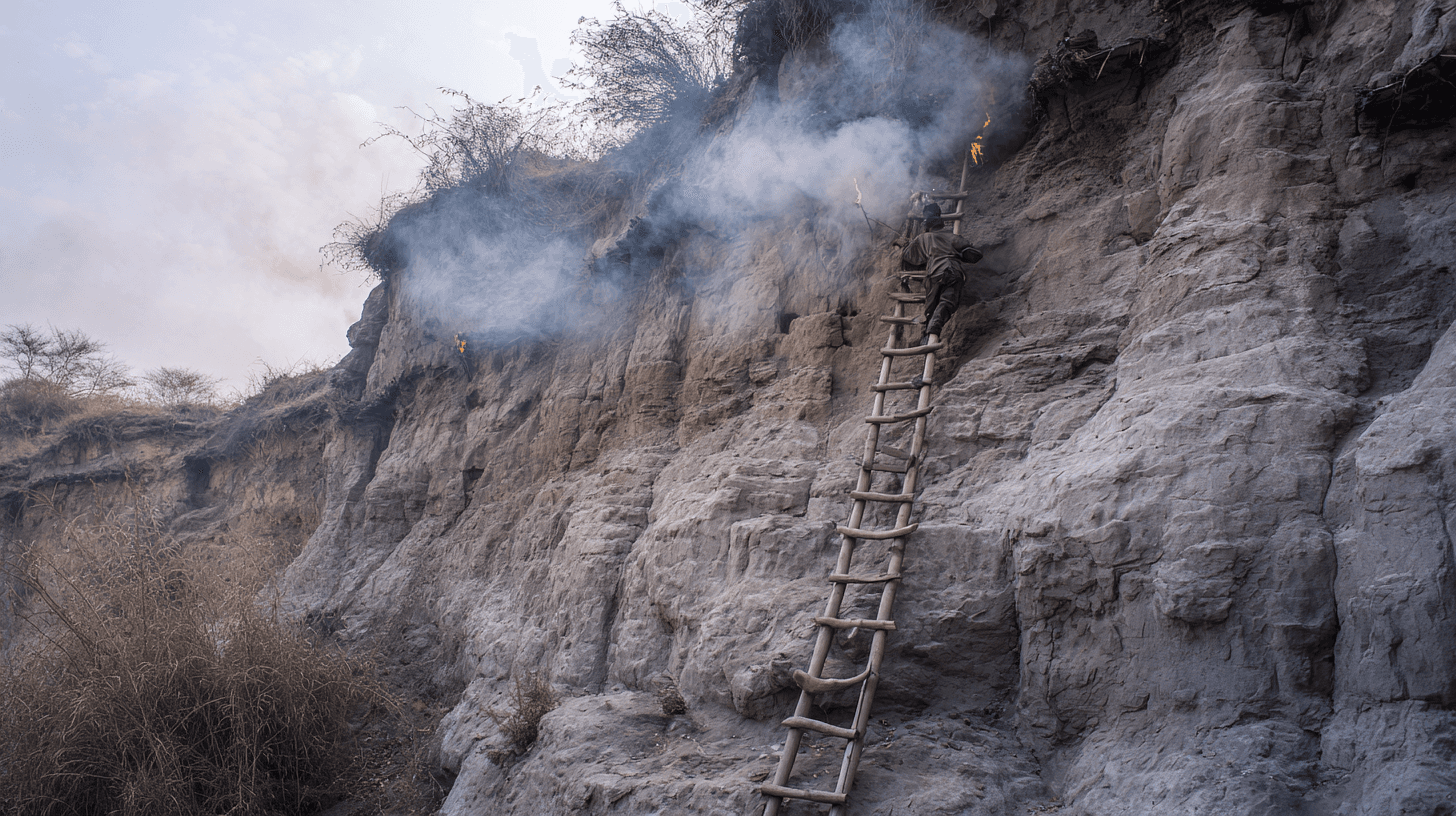
The hunter descends the cliff on a rope ladder, smoke torch in hand. Two hundred feet of vertical rock. The bees swarm. The honey waits.
Wild honey hunting persists where wild bees persist — in forests, on cliff faces, in landscapes that haven't been converted to agriculture. The hunters use methods their predecessors used, because the methods work.
The Cliffs
In Nepal, the Gurung people harvest honey from Himalayan cliff bees — Apis laboriosa, the world's largest honeybee. The hives hang on sheer rock faces, sometimes hundreds of feet up.
The hunters descend on handmade rope ladders, using smoke to calm the bees. The harvest happens twice a year, in spring and autumn. One slip means death.
The Birds
In Africa, honey hunters follow honeyguides — small birds that lead humans to wild hives. The bird chatters and flies toward the hive. The hunter follows.
The relationship is mutualistic. The bird can't open the hive. The hunter can't find it. Together they succeed. The hunter leaves wax and larvae for the bird.
The Smoke
Smoke calms bees — it triggers a feeding response, preparing them to abandon the hive, and masks alarm pheromones. Hunters worldwide use smoke, though the fuels vary.
The smoke must be managed. Too little and the bees attack. Too much and you can't breathe. The hunter works in a cloud of smoke and bees.
The Honey
Wild honey tastes different from farmed honey. The bees forage from whatever blooms — wildflowers, forest trees, alpine plants. The honey carries the landscape.
Some wild honeys have medicinal properties. Himalayan cliff honey is prized for its intoxicating effects — grayanotoxins from rhododendron nectar. The hunters know which harvests are "mad honey."
The Market
Wild honey commands premium prices. Scarcity and story drive value. Buyers pay for what cliff hunters and forest hunters risk to collect.
The premium creates pressure. More harvesting can deplete wild colonies. Sustainable harvest requires restraint — taking some, leaving enough.
The Decline
Wild honey hunting declines as wild habitat declines. Deforestation eliminates forest bees. Cliff faces remain, but access changes. The hunters age.
Where traditional hunting continues, it often becomes tourism. Visitors watch the harvest. The spectacle supplements the honey sale.
The Risk
The risk is real. Hunters die from falls, from bee stings, from smoke inhalation. The honey is gathered at genuine cost.
The risk creates respect — for the bees, for the cliffs, for the work. This is not casual harvesting.
The Descent
The hunter reaches the hive. The bees swarm around him. The smoke billows.
He cuts the comb. The honey drips. The basket fills.
The climb back up is harder than the descent. Arms tired. Rope slippery with honey.
He reaches the top. The harvest complete. The wild honey collected one more time.
Sources
- Crane E. (1999). The World History of Beekeeping and Honey Hunting
- Ahmad F. et al. (2007). Honeybees of Asia
- Valli E. and Summers D. (1988). Honey Hunters of Nepal
- Aryal S. et al. (2020). Mad Honey: History and Pharmacology