Systems
The Fire Watchers
The eyes above the forest
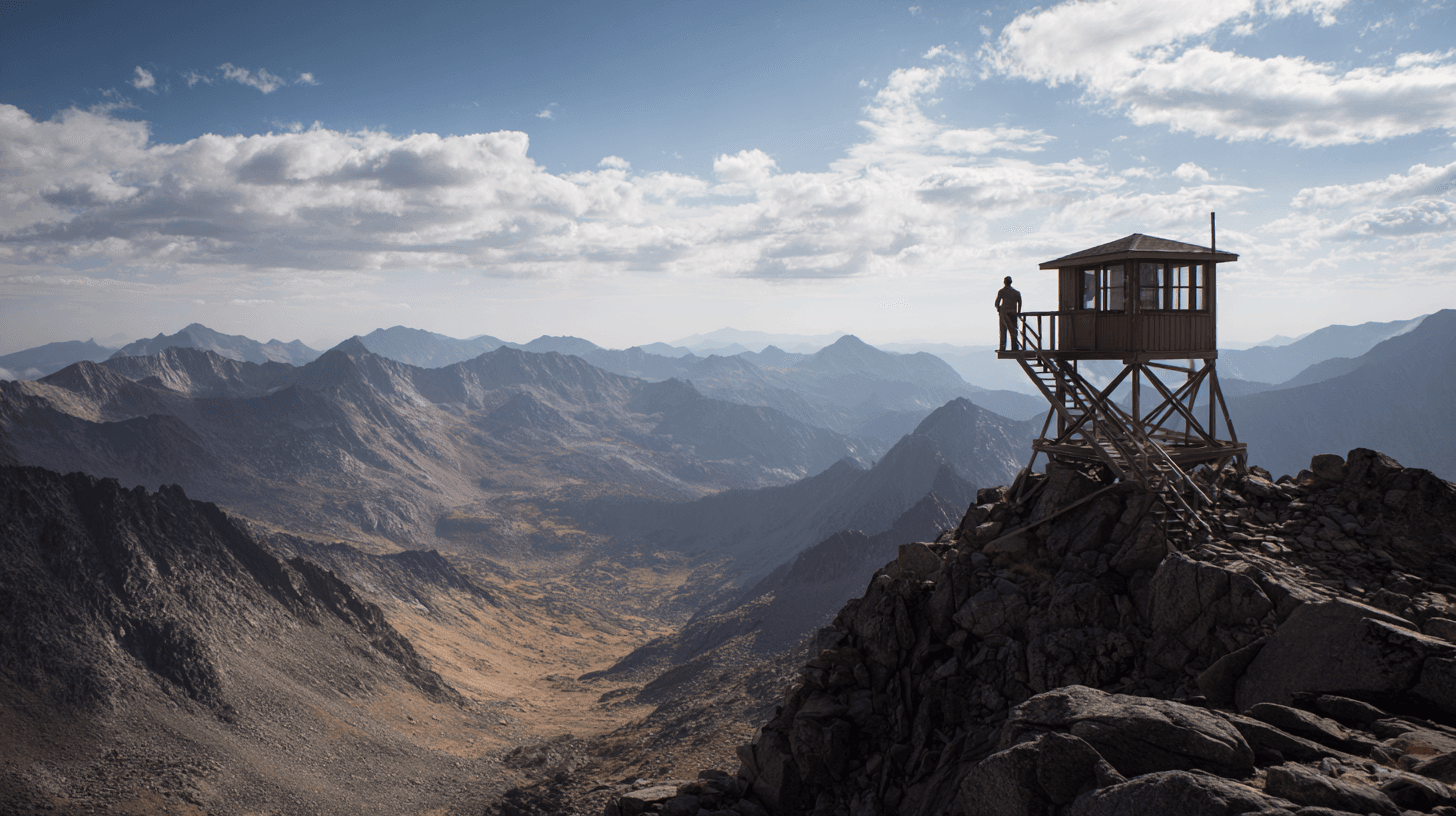
The lookout sits in a tower on a mountain peak. She scans the horizon with binoculars, looking for smoke.
Fire lookouts were once essential infrastructure — a network of observers covering fire-prone forests. Satellites and aircraft have replaced most of them. Some remain.
The History
The US Forest Service built thousands of lookout towers in the early 20th century. By the 1950s, nearly 5,000 staffed the national forests. Today, fewer than 500 are still active.
The decline followed technology. Satellites detect heat signatures. Aircraft patrol forests. The human observer seemed redundant.
The Persistence
Some lookouts remain because they work. Human observers can distinguish smoke from dust, fog, or clouds — distinctions that satellite imagery sometimes misses. They can assess fire behavior in real time, providing information that remote sensing can't.
In terrain with poor satellite coverage or rapid fire development, lookouts still provide the first alert.
The Solitude
Lookout duty means weeks of solitude in remote locations. The job attracts specific personalities — those who find isolation restorative rather than punishing.
The literary tradition of lookouts includes Jack Kerouac, Gary Snyder, and others who wrote about the contemplative dimension of watching for fire.
The Technology
Modern lookouts use technology too. Radio communication, weather instruments, sometimes webcams that supplement human observation. The human eye and electronic sensors work together.
The technology augments rather than replaces. The lookout remains the synthesizing intelligence.
The Decision
Whether to staff lookouts is economic: Does the cost of maintaining lookouts and paying observers exceed the cost of fires that would have spread without early detection?
The calculation favors technology in accessible areas with good coverage. In remote or complex terrain, lookouts may still provide value that technology can't match.
The Watch
The lookout's day is mostly waiting. Scanning the landscape, recording observations, watching weather develop. The emergency may not come. When it does, the lookout's role becomes critical.
Spotting smoke early — before fire grows — can mean the difference between containment and catastrophe. The first hours matter.
The Tower
The tower stands on the ridgeline, highest point in the landscape. The lookout climbs in spring and descends in fall.
Between, she watches. The forest stretches to the horizon. Smoke, if it rises, will be visible from here.
The vigil continues. The forest waits. The eyes that have watched for a century watch still.
Sources
- Spring R. and Spring I. (2013). Lookouts: Firewatchers of the Cascades and Olympics
- Morrison E. (2005). Towers of Stone: The Life of a Fire Lookout
- Kerouac J. (1965). Desolation Angels
- USDA Forest Service Fire Lookout Archives