Systems
The Falaj Keepers
The water that flows uphill
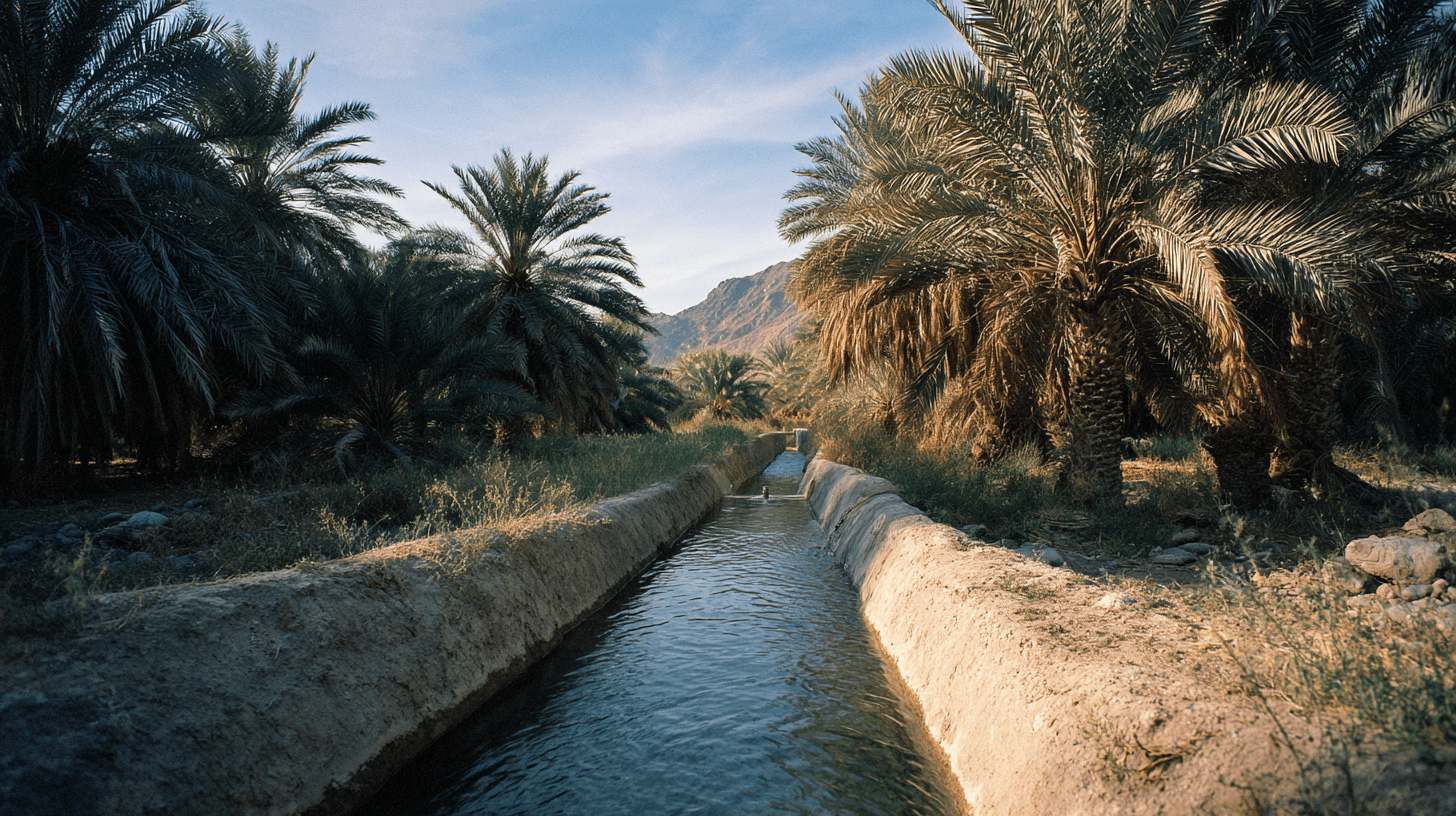
The water emerges from the mountainside, cool and clean. It has traveled kilometers underground, gravity-fed through tunnels dug three thousand years ago — before pumps, before pipes, before anyone else in the world had figured out how to move water through mountains.
The falaj keepers maintain what their ancestors carved.
The simplicity is deceptive. A falaj can run for 20 kilometers through solid rock. It must maintain a precise gradient — steep enough to flow, gentle enough not to erode. It must be deep enough to tap the water table but shallow enough to reach the surface where it is needed. The engineering tolerances are measured in centimeters over kilometers.
Oman has over 3,000 aflaj — the plural of falaj — still in operation. They irrigate date palms, vegetables, and fruit trees. They supply drinking water to villages. They have been doing this continuously since the Iron Age.
The Construction
Building a falaj requires skills that border on the supernatural. The builders — historically, specialized craftsmen who passed techniques from father to son — had to find water underground, calculate gradients over long distances, and dig through rock without modern surveying equipment.
They used oil lamps to check air quality and indicate direction. They used plumb lines and simple levels to maintain gradient. They dug vertical shafts at intervals to remove spoil and provide ventilation. The shafts, visible today as lines of holes marching across the landscape, are the signature of the falaj system.
A major falaj took years to build. The workers dug in from both ends, meeting in the middle with accuracy that modern engineers find difficult to explain. The channels were lined with stone to prevent collapse. The outlets were designed to distribute water fairly among users.
The investment was enormous. A falaj was a community project, funded collectively, maintained collectively, governed by rules that everyone understood. Building one was an act of faith that the water would flow and the community would persist to use it.
The Distribution
Water from a falaj is not sold. It is allocated by time. Each landowner receives water for a specific period — measured traditionally by sundials, water clocks, or the stars — before the flow passes to the next user.
The allocation system is ancient and precise. A large farm might receive water for several hours. A small garden might receive it for 30 minutes. The schedule repeats on a cycle — every 10 days, every 14 days, depending on the falaj — and has often remained unchanged for centuries.
Managing this system requires a wakil — a falaj keeper. The wakil knows the schedule, resolves disputes, organizes maintenance, and ensures that the water flows where it should. The position is typically hereditary, though some communities now elect their wakils. The knowledge required takes years to acquire.
The Maintenance
A falaj needs constant care. Silt accumulates. Walls crack. Floods damage channels. Animals fall into shafts. Every year, the community must organize cleaning expeditions, sending workers underground to clear debris and repair damage.
The work is dangerous. The channels are narrow, dark, and sometimes unstable. Historically, workers died in collapses and flash floods. The tradition includes rituals to propitiate the spirits of the falaj — not superstition, exactly, but acknowledgment that the work is serious and the risks are real.
Modern threats are different. Motorized wells tap the same aquifers that feed the aflaj, lowering water tables. Climate change is reducing rainfall in the mountains. Concrete channels replace stone, altering flow characteristics. Some aflaj that flowed for millennia have dried up within the past generation.
The Future
The Omani government recognizes the aflaj as cultural heritage and provides funding for restoration. UNESCO has designated five aflaj systems as World Heritage Sites. Tourism brings visitors who marvel at the engineering and contribute to local economies.
But heritage status does not guarantee survival. An aflaj without water is a ruin. An aflaj without farmers is abandoned. The system depends on continuous use — on people who need the water and are willing to maintain the infrastructure that delivers it.
In some areas, young people are leaving agriculture. Farms are consolidated or abandoned. The communal labor that maintained the aflaj becomes harder to organize. The wakils age without training successors.
In other areas, the system is adapting. GPS-equipped surveys map the ancient channels. Concrete repairs extend the life of damaged sections. Hybrid systems combine traditional aflaj with modern pumping during low-flow periods. The technology is evolving, just as it has evolved for 3,000 years.
What Remains
The water still flows. In villages across Oman, the falaj channels still carry water from mountain aquifers to valley farms. The sundials still mark the hours. The wakils still manage the schedules. The system that was old when Rome was young continues to function.
Whether it will function for another 3,000 years depends on choices being made now: about groundwater extraction, about agricultural policy, about whether communities will maintain the infrastructure their ancestors built.
The aflaj are not just engineering. They are institutions — social contracts that govern shared resources, maintained by collective labor, enforced by collective agreement. The water flows because people continue to make it flow.
That is the secret the ancient engineers understood. The technology is the easy part. The society that maintains it is what matters.
Sources
- Wilkinson J. (1977). Water and Tribal Settlement in South-East Arabia
- Al-Ghafri A. et al. (2003). Aflaj Irrigation Systems of Oman
- UNESCO World Heritage: Aflaj Irrigation Systems of Oman
- Costa P. (1983). Notes on the traditional irrigation system of the Sultanate of Oman