Systems
The Desert Elephants
Memory written in sand
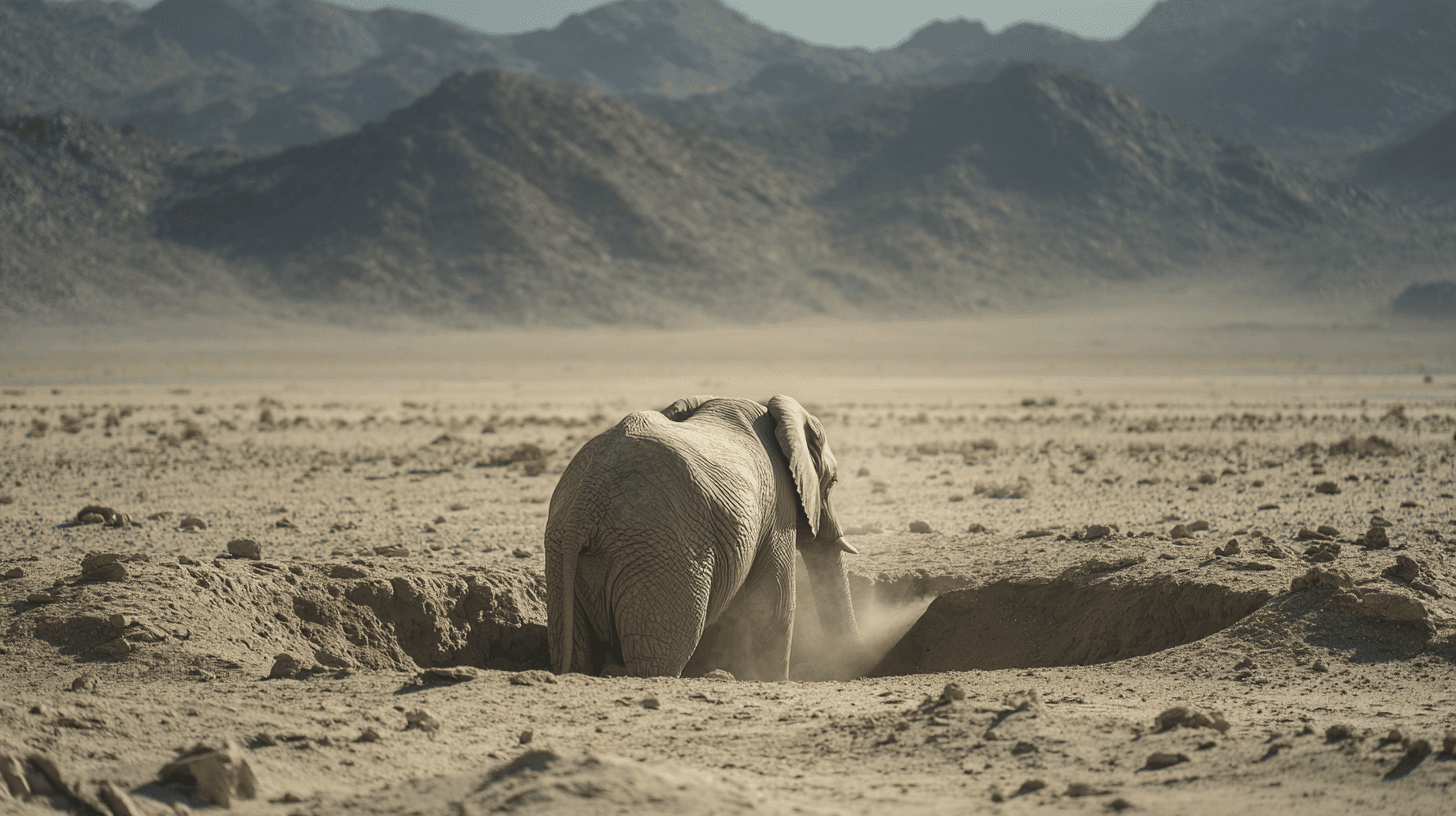
The elephant digs in a dry riverbed. No surface water for fifty kilometers. But she digs, and the hole fills.
Other animals wait. Zebra. Oryx. Baboons. They drink from wells they cannot dig themselves. The elephant is not sharing — she's engineering. The wells she excavates become water sources for entire ecosystems.
The Numbers
Namibia's elephant population: approximately 24,000, the largest in Africa after Botswana.
Desert elephant population in Kunene: growing, after decades of decline from poaching and conflict.
Community conservancy land: over 20% of Namibia's total land area.
The Model
In the 1990s, Namibia tried something different. Instead of fencing wildlife into parks and keeping people out, the government gave communities rights to wildlife on their land.
The conservancies own the animals. They benefit from tourism revenue. They decide how the land is used. They have financial reasons to keep elephants alive.
The result: communities that once saw elephants as crop-raiding pests now see them as assets. Poaching dropped. Populations recovered.
How It Works
Trophy hunting generates revenue. Photographic tourism generates revenue. Both require wildlife to exist. The conservancy model aligns incentives: the people who live with dangerous animals benefit from those animals being there.
Revenue gets distributed. Jobs get created. Schools and clinics get funded. The abstract value of wildlife becomes concrete.
The Contrast
Colonial conservation created parks by removing people. "Fortress conservation" — fences, guards, exclusion. It protected some land but created enemies of everyone outside the boundaries.
The conservancy model keeps people on the land and gives them ownership of what lives there. It treats local communities as partners rather than threats.
The data suggests it works better. Namibia's wildlife populations have recovered faster than in countries using fortress approaches.
The Design
The question conservation usually asks: how do we protect nature from people?
The conservancy model asks: how do we make nature valuable to people?
Different question. Different answer. Different results.
The Elephant as Engineer
Back to the wells. Desert elephants modify their environment in ways that benefit other species. They create water access. They open paths through thick vegetation. They disperse seeds across enormous ranges.
Remove the elephants, and the ecosystem changes. The wells don't get dug. The paths close. The seeds don't travel.
They're not just surviving in the desert. They're maintaining it.
Sources
- Leggett K. (2006). Home range and seasonal movement of elephants in the Kunene Region
- NACSO (2023). Namibia's Communal Conservancies: A review of progress
- Viljoen P. (1989). Spatial distribution and movements of elephants in northern Namibia
- O'Connell-Rodwell C. (2007). Keeping an ear to the ground