Systems
The Date Farmers
The tree that made the desert livable
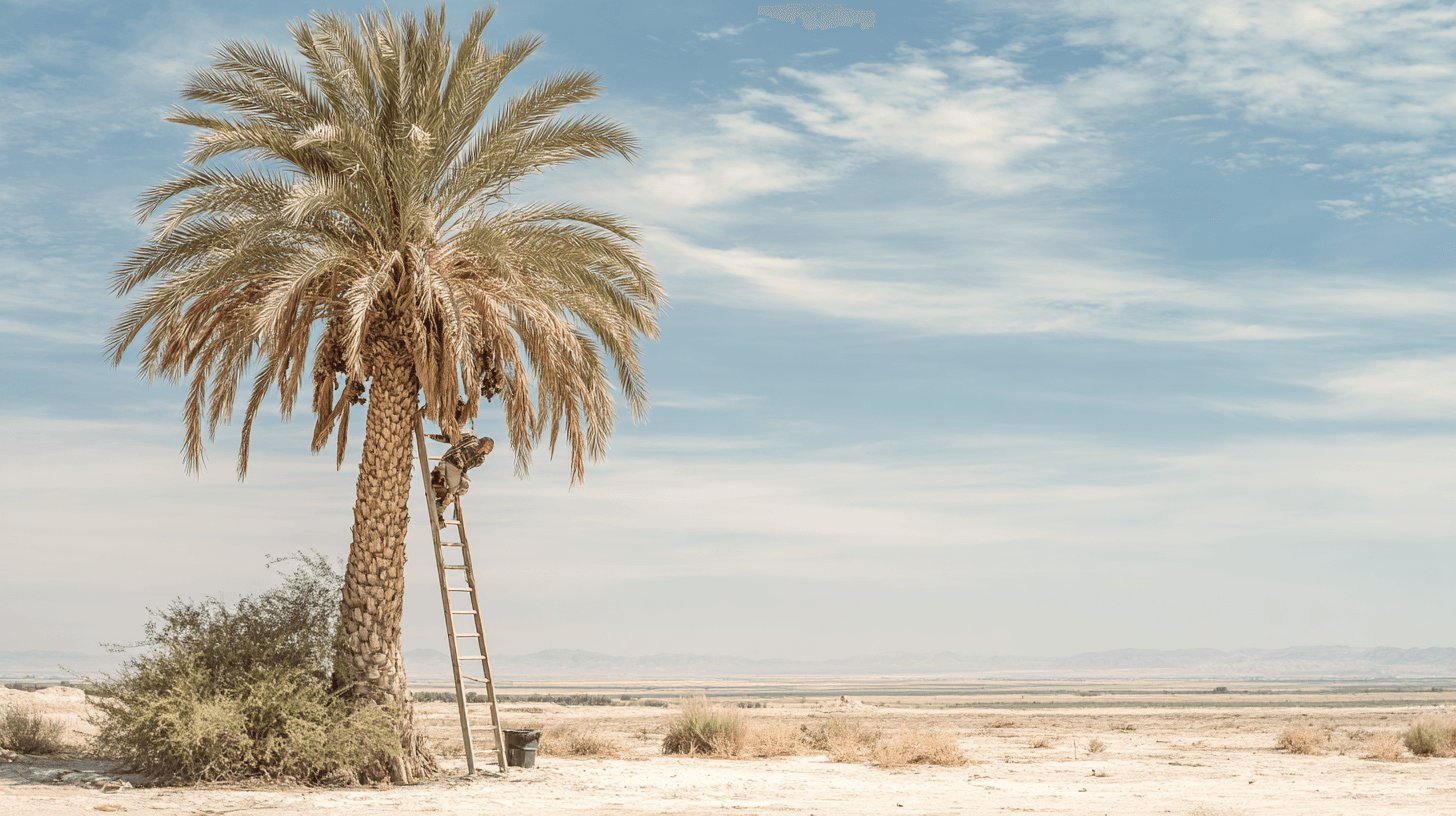
The climber wraps his legs around the trunk and begins to ascend. No harness. No ladder. Just the grip of his body against the rough bark, moving upward through the fronds to where the date clusters hang heavy and golden.
Six thousand years of harvests. The method has not changed.
The reasons were practical. In a region of extreme heat and scarce water, the date palm provided reliable food. A single tree can produce 100 kilograms of fruit per year for a century or more. The fruit is nutritious, storable, and transportable. It made civilization possible in places that could not otherwise support large populations.
Iraq was the heart of the date world. As recently as 1960, the country had 30 million date palms and produced three-quarters of the world's dates. The groves along the Shatt al-Arab waterway, where the Tigris and Euphrates meet, were the most productive on earth.
Today, fewer than 10 million palms remain. The groves are dying. The farmers who tend them are fighting to save what is left.
The Tree
The date palm is perfectly adapted to its environment. Its roots reach deep into aquifers. Its fronds shed heat without losing moisture. It tolerates salt levels that would kill most crops. It thrives in temperatures that exceed 50 degrees Celsius.
But it requires one thing: fresh water at its roots. The date palm can tolerate salt in the soil, but not in the groundwater. When the water table turns saline, the trees die.
Traditionally, the groves of southern Iraq were irrigated by the rivers. Fresh water from the Tigris and Euphrates flushed the soil, keeping salt levels manageable. The system worked for millennia.
Then the dams came. Turkey and Syria built dams on the upper rivers, reducing the flow to Iraq by more than half. The Shatt al-Arab, once a broad freshwater estuary, became salty as seawater pushed upstream. The groves that depended on river water began to die.
The Wars
War accelerated the decline. The Iran-Iraq War of the 1980s turned the date groves of the south into battlefields. Trees were cut for fortifications, burned for fuel, killed by neglect as farmers fled. Millions of palms were destroyed.
The Gulf War and the sanctions that followed continued the damage. Irrigation systems collapsed. Pesticides became unavailable. Farmers who might have replanted could not afford the seedlings or the labor.
The 2003 invasion and subsequent chaos brought more destruction. Fighting damaged groves. Displacement scattered farming communities. The institutions that had supported date agriculture — research stations, extension services, marketing cooperatives — ceased to function.
By 2010, Iraq's date production had fallen to less than 5 percent of its 1960 level. The groves that had fed Mesopotamia for 6,000 years were dying within a single generation.
The Farmers
The farmers who remain are stubborn, poor, and aging. Many are elderly, tending groves their fathers planted, watching trees die that their grandfathers tended. The young people have mostly left. The work is hard, the returns are low, and the future is uncertain.
What keeps them going is partly economic — a productive grove still provides income — and partly something harder to name. The date palm is not just a crop. It is identity, heritage, a connection to ancestors who cultivated the same trees for longer than any other agricultural tradition on earth.
Some farmers are replanting, choosing salt-tolerant varieties, experimenting with irrigation techniques that use less water. International organizations provide support — seedlings, training, market access. The Iraqi government has declared the date palm a national priority.
Progress is slow. A date palm takes seven years to mature and 15 to reach full production. The farmers who plant today will be elderly before the trees produce abundantly. They plant anyway, betting on a future they may not see.
What Remains
The groves are smaller than they were. The trees are fewer. The production is a fraction of what it was. But the date palms are still there, still producing, still feeding people as they have for 6,000 years.
The Shatt al-Arab is still salty, still difficult. The dams upstream are still there. The challenges have not disappeared. But the farmers have not disappeared either. They tend their groves, plant their seedlings, harvest their dates.
The date palm made Mesopotamia habitable. It fed the civilizations that invented writing, mathematics, the wheel. It sustained populations through invasions, empires, collapses. It survived everything until the rivers themselves were taken away.
Whether it will survive the 21st century is uncertain. The climate is changing. The water is shrinking. The young people are leaving. The groves are aging.
But the farmers are still there, still tending the trees that have grown in this place since before history began. The dates still ripen in the brutal summer heat. The tradition continues, diminished but not defeated.
Six thousand years is a long time. The farmers of Basra hope for a few more.
Sources
- Potts D. (2002). Feast of Dates
- FAO (2019). Iraq Date Palm Sector Review
- Tengberg M. (2012). Beginnings and early history of date palm cultivation
- Al-Khayri J. et al. (2015). Date Palm Genetic Resources and Utilization