Systems
The Coffee Forest
Where coffee still grows wild
The wild coffee plants still grow where they first evolved. Ethiopian farmers move through the forest understory, harvesting red berries from trees that have never been planted, never been cultivated, never been removed from the ecology that created them.
Every coffee plant on earth descends from these woods.
The people who live here — the Kaffa, from whom coffee takes its name — have known the plant longer than anyone. They were drinking coffee before the Arabs, before the Europeans, before anyone else knew what it was. Their relationship with the plant is not agriculture. It is something older.
The Wild Coffee
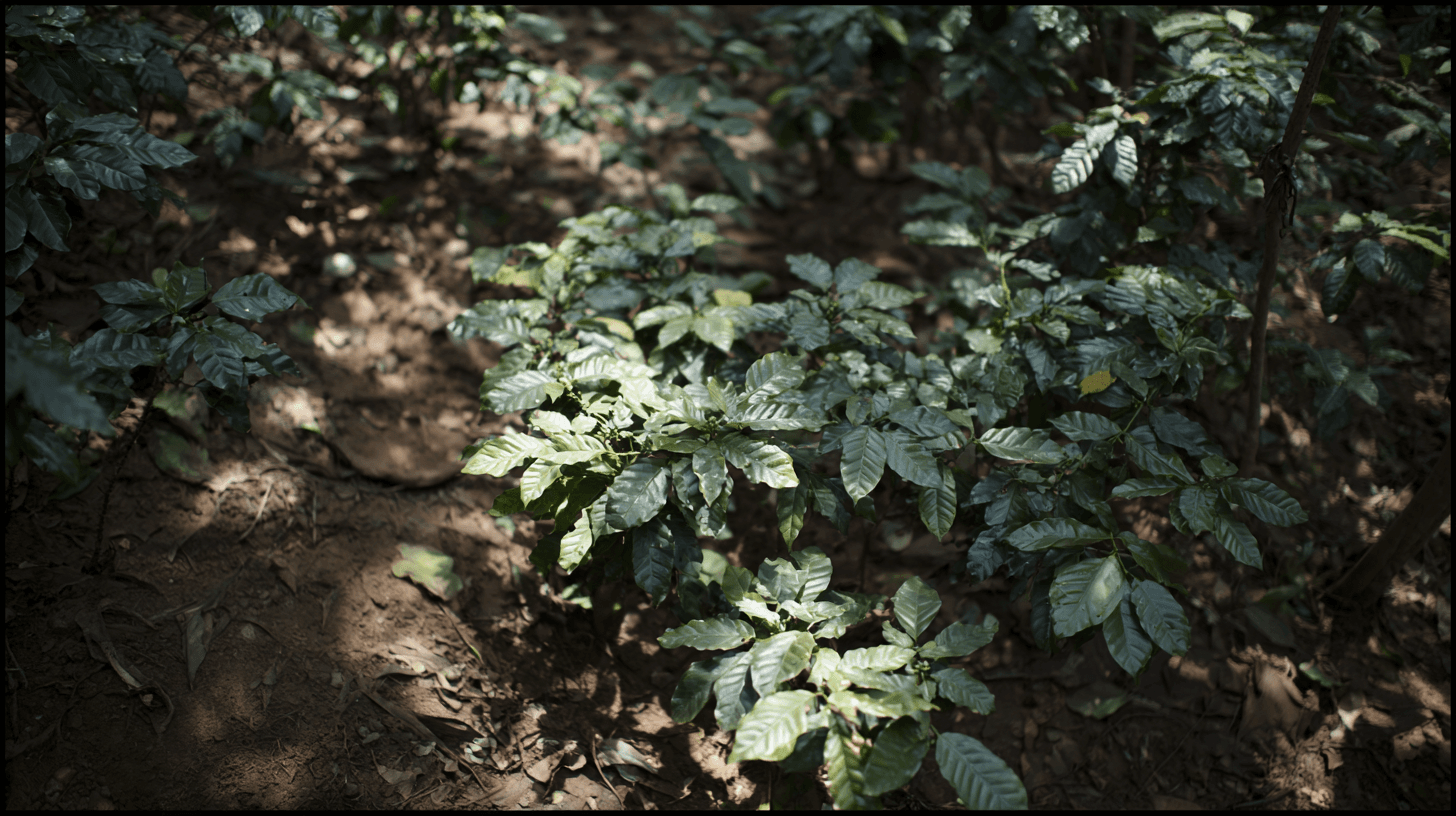
Wild coffee looks nothing like a plantation. There are no rows, no irrigation systems, no pruning schedules. The plants grow scattered through the forest, reaching heights of 10 meters or more, competing with other species for light and nutrients. The cherries ripen at different times on different plants. The harvest is gathering, not reaping.
The genetic diversity is extraordinary. Plantation coffee has been bred for yield, disease resistance, and flavor profiles that match market preferences. Wild coffee contains the full genetic potential of the species — variants that produce different flavors, that resist different diseases, that thrive in different conditions. This diversity is the insurance policy for the global coffee industry.
If climate change or new diseases threaten the world's coffee crops — and both are happening — the solution may come from the wild genetics of the Ethiopian forests. The wild plants contain adaptations that have not yet been discovered, resistances that have not yet been needed, flavors that have not yet been tasted.
The Harvest
The Kaffa harvest wild coffee the way their ancestors did. Families have traditional rights to specific areas of forest. During the harvest season, they walk the forest paths, collecting ripe cherries from plants they have known for generations.
The cherries are processed at home: pulped, fermented, dried on raised beds in the sun. The method is ancient and produces coffee with flavors that cannot be replicated by industrial processing — fruity, wine-like, complex in ways that plantation coffee rarely achieves.
The best wild coffee fetches premium prices in international markets. Specialty roasters seek it out. Coffee connoisseurs pay $50 or more per kilogram for beans that were gathered by hand from plants that have never been cultivated. The economics work, barely — enough to make forest conservation competitive with clearing land for agriculture.
The Ceremony
The Ethiopian coffee ceremony is the oldest coffee ritual in the world. It predates the coffeehouses of Cairo and Constantinople, predates the espresso bars of Italy, predates every other coffee tradition on earth.
The ceremony takes hours. Green beans are roasted over charcoal, ground by hand, brewed in a clay pot called a jebena. Three rounds are served: abol, tona, baraka — each progressively weaker, each with its own significance. The ceremony is social, spiritual, and domestic all at once.
In the Kaffa highlands, the ceremony uses wild coffee. The taste is different from plantation coffee — more variable, more complex, sometimes strange in ways that take getting used to. This is what coffee tasted like before it was standardized, before breeding selected for consistency, before the global market decided what coffee should be.
The Threat
The forests are shrinking. Ethiopian population growth creates pressure for agricultural land. The global market for coffee creates incentive to clear forest and plant high-yield varieties in rows. The wild coffee plants are cut down to make room for their domesticated descendants.
Climate change compounds the pressure. The highland forests depend on specific temperature and rainfall patterns. As conditions shift, the zone where coffee can grow is moving uphill — but the mountains have tops. Some projections suggest that wild coffee could become extinct in its native range within decades.
Conservation efforts are underway. The Ethiopian government has established biosphere reserves. International organizations are funding forest protection. Coffee companies are investing in projects that link their supply chains to wild genetic resources.
Whether these efforts will be enough is uncertain. The forces driving deforestation are powerful. The timeline is short. The forests that evolved over millions of years are being cleared over decades.
What Remains
The wild coffee still grows in the Ethiopian highlands. The Kaffa still harvest it, still process it, still serve it in ceremonies that have continued for a thousand years. The genetic diversity that could save the global coffee industry still exists — for now.
The forests are smaller than they were. The climate is changing. The pressures are intensifying. But the plants are still there, scattered through the understory, producing cherries that taste like coffee tasted before there was a coffee industry.
Every cup of coffee anywhere in the world is connected to these forests. The arabica in your espresso or your French press or your instant crystals descends from plants that still grow wild in the Ethiopian highlands. The origin is not distant history. It is living and present and threatened.
The Kaffa have been drinking coffee for a thousand years. Whether there will be wild coffee to drink for another thousand depends on decisions being made now.
Sources
- Sylvain P. (1958). Ethiopian Coffee: Its Significance to World Coffee Problems
- Davis A. et al. (2012). The Impact of Climate Change on Indigenous Arabica Coffee
- Gole T. (2003). Vegetation of the Yayu Forest in SW Ethiopia
- Labouisse J. et al. (2008). Current status of coffee genetic resources in Ethiopia