Returns
The Cave Paintings
The art that waited 40,000 years
In the caves of Sulawesi, handprints and animals painted 45,000 years ago are emerging from behind mineral crusts. The oldest known art on earth is Indonesian, not European.
For over a century, the story of art history began in Europe. The cave paintings of Lascaux and Altamira, created roughly 17,000 to 20,000 years ago, were considered the earliest examples of human artistic expression. The narrative was convenient: art began in Europe, developed there, and spread outward with Western civilization.
The caves of Sulawesi upended this story. Beginning in 2014, uranium-series dating of Indonesian rock art revealed paintings at least 45,000 years old — more than twice as old as the famous European examples. The oldest known representational art on earth is not French or Spanish. It is Indonesian.
The discovery rewrote human history. And it raised new questions about what the paintings mean and whether they can survive.
The Paintings
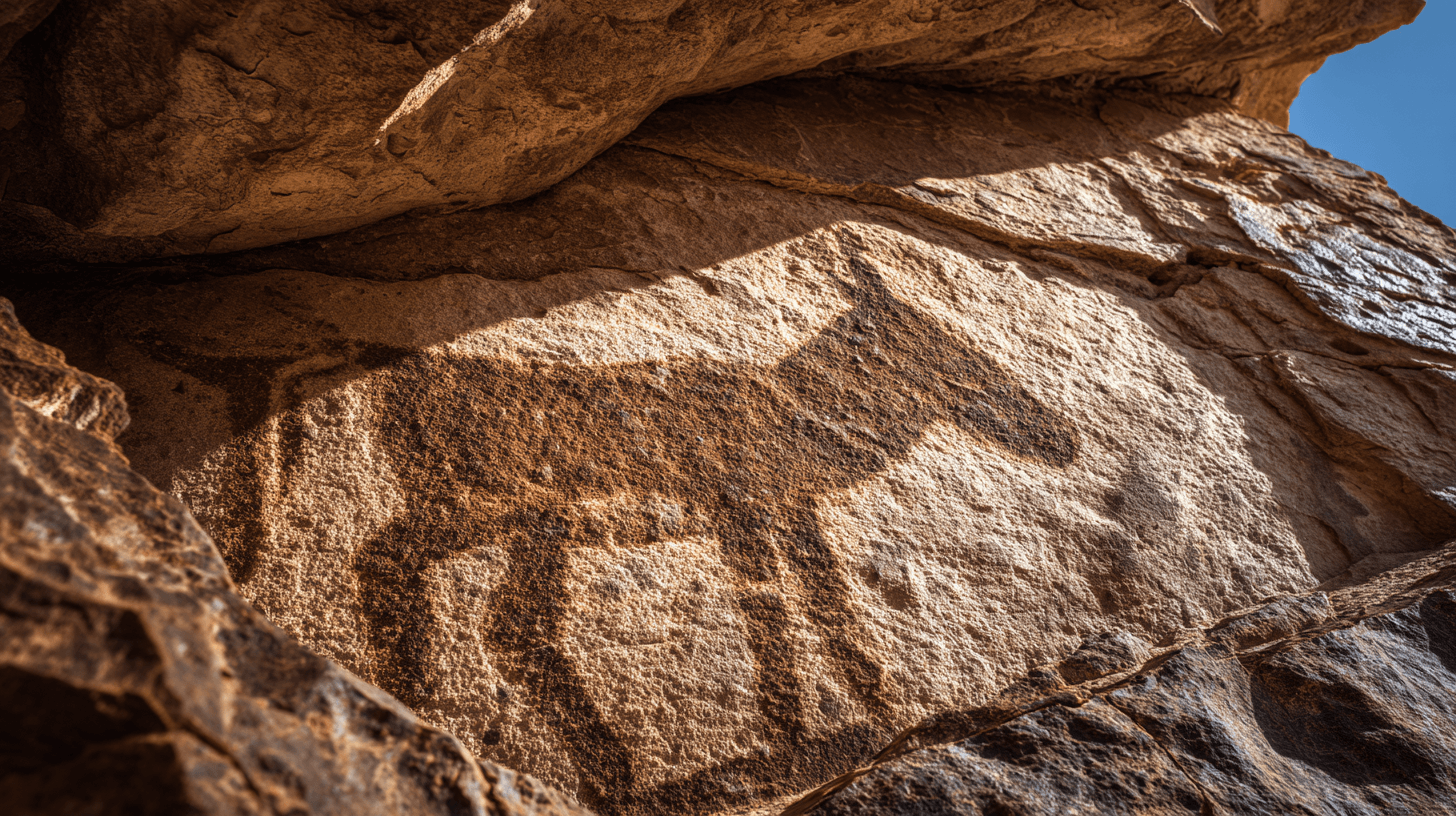
The Sulawesi caves contain hundreds of images. Handprints — made by pressing a hand against rock and blowing pigment around it — are the most common. But there are also animals: pigs, buffalo, and a creature that appears to be a babirusa, a tusked pig endemic to Sulawesi.
The oldest dated image is a pig, painted at least 45,500 years ago. This means that fully modern humans — people with our cognitive abilities, our capacity for symbolic thought — were creating art in Southeast Asia before they reached Europe. The story of human creativity does not begin in France. It begins wherever humans went, as far back as we can trace them.
The handprints are haunting. A human hand, pressed against stone 40,000 years ago, outlined in red pigment. The person who made it was as human as we are — same brain, same hand, same impulse to leave a mark. The connection across millennia is visceral.
The Discovery
The paintings were not unknown. Local people had seen them for generations. Archaeologists had documented them in the 1950s. But no one knew how old they were. Without dating, the assumption was that they were relatively recent — perhaps a few thousand years old, interesting but not extraordinary.
The breakthrough came from uranium-series dating. As water drips through limestone caves, it deposits minerals over the paintings. These deposits contain uranium, which decays into thorium at a known rate. By measuring the uranium and thorium in the mineral crusts, scientists can determine when the crust formed — and therefore the minimum age of the painting beneath it.
The dates were shocking. Paintings that had been assumed to be thousands of years old were tens of thousands of years old. The handprints and animals of Sulawesi had been waiting, hidden under mineral deposits, since before the last ice age.
The Meaning
Why did early humans make art? The question has no certain answer, but the Sulawesi paintings offer clues.
The handprints suggest identity — a way of saying "I was here," of marking presence, of making the self permanent. The animal images suggest narrative — stories about hunts, about the creatures that shared the landscape, about the relationship between humans and nature.
The paintings were not made casually. The pigments had to be prepared, the locations chosen, the images planned. Someone climbed into these caves, in the dark, and created images they knew would outlast them. The impulse to create, to communicate, to leave something behind — this is as old as humanity itself.
The Sulawesi paintings also challenge assumptions about the development of art. The images are sophisticated — the animals are recognizable, the proportions reasonable, the techniques effective. If this is the beginning of art, it is not a primitive beginning. The people who made these paintings knew what they were doing.
The Threat
The paintings are deteriorating. After surviving 45,000 years, they are now flaking away, victim of climate change and human activity.
The problem is salt. As temperatures rise and humidity fluctuates, mineral salts in the rock expand and contract. This creates pressure that pushes the painted surface away from the stone beneath. Flakes fall. Images disappear.
Researchers estimate that some paintings have lost half their detail in the past few decades. The deterioration is accelerating. Paintings that survived the ice ages may not survive the Anthropocene.
Conservation is difficult. The caves are numerous, remote, and hard to monitor. The causes of deterioration — climate change, pollution, altered drainage patterns — are not easily addressed. The paintings are being documented, photographed, studied. But documentation is not preservation. The originals are vanishing.
What Remains
The caves still hold their images. The handprints still mark the rock. The animals still run across stone surfaces that have not moved in millions of years.
What remains is both permanent and fragile. The paintings have survived for 45,000 years. They may not survive another century. The record of human creativity that they represent — the evidence that art is as old as humanity, that the impulse to create is not cultural but biological — this record is degrading as we watch.
The hands that made these marks are gone. The people who pressed their palms against the rock, who ground pigments and blew them through hollow reeds, who stood in the dark caves and created images that would outlast everything they knew — those people vanished tens of thousands of years ago.
What they made remained. It remains still, for now. The art that waited 40,000 years for us to find it is asking how long we will let it survive.
Sources
- Aubert M. et al. (2014). Pleistocene cave art from Sulawesi, Indonesia
- Brumm A. et al. (2021). Oldest cave art found in Sulawesi
- Taçon P. and Chippindale C. (1998). The Archaeology of Rock-Art
- Huntley J. et al. (2021). The effects of climate change on the rock art of Sulawesi