Systems
The Bronze Casters
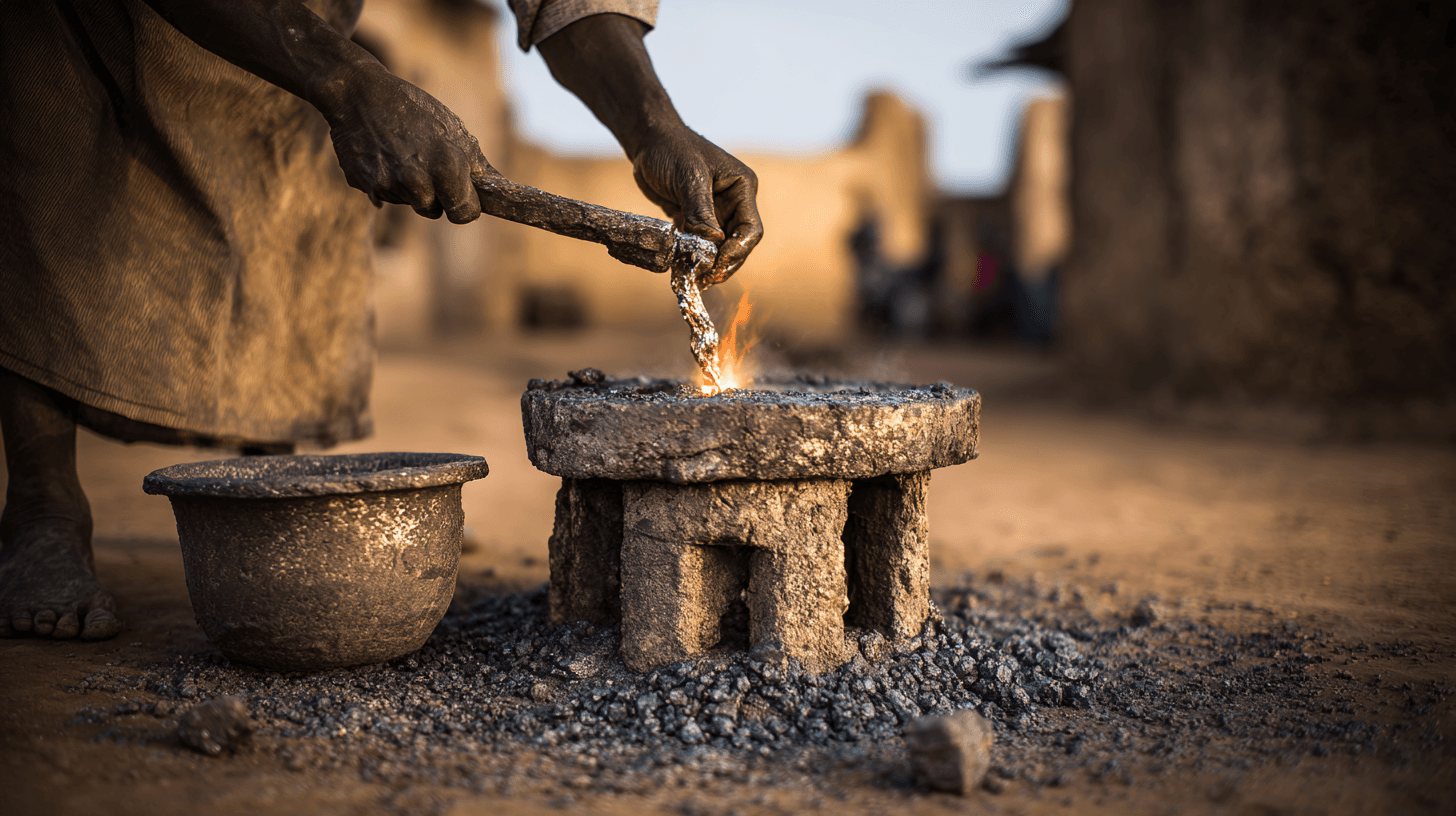
The metal that remembers kings
The wax melts and drains away. Molten bronze fills the void, taking the shape of what was lost. When the clay mold is broken open, the sculpture emerges — an object that has never existed before, created through the destruction of its own pattern.
Benin casters have practiced this magic for six hundred years.
The British stole thousands of these objects in 1897, dispersing them to museums around the world. The craftsmen who made them continued working. The techniques survived. The bronze casters of Benin City still produce works using methods that have not fundamentally changed since the 15th century.
The Technique
Lost-wax casting is deceptively simple in concept. A model is made in wax. The wax is coated in clay to form a mold. The mold is heated, melting out the wax and leaving a cavity. Molten metal is poured into the cavity, taking the shape of the original wax model. The clay is broken away, revealing the metal casting.
The execution is immensely difficult. The wax must be modeled with perfect precision — every detail in the wax will appear in the final bronze. The clay coating must be uniform and properly vented, or the metal will not flow correctly. The temperature of the metal, the speed of pouring, the cooling rate all affect the final result. A mistake at any stage ruins hours or days of work.
Benin casters mastered techniques that remain impressive today. They cast objects with walls less than 3 millimeters thick — thinner than most modern foundries attempt. They created multiple-piece molds that allowed for undercuts and hollow interiors. They worked at scales from finger-sized ornaments to life-sized heads.
None of this was written down. The knowledge passed from master to apprentice through demonstration and practice, accumulated over generations, held in the hands and eyes of craftsmen who could not explain in words what they knew how to do.
The Guild
The bronze casters of Benin were organized into a guild called Igun Eronmwon, located in a specific quarter of Benin City. Membership was hereditary — sons followed fathers into the craft, learning from childhood the techniques that would occupy their adult lives.
The guild worked for the Oba, the king of Benin. The bronze heads, plaques, and ceremonial objects were royal commissions, created to honor ancestors, commemorate events, and display the power of the kingdom. The craftsmen were court artists, their work inseparable from the political and spiritual life of the state.
This relationship protected the craft. The guild had royal patronage, guaranteed markets, and social status. The Oba needed bronze casters; the bronze casters needed the Oba. The symbiosis sustained both for centuries.
The Destruction
In 1897, a British military expedition attacked Benin City. The Oba was exiled. The palace was looted. The bronzes — thousands of them, representing centuries of production — were taken to Britain and sold to pay for the expedition.
The dispersal of the bronzes created a diaspora of objects now held in museums worldwide. It also disrupted the guild. Without royal patronage, without the ceremonial context that gave their work meaning, the bronze casters faced an uncertain future.
But the guild survived. The craftsmen continued working, adapting to new patrons and new markets. The techniques that had served the Oba now served collectors, tourists, and eventually the Nigerian state. The hereditary structure of the guild ensured transmission even without the old structures of patronage.
The Revival
Today, the bronze casters of Igun Eronmwon still work in Benin City. The guild still exists. The techniques are still transmitted from father to son. The bronzes still emerge from the foundries, made by the same methods that produced the objects now scattered in museums from London to Berlin.
The market has changed. Tourist pieces sell for modest prices. High-quality work goes to collectors and galleries. Commissions come from the Nigerian government, from institutions seeking to reclaim heritage, from diaspora Africans reconnecting with tradition.
Some guild members have achieved international recognition. Their work appears in museums alongside the historical bronzes their ancestors made. The tradition that was supposed to have been destroyed by colonialism has proven more durable than the empire that tried to destroy it.
The Return
The stolen bronzes are coming back. Germany has returned hundreds of objects. Britain has committed to returns. Museums that once displayed the bronzes as trophies now acknowledge them as stolen goods.
The returns are complicated. Where should the bronzes go? Who should control them? How should they be displayed? The questions are political, legal, and cultural all at once. But the direction is clear: objects taken in 1897 are returning to Benin City over a century later.
For the bronze casters, the returns are validation. The art their ancestors made was valuable enough to steal, important enough to fight over, beautiful enough to survive exile. The techniques that produced those objects are still alive, still producing, still creating art that stands with anything made anywhere.
What Remains
The foundries are still there, in the Igun quarter of Benin City. The wax is still modeled by hand. The clay molds are still built and fired. The bronze still flows into the cavities and emerges as art.
The guild is smaller than it was, the markets more uncertain, the future less guaranteed. But the transmission continues. Sons learn from fathers. Apprentices watch and practice. The techniques that survived colonialism and exile and a century of neglect are still being passed on.
The Benin bronzes in Western museums are frozen in time — objects from a specific moment, made by craftsmen long dead. The bronzes being made today are living tradition — the same techniques, the same skills, the same guild, still creating.
The metal remembers. The craftsmen continue.
Sources
- Ezra K. (1992). Royal Art of Benin
- Dark P. (1973). An Introduction to Benin Art and Technology
- Plankensteiner B. (2007). Benin Kings and Rituals: Court Arts from Nigeria
- Hicks D. (2020). The Brutish Museums: The Benin Bronzes, Colonial Violence and Cultural Restitution