Returns
The Boat Graves
The ships that carried the dead
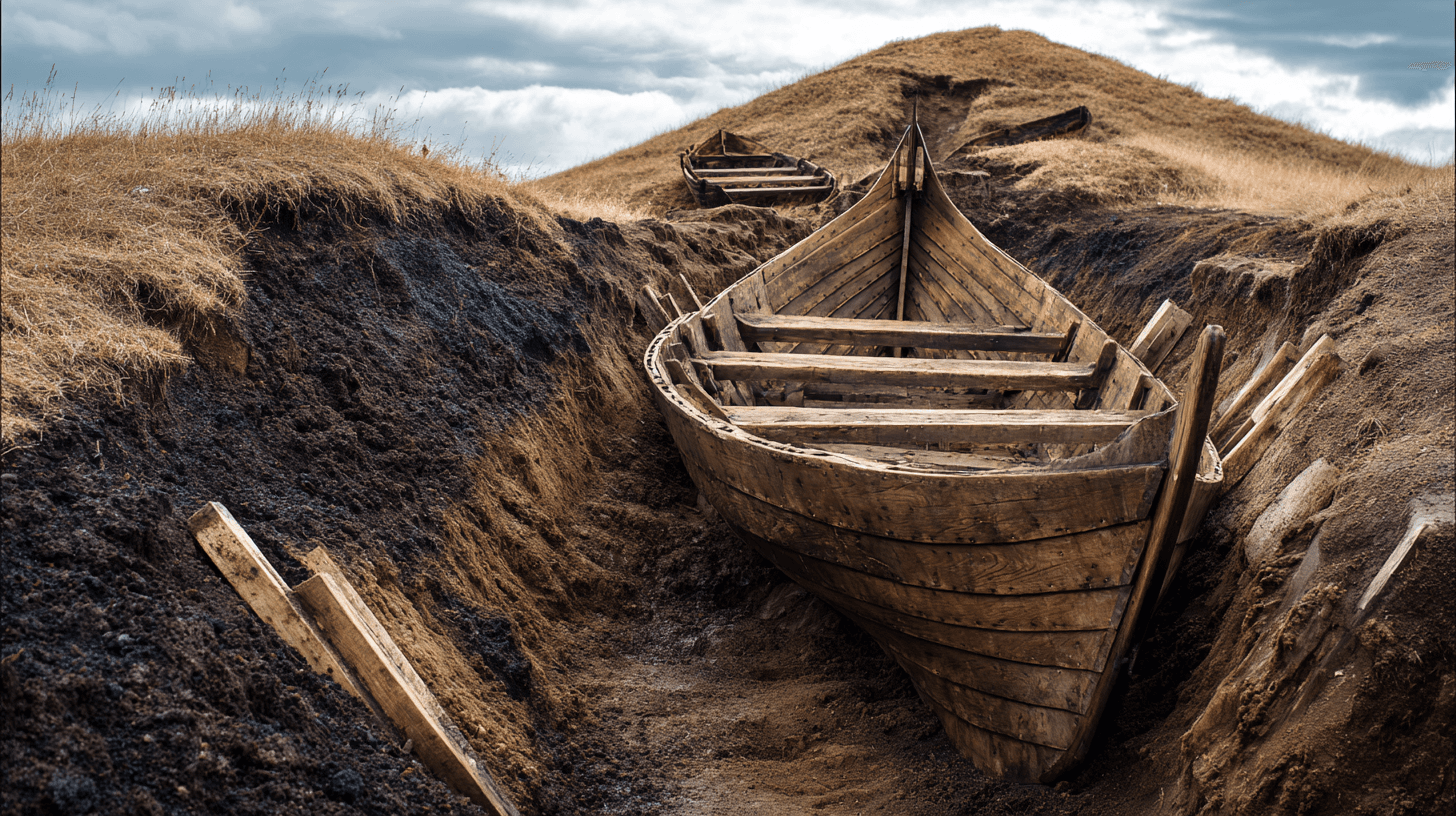
The Vikings buried their kings in ships. The ships were forgotten under mounds of earth for a thousand years. Now they are being excavated, studied, and sometimes reconstructed.
The ship burial was the ultimate Viking funeral. A vessel that had carried warriors across seas would carry them into death, provisioned with weapons, treasures, food, and sometimes servants sacrificed for the journey. The ship was covered with earth, creating a mound that marked the grave and preserved what lay within.
The practice occurred throughout the Viking world, but the greatest ship burials are in Norway. The Oseberg and Gokstad ships, excavated in the 19th century, are among the most important archaeological finds ever made. They revealed a culture of extraordinary sophistication — shipbuilders, artists, traders who connected Scandinavia to the wider world.
The ships are still being found. New technology reveals mounds invisible to earlier searchers. Each discovery adds to understanding. Each excavation recovers what time has preserved.
The Burials
A ship burial was not for ordinary people. The vessels were valuable, the grave goods extensive, the labor required for the mound substantial. Only the wealthy and powerful were buried this way — chieftains, queens, the elite of Viking society.
The Oseberg ship, buried around 834 CE, contained two women. Their identities are unknown, but the richness of the grave goods suggests royalty or high nobility. The ship was filled with textiles, furniture, wagons, sledges, and the famous carved animal-head posts that are now icons of Viking art.
The Gokstad ship, buried around 900 CE, contained a man in his 60s, powerfully built despite evidence of disease and injury. He was buried with weapons, horses, dogs, and peacocks — the last imported from distant lands, proof of connections that spanned continents.
The ships themselves were not retired vessels. They were seaworthy craft, capable of ocean voyages, buried at the peak of their usefulness. The sacrifice was deliberate. The dead were given the best because they were going on the most important journey.
The Preservation
The ships survived because of the conditions of burial. The blue clay of the Norwegian coast is dense and waterlogged, creating an anaerobic environment where wood does not rot. The ships were crushed under the weight of the mounds but not decomposed. The fragments remained, awaiting discovery.
When the Oseberg ship was excavated in 1904, archaeologists found wood preserved well enough to reveal tool marks, construction details, and decorative carvings. The textiles, normally the first material to disappear, survived in fragments. The metal corroded but remained identifiable. The grave had become a time capsule.
Modern conservation has stabilized the surviving materials. The ships are displayed in the Viking Ship Museum in Oslo, their timbers treated with chemicals that prevent further decay. They remain fragile — the wood that survived a thousand years underground struggles in the modern atmosphere — but they remain.
The Discoveries
The search for ship burials continues. Ground-penetrating radar and other remote sensing technologies can detect disturbances beneath the surface that indicate buried structures. Mounds that appear natural may conceal ships. Fields that show crop marks may hide graves.
In 2018, radar surveys near Halden revealed a ship burial that had never been excavated. The vessel was large — approximately 20 meters long — and appeared to be largely intact. The discovery made international headlines. Excavation is proceeding carefully, with techniques far more sophisticated than those available to 19th-century archaeologists.
Each discovery raises questions. Who was buried here? What goods accompanied them? What does the ship tell us about construction, navigation, social organization? The answers accumulate, building a picture of Viking society that written sources alone cannot provide.
The ships are also being reconstructed. Replica vessels, built using traditional methods and materials, test the capabilities of Viking shipbuilding. They have crossed the Atlantic, following the routes the Vikings sailed. They have proven that the technology worked — that these were not ceremonial objects but functional ships, capable of the voyages the sagas describe.
The Meaning
The ship burials tell us what the Vikings valued. The effort invested in these graves — building mounds that required thousands of hours of labor, sacrificing vessels worth small fortunes, provisioning the dead for journeys that would never end — this effort reveals priorities.
The ship was central. It enabled trade, warfare, exploration, and migration. It connected isolated communities to the wider world. It was the technology that made the Viking Age possible. Burying the dead in ships was a statement about what mattered.
The graves also reveal complexity. The Oseberg burial, with its artistic treasures and female occupants, challenges stereotypes of Viking culture as purely martial. The women buried there were powerful, valued, commemorated with goods that reflect sophistication and taste. The Vikings were more than warriors.
What Remains
The ships remain, preserved in museums and still buried in the earth. The Oseberg and Gokstad ships draw visitors from around the world. The unexcavated burials wait beneath fields and mounds, their contents unknown, their discovery still in the future.
The technology remains too. The clinker-built construction, the elegant lines, the balance of seaworthiness and speed — these were achievements that modern boatbuilders still study. The Vikings solved problems of naval architecture that remain relevant. Their ships were not primitive. They were advanced.
The tradition of boat burial ended with the Viking Age, but the ships themselves endure. They carry their occupants still — not to Valhalla, but into memory, into museums, into a future their builders could not imagine.
A thousand years in the ground. A century in the light. The ships that carried the dead continue their journey, longer and stranger than any voyage the Vikings themselves undertook.
Sources
- Brøgger A.W. et al. (1917). The Viking Ships: Oseberg and Gokstad
- Bill J. (2020). Viking Ships and Seafaring
- Gansum T. (2004). Role the bones: From iron to steel in Viking Age Norway
- Paasche K. (2010). The Oseberg Ship and Archaeology