Systems
The Bell Founders
The listeners who tune bronze by ear
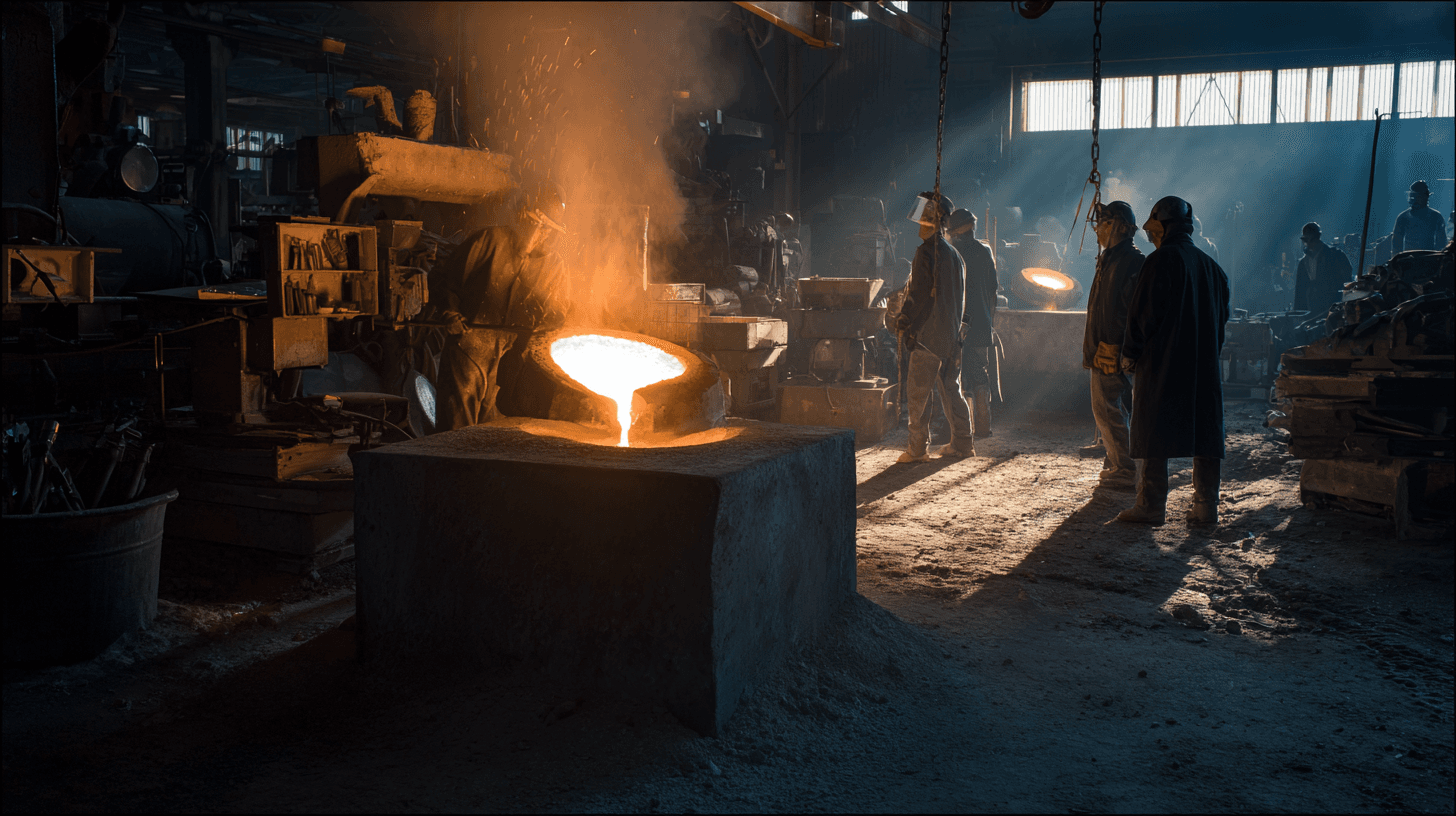
The furnace roars. Molten bronze glows orange-white. The founder watches the pour — tons of liquid metal flowing into the mold.
Bell founding combines metallurgy, acoustics, and craftsmanship at monumental scale. A large bell may weigh tons. The pour happens once. The result rings for centuries or fails forever.
The Alloy
Bell bronze is roughly 80% copper, 20% tin — the same alloy for millennia. The proportions matter. Different ratios produce different tones.
The alloy must be pure. Contaminants affect both casting and sound. The founder controls metal quality before melting begins.
The Mold
The mold is built in layers. An inner core establishes the bell's interior. A false bell of clay or foam establishes the shape. An outer cope encases the false bell.
When the false bell is removed, the space between core and cope receives the molten metal. The bell takes the shape of what was removed.
The Profile
Bell profile — the thickness at various points — determines tone. The founder calculates profile to produce desired pitch and harmonics.
The calculation is part mathematics, part experience. Bell founders develop intuition about how shape affects sound.
The Tuning
Cast bells are often tuned after casting. Metal is removed from specific locations to adjust pitch and harmonics. The tuning is done by ear and analysis.
Traditional tuning was entirely by ear. Modern tuning uses electronic analysis. Both aim for the same result — a bell that sounds right.
The Pour
The pour is the critical moment. Tons of molten bronze flow from furnace to mold. The pour must be continuous — interruption creates flaws.
Everything leads to this. Months of preparation. Then minutes of pour. The result is fixed in metal.
The Reveal
When the bronze cools, the mold is broken away. The bell appears. The moment of truth approaches.
The bell is struck. The tone rings out. Did the calculations work? Does the bell sound true?
The Longevity
A well-made bell lasts indefinitely. Bells cast centuries ago still ring. The founding creates something nearly permanent.
The longevity creates responsibility. The founder knows the bell may outlast everything else they make. The work deserves corresponding care.
The Foundries
Bell foundries are few. The world needs only so many bells. The foundries that persist have often operated for generations.
The skill passes from founder to founder. The techniques are documented but really learned by doing — watching pours, feeling metal, hearing results.
The Ring
The bell hangs in the tower. The clapper swings. The tone spreads across the landscape.
Centuries of sound from one pour. The founder who calculated the profile is long dead. The bell continues.
The bronze endures. The tone endures. The founding determined what would ring across the years.
Sources
- John Taylor & Co foundry records; Whitechapel Bell Foundry archives; The Craft of Bell Founding by Trevor Jennings