Systems
The Bark Cloth Makers
The fabric beaten from trees
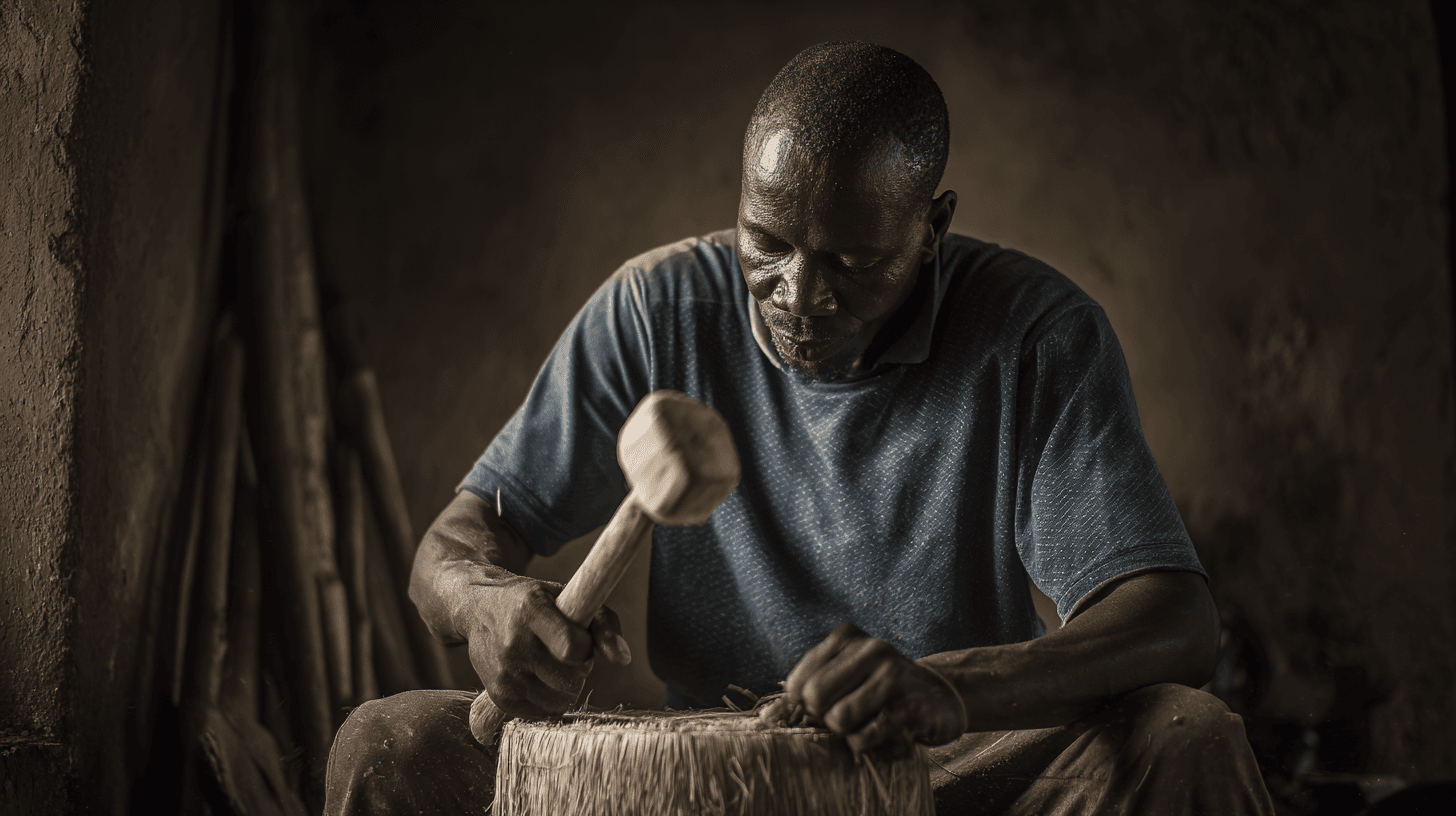
The mallet falls in rhythm. With each stroke, the inner bark spreads wider, thinner, softer. No spinning. No weaving. Just beating until the fibers forget they were ever part of a tree.
Before cotton, before looms, Ugandans made cloth this way.
In Uganda, it reached its highest development. The Baganda people of central Uganda created bark cloth of exceptional quality — supple, durable, beautifully finished. It was the fabric of kings. It wrapped the dead. It marked ceremonies that connected the living to the ancestors.
When cotton arrived, bark cloth nearly disappeared. Now it is returning.
The Process
Bark cloth begins with the mutuba tree — the Ficus natalensis, a species of fig native to East Africa. In the wet season, when the sap is flowing, a section of bark is carefully removed from the trunk. Done correctly, the tree survives and regenerates new bark within a year. A single tree can be harvested repeatedly for decades.
The outer bark is scraped away, leaving the inner bark — a layer of fibrous material about a centimeter thick. This is soaked in water, then beaten with wooden mallets. The beating is rhythmic, skilled, and long. Hours of pounding stretch and flatten the bark, breaking down the fibers, spreading the material to several times its original width.
As the bark spreads, it becomes cloth. The color is a warm terracotta, the texture somewhere between leather and velvet. The fabric drapes, folds, and can be stitched. It is warm in cold weather and breathes in heat. It can last for decades with proper care.
The skill is in the beating. Too hard and the cloth tears. Too soft and it stays thick and stiff. The rhythm must be consistent, the pressure even, the motion controlled. A master can produce cloth that feels almost like silk. An amateur produces something barely usable.
The Kingdom
The Buganda Kingdom made bark cloth a royal monopoly. The best craftsmen worked for the Kabaka — the king — producing cloth for the court and for ceremonial use. The quality of Buganda bark cloth was famous across East Africa.
The cloth carried meaning. Different colors and patterns indicated status. Bark cloth wrapped around a bride signified her transition. Bark cloth shrouded the dead, connecting them to ancestors who had been buried the same way for centuries. The fabric was not just material. It was memory.
When the British arrived, they brought cotton. Cheap, colorful, easier to wash, cotton quickly replaced bark cloth for everyday use. The colonial government encouraged the shift. By independence in 1962, bark cloth was a relic — made for tourists and funerals, but no longer worn in daily life.
The craftsmen dwindled. The young people learned other trades. The knowledge that had produced the finest bark cloth in Africa was concentrated in fewer and fewer hands.
The Revival
In 2005, UNESCO inscribed Ugandan bark cloth on the Intangible Cultural Heritage list. The designation brought attention, funding, and legitimacy. Bark cloth was not just a relic. It was heritage worth preserving.
Fashion designers discovered the material. The warm color, the unique texture, the story behind it — all appealed to markets seeking authentic, sustainable materials. Ugandan bark cloth began appearing in collections from Milan to New York. The prices rose accordingly.
The craftsmen who had persisted suddenly had markets. Young people who had disdained the trade reconsidered. Training programs were established. The number of bark cloth makers, which had fallen to a few hundred, began to grow again.
The material itself found new uses. Fashion, obviously. But also interiors — bark cloth wallpaper, bark cloth upholstery. Art — sculptures and installations featuring the material. Even technology — research into bark cloth as a sustainable alternative to leather.
What Remains
The mutuba trees still grow around Kampala. The craftsmen still harvest the bark in the wet season, still soak it, still beat it with the rhythmic patience their ancestors used. The cloth still emerges — terracotta-colored, warm to the touch, carrying a tradition that predates memory.
The market has changed. The craftsmen sell to designers and tourists rather than to kings. The cloth is a specialty product rather than an everyday fabric. But the knowledge persists. The technique is preserved. The tradition continues.
Bark cloth was supposed to disappear. Cotton was supposed to replace it permanently. The market was supposed to decide, and the market chose efficiency over heritage.
But markets change. What was obsolete became unique. What was outdated became authentic. The craftsmen who had seemed like relics became keepers of rare knowledge. The trees that had seemed useless became sources of sustainable material.
The beating continues. The bark becomes cloth. The tradition that was nearly lost has been found again.
Not everything that is old must die. Some things persist because they are worth persisting. Bark cloth is one of them.
Sources
- Picton J. and Mack J. (1989). African Textiles
- UNESCO Intangible Cultural Heritage: Bark cloth making in Uganda
- Trowell M. and Wachsmann K. (1953). Tribal Crafts of Uganda
- Nakazibwe V. (2005). Bark-cloth of the Baganda People of Southern Uganda