Systems
The Argan Forest
Women goats and the last line against the Sahara
The goats climb the trees. This is not a metaphor.
Argan trees have gnarled, twisted branches that goats scale to eat the fruit. The image appears on every tourist brochure, every lifestyle magazine feature, every "hidden Morocco" documentary. It's real. The goats are up there.
What the brochures don't mention: the argan forest has shrunk by half in the last century.
The Tree
Argania spinosa is a Tertiary relic — a species that survived the ice ages in a small pocket of southwestern Morocco. It grows nowhere else. The trees live 200 years. They fix nitrogen in the soil. Their deep roots prevent erosion. The forest is a UNESCO Biosphere Reserve.
The oil extracted from the nuts is genuinely unusual. High in vitamin E, oleic acid, linoleic acid. Cosmetic companies pay premium prices. Culinary argan oil — roasted before pressing — tastes like nothing else.
The Economics
In 1996, the first women's cooperative formed to process and sell argan oil directly. Before that, women cracked nuts for middlemen who captured most of the value. The cooperatives changed the math.
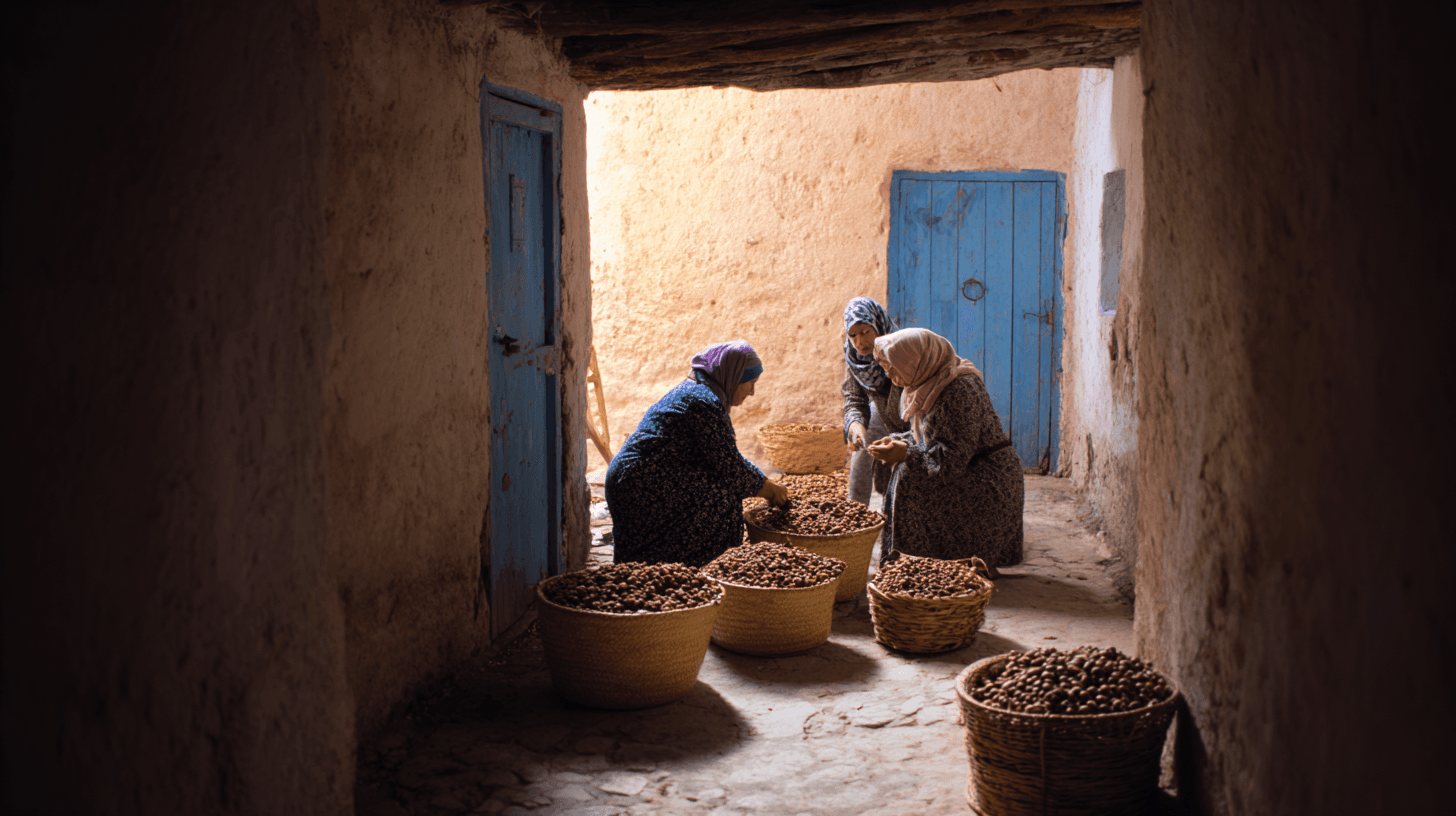
Today, over 100 cooperatives employ roughly 4,000 women. They crack the nuts (by hand — no machine replicates the precision), roast the kernels, press the oil. The product sells for €30-100 per liter at origin. In Paris or New York, multiply by three.
The global argan oil market was worth $1.8 billion in 2023. Projected to reach $3 billion by 2030.
The Pressure
The forest is shrinking. Climate change is reducing rainfall. Groundwater extraction for agriculture is dropping the water table. The trees are stressed.
And success creates its own pressure. Demand for argan oil incentivizes cultivation — but plantation trees produce less and different oil than wild forest trees. The cooperatives that made the product famous now compete with industrial operations that undercut their prices.
Some cooperatives have responded by pursuing quality certifications, organic labels, direct relationships with buyers. Others struggle against cheaper competition.
What's Working
The economics of argan oil have done something that decades of conservation policy couldn't: made the forest's survival someone's financial concern.
The cooperatives have reasons to protect the trees. The women who work in them have income that depends on the forest existing. The communities around them benefit from the revenue.
This is not a complete solution. The forest is still shrinking. The pressures haven't disappeared. But the rate of loss has slowed. And for the first time, the people who live in the forest have economic reasons to keep it standing.
The System
Argan is a case study in what economists call "conditional conservation" — protecting a resource by making it valuable. The question is whether the value is high enough, distributed widely enough, and structured correctly enough to outpace the pressures.
The goats still climb the trees. The women still crack the nuts. The oil still sells for €100 in Paris. The forest is still shrinking — but slower than before.
Whether that's fast enough is the open question.
Sources
- UNESCO Biosphere Reserve data; Argan oil cooperative economic studies; Global argan market analysis (2023); Moroccan forestry department statistics