Systems
The Ama Divers
The women who breathe the sea
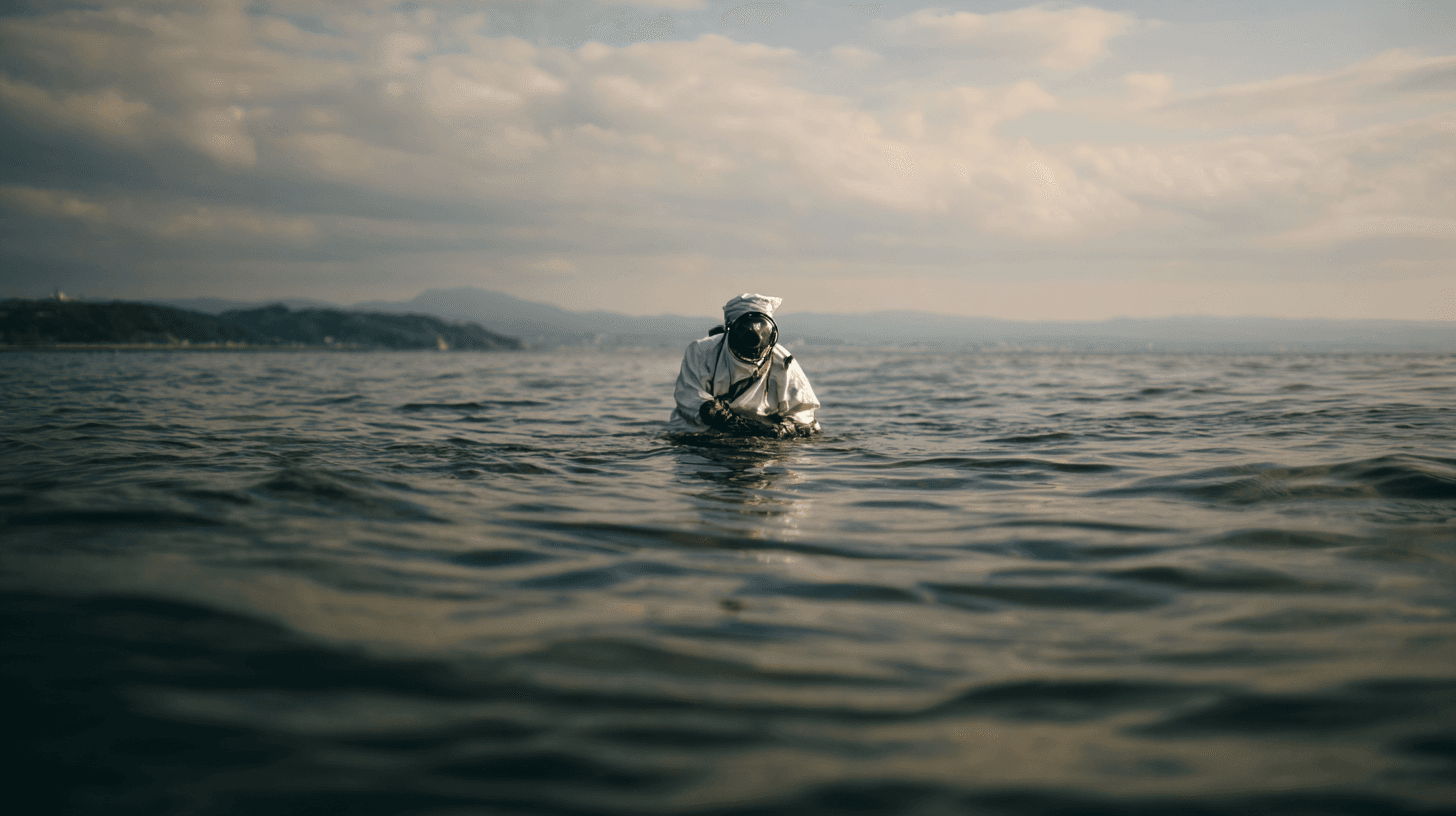
For 2,000 years, Japanese women have dived for shellfish without tanks or equipment — just lungs, skill, and the cold Pacific. The youngest ama is now over 50.
The ama — "sea women" — are free divers who harvest abalone, sea urchins, and other shellfish from the coastal waters of Japan. They work without scuba gear, diving repeatedly to depths of 10 meters or more, holding their breath for one to two minutes at a time. The practice dates to at least the 3rd century. It may be older.
The divers are almost all women. Tradition holds that women's bodies, with more subcutaneous fat, handle the cold better. Whether this is true physiologically or simply a cultural explanation for a gendered practice, the result is the same: ama diving has been women's work for as long as anyone can remember.
The work is dying. The divers are aging. The young women are not replacing them. Within a generation, the ama may exist only in memory.
The Dive
An ama dive begins with hyperventilation — deep, rapid breaths that lower carbon dioxide levels and extend the time before the urge to breathe becomes overwhelming. The diver enters the water, sometimes from a boat, sometimes from shore, and descends.
The descent is fast. The diver uses weights or simply swims down, reaching the bottom in seconds. There she works — prying abalone from rocks, collecting urchins, filling a net bag attached to her waist. The work is quick and efficient. Every second underwater is a second closer to the desperate need for air.
The ascent is controlled. Rising too fast risks shallow-water blackout as oxygen levels drop. The diver surfaces, exhales with a distinctive whistle — the isobue, the "sea whistle" that is the signature sound of ama work — and rests before diving again.
A working day might include 100 dives or more. Each dive is a cycle: breathe, descend, work, ascend, rest. The cycles repeat for hours. The water is cold — 15 to 20 degrees Celsius, sometimes colder. The work is exhausting.
The divers do it anyway, day after day, season after season, for decades.
The Body
Ama diving changes the body. Research on the divers has documented physiological adaptations: enlarged spleens that release extra red blood cells during dives, altered responses to cold, modified breathing patterns. The bodies of experienced ama are different from those of non-divers — shaped by decades of work in ways that science is still mapping.
The adaptations are not genetic. They are acquired, developed through years of practice. A young woman beginning to dive does not have them. An old woman who has dived for 50 years does. The body learns to do what the work demands.
But the adaptations come with costs. Joint problems from repeated pressure changes. Hearing damage from the diving. Cold-related injuries. The cumulative wear of a lifetime spent moving between air and water, surface and depth, warmth and cold.
The oldest ama are in their 80s. They still dive, though less frequently than before. Their bodies carry the evidence of decades in the water — and also the evidence of what the water gave them: health, strength, purpose.
The Community
Ama diving is not solitary. The divers work together, watching out for each other, sharing knowledge, maintaining traditions that bind them into a community.
The amagoya — the huts where divers rest and warm themselves between diving sessions — are social centers. The women gather around fires, eat together, talk. The huts are where knowledge is transmitted, where young divers learn from old ones, where the community maintains itself.
The knowledge is extensive. Which areas hold the best shellfish. How the tides and currents affect diving conditions. How to read the weather. How to work efficiently at depth. How to recognize danger. The knowledge accumulates over lifetimes and is passed through conversation and example.
The community also regulates the harvest. Ama cooperatives set rules about what can be taken and when. The regulations are not imposed from outside — they emerge from the divers themselves, who understand that overharvesting destroys the resource they depend on. The system has maintained sustainable yields for centuries.
The Decline
In 1956, there were approximately 17,000 ama in Japan. Today, there are fewer than 2,000. The average age is over 65. The youngest active divers are in their 50s. Almost no young women are learning the trade.
The reasons are familiar. The work is hard and poorly paid. Other opportunities exist. Young women see no future in spending their lives in cold water. The shellfish populations have declined, reducing returns. The villages where ama lived are shrinking as young people leave for cities.
Some communities are trying to reverse the decline. Tourism brings visitors who pay to watch demonstrations or try diving themselves. Ama seafood is marketed as a premium product. The tradition is promoted as cultural heritage worth preserving.
These efforts help but do not solve the fundamental problem: the work is too hard and pays too little for young women who have other choices. Without new divers, the tradition ends when the current generation can no longer work.
What Remains
The ama still dive. In Toba, in Shima, in scattered communities along the Japanese coast, women in their 60s and 70s and 80s enter the water as their mothers and grandmothers did. They hyperventilate, descend, work, surface with the isobue whistle, rest, and dive again.
The shellfish they harvest still command premium prices. The abalone and sea urchin and turban shells still reach restaurants where diners pay for the quality and the story. The product remains valued even as the producers disappear.
The knowledge the ama hold — how to read the water, how to work at depth, how to survive and thrive in an environment that tries to kill you — this knowledge is being lost. It exists in the minds and bodies of aging women who learned it from women now dead. When they are gone, it will be gone.
Two thousand years of practice. Fewer than 2,000 practitioners remaining. The math is simple. The tradition that has continued since before Japan was Japan will end within decades, not centuries.
The women keep diving anyway. The water is cold. The shellfish are there. The work is what they know. They do it until they cannot, and then they stop, and then there is one fewer ama in the world.
Sources
- Maraini F. (1962). Hekura: The Diving Girls' Island
- Martinez D.P. (2004). Identity and Ritual in a Japanese Diving Village
- Hong S.K. et al. (1991). Physiological adaptation of Korean women divers
- Rahn H. and Yokoyama T. (1965). Physiology of Breath-Hold Diving and the Ama of Japan